Club Car Transmission Fluid
Asking which fluid belongs in a Club Car transmission requires more than a single part number. Golf carts and utility vehicles use several drive systems, so the correct answer depends on whether your machine has a splash-lubricated transaxle, a continuously variable clutch arrangement, or a separately serviced differential. The search for “club car transmission fluid” often begins with a maintenance interval or a subtle change in noise and shift feel. Finding the right lubricant means first identifying the transmission type, then matching the fluid specification to the operating conditions and service history.
Essential answer
The essential answer is that Club Car transmission fluid selection is not universal across all models. The appropriate product is determined by the drive unit fitted to the specific vehicle, and the qualification that changes the answer materially is fitment. Some gasoline and electric platforms lubricate the transaxle with a gear oil, while other continuously variable transaxle designs depend on a wet clutch environment or a particular friction-modified fluid. Using a fluid based only on the Club Car name can lead to the wrong viscosity or additive package for the actual hardware.
A Club Car DS transmission fluid change is one of the most common ways owners encounter this question. The DS platform has been produced with different powertrains over time, so the drain, fill, and level-check steps assume the correct lubricant for that transaxle case and its internal components. Shift behavior can offer clues: hard engagement when warm, increased whine under load, or a notchy feel may reflect degraded fluid rather than an internal failure. However, observation alone is evidence to interpret, not proof that a specific part must be replaced.
Because transmission type drives fluid specification, the first useful step is to locate the vehicle identification and any service records that document the transaxle or rear-end assembly. Fitment resources from the manufacturer or a dealer can convert that information into an approved lubricant category. In the absence of confirmed specifications, it is safer to describe the requirement by function—such as an extreme-pressure gear lubricant for a hypoid differential or a wet-brake-compatible oil for an integrated transaxle—than to invent an exact product code.
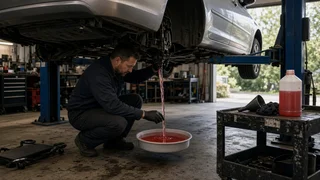
Repair options also depend on how the fluid was used and maintained. A vehicle with a clean fill history and only mild fluid discoloration may need a drain-and-refill and a fresh gasket or sealing washer, while one with glittering metallic particles in the drained oil points toward bearing or gear wear. Diagnostic codes are generally not part of a simple fluid service, but if a controller stores a transmission-related code, that code must be confirmed for the specific model before spending money on internal repairs. The goal is to match the lubricant to the design and then use the drained fluid as a diagnostic sample rather than guessing at the problem.
Practical next steps begin with confirming whether the transaxle is a sealed unit, a serviceable gear case, or part of an integrated drive module with a wet brake. That single distinction often changes both the fluid type and the fill procedure. High ambient heat, hilly terrain, heavy loads, and short trips can shorten useful fluid life even when the hour meter is low. For many owners, the most productive approach is to obtain the model-specific fluid specification, service the case carefully, and then watch shift behavior and noise over the next few operating hours for improvement.