Choosing a Fire Extinguisher for a UTV
The Short Answer
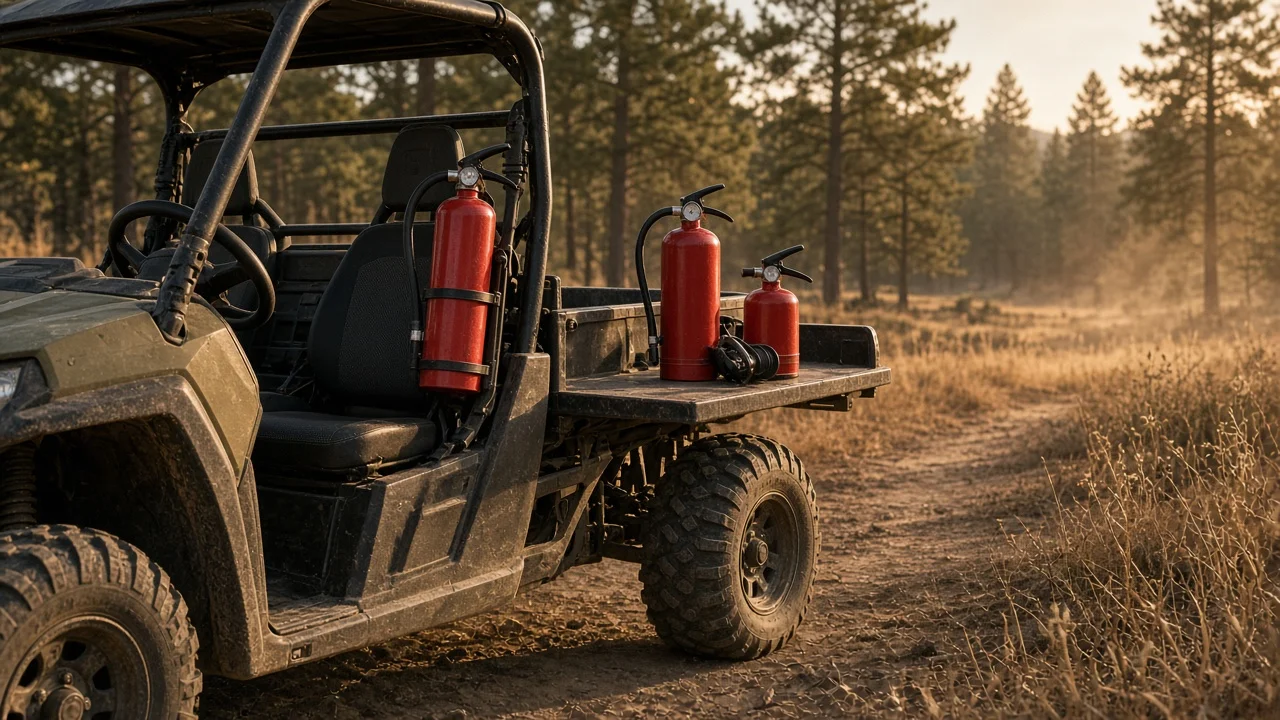
For most UTV owners in the US, a sensible choice is a compact, UL-listed extinguisher rated at least for Class B (flammable liquids such as gasoline and oil) and Class C (energized electrical equipment). It should sit in a sturdy metal quick-release mount that the driver or passenger can reach without leaving their seat. An ABC multipurpose dry chemical unit also covers Class A materials such as brush, upholstery and plastics, which matters if you ride through dry vegetation. The right answer changes in three situations. A trail system, land manager or organized event may set its own extinguisher requirement. You may care more than most about avoiding residue on electronics and aluminum. Or the machine may carry fuel or cargo loads that call for more capacity than the smallest units offer.
An onboard extinguisher is for stopping a small fire early or clearing a path to get away. It is not meant for fighting a fire that has taken hold of the fuel system or engine bay. If a fire is growing, spreading toward the fuel tank, or producing heavy smoke, getting everyone well away from the machine takes priority over saving it.
What to Check Before Buying
Fire Classes and the Rating Label
US extinguishers carry a rating label made of numbers and letters. The letters show which fire classes the unit is listed for. The numbers indicate relative capacity within each class, and a higher number means more capacity. A UTV fire is most likely to involve fuel, oil or wiring, so Class B and C coverage is the baseline. Class A coverage is worth adding if you ride where dry grass, brush or debris can build up around the exhaust, or where a vehicle fire could start a wildland fire. Read the label on the actual unit rather than relying on a product title, and confirm the extinguisher is listed by a recognized testing laboratory such as UL.
Extinguishing Agent
The agent is the substance the extinguisher discharges. Each common type involves trade-offs that matter on a UTV:
Agent type | Fire classes typically covered | Main advantage | Main drawback; ABC dry chemical (monoammonium phosphate) | A, B, C | Broad coverage, widely available | Fine powder residue can corrode metals and electrical parts if not cleaned up promptly; BC dry chemical (sodium bicarbonate) | B, C | Suited to fuel and electrical fires; residue is generally easier to clean up | Not listed for ordinary combustibles such as brush or upholstery; Clean agent (for example, halocarbon types) | Varies by product; check the label | Leaves little or no residue on electronics | Usually costs more for a given rating, and the discharge can be affected by wind in open-air vehicles
Some general guidance by use case. For general trail riding in dry country, an ABC dry chemical unit is the most versatile choice. If you mainly worry about fuel and electrical fires and want easier cleanup, a BC unit fits. If protecting expensive electronics matters most and you accept a higher cost, look at a clean agent unit, and check that its rating still covers Class B and C. When comparing models, compare the rating on the label rather than the agent weight alone. Two units of similar size can carry different ratings.
Size, Weight and Reach
A UTV has limited space, but the smallest available unit may not give enough discharge time to knock down a fuel fire. Choose the largest rating that you can mount securely within reach of the occupants. An extinguisher stored in a rear cargo bed or a locked box may be unreachable if a fire starts near it. Some riders carry two units: one in the cab and one near the rear. Before buying, measure the available mounting space and check the unit's length and diameter against it.
Mounting Hardware
Mounting matters on a UTV as much as the extinguisher does. Vibration, jumps and rough terrain can shake a unit loose from a light-duty bracket. Look for a metal bracket with a positive quick-release latch that a gloved hand can open quickly. Plastic straps or the vehicle-style bracket included with many household units may not hold up off-road. Roll-cage mounts need clamps sized to the tube diameter of your specific machine. That diameter can differ by make, model and model year, so measure before ordering. Avoid mounting points near the exhaust or other heat sources, and avoid spots where the unit could injure an occupant in a rollover.
Gauge, Rechargeability and Construction
Pressure gauge: lets you confirm at a glance that the unit is charged. Rechargeable or disposable: rechargeable units usually have a metal valve and can be serviced and refilled, while disposable units are replaced after use or when they lose pressure. Valve and body construction: metal valves generally stand up better to vibration, dust and weather than plastic ones. Corrosion resistance: units carried outdoors face mud, water and UV exposure, so check for a durable finish.
Rules That May Apply
Some off-highway vehicle areas, public land managers, private parks, dune areas and organized events or races require riders to carry an extinguisher. These rules may specify a minimum rating, a mounting location or a type. Requirements differ by state, agency and event, and no specific rule text was available for this guide. Check the current regulations for every area or event where you plan to ride before choosing a unit, because they can change what size or type you need.
Total Cost of Ownership
No verified prices were available for this guide, so compare current listings yourself. Look beyond the extinguisher's sticker price. Total cost includes the mounting bracket or cage clamps if they are sold separately, shipping, and either professional recharge and servicing or periodic replacement of a disposable unit. When comparing quotes, note the retailer, the date and whether the bracket is included. An advertised price is not necessarily what you will finally pay.
Keeping the Extinguisher Ready
Constant vibration can compact the powder in dry chemical extinguishers, which may affect how well they discharge. Follow the manufacturer's instructions on routine checks. These often include inspecting the gauge, checking the pin and tamper seal, looking for damage to the hose or nozzle, and any recommended step for loosening settled powder. Replace or service the unit after any use, even a brief discharge, because partially used units can lose pressure.
Information Gaps
This guide is based on general principles of fire classification and extinguisher selection. No confirmed product specifications, independent test results, prices or regulatory text were available. Before buying, verify the rating on the specific unit, the bracket fit for your machine's model year and cage design, and the current rules for the areas where you ride.