Choosing a Turbo Blanket for a Precision 6466
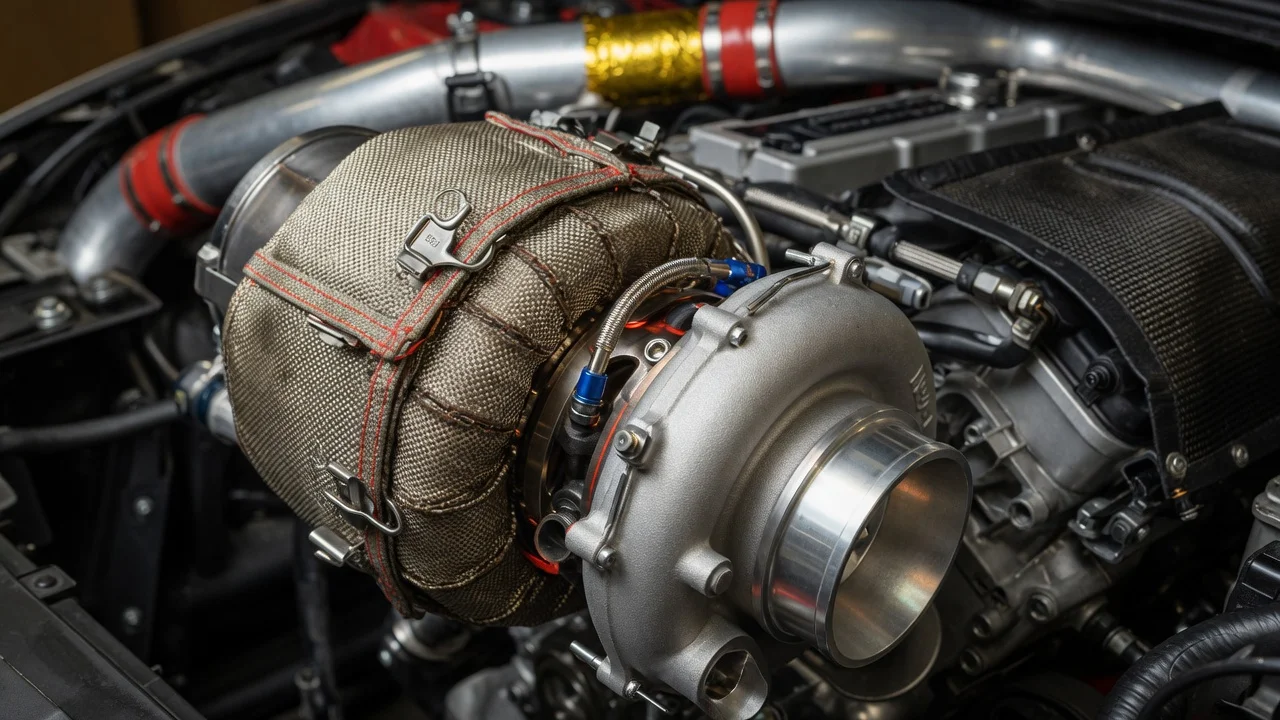
A turbo blanket for a Precision 6466 manages heat. It is not a performance upgrade by itself. Its job is to keep turbine housing heat away from wiring, hoses, brake lines and intake parts, and to survive repeated heat cycles. The right choice depends on which 6466 configuration you run, where the turbo sits in your engine bay and how the car is actually driven.
Define the job the product must do
Start with the problem you want to solve. On a street car, the usual complaints are heat-soaked intake air, cooked wiring looms, softened coolant hoses near the hot side, or a hot firewall and hood. On a drag or road-race car, the concern is usually protecting nearby parts during long or repeated pulls, and sometimes class rules about exposed hot components. Write down which nearby parts are actually at risk. A blanket that suits a front-mount setup with open space may be unnecessary or awkward in a tight rear-mount or sidemount installation.
Separate symptom reports from verified problems. A melted connector or a hose that has turned brittle is physical evidence of a heat issue. A forum claim that a blanket made a turbo spool noticeably faster, or that one caused a housing to crack, is a report that usually lacks controlled conditions. If you log intake air temperature, note the symptom conditions: ambient temperature, idle time, and whether readings follow a hard pull or heat soak after shutdown. That record shows whether a blanket, a rigid shield, better airflow or a relocated filter is the right fix.
Check compatibility
The Precision 6466 has been sold in more than one generation and with several turbine housing choices, including different inlet flanges, outlet styles and A/R sizes. Those differences change the outside shape of the housing, and that shape is what a blanket has to wrap. Before ordering, confirm the exact configuration from the turbo itself, its paperwork or the supplier's records. Check the inlet flange type (such as T3, open or divided T4, or V-band), the discharge style, the A/R, and whether the housing is internally or externally wastegated. A blanket cut for a divided T4 housing will not sit properly on a V-band housing, even though both carry the 6466 name.
Next, check what surrounds the housing. Note where the wastegate or its actuator sits, how the oil feed and drain lines are routed, whether coolant lines are present, and where any speed sensor or EGT probe is mounted. The blanket needs clean cutouts or enough slack at each point so it does not crush a line or rub a fitting. Also account for the vehicle's engine configuration and model year. Hood clearance, strut towers, steering shafts and factory heat shields vary, and a bulky blanket can create a contact point that was not there before. Follow the turbo maker's specifications and any guidance it gives about insulating its housings.
Features that affect the choice
Most blankets have an outer layer of woven fiberglass, silica or basalt (often sold as lava rock) over an insulating core. The material names alone say little. What matters is whether the temperature rating is continuous or a short-term peak, how thick the insulation is, and how well the outer weave resists abrasion and fluid absorption. A headline figure in the thousands of degrees is marketing unless the seller states whether it is continuous or intermittent and which layer it applies to.
Construction details often matter more than material labels. Look for stainless steel stitching or wire and stainless retention springs or hooks, not plastic or plated hardware. The blanket should cover the housing scroll without leaving large gaps at the flange. Some blankets are one piece with a slit, and others are two pieces, which are easier to fit with the turbo still on the car. Reinforced cutouts for the wastegate, actuator rod and oil lines resist fraying. To judge fit, ask the seller for photos of the blanket installed on the same housing configuration you run, not a generic product image.
Also compare a blanket against a rigid heat shield or targeted sleeving. A shield comes off quickly for inspection and does not absorb oil, while a blanket insulates more of the housing surface. Some owners combine a housing blanket with reflective sleeving on nearby lines and harnesses.
Limitations and ownership costs
A blanket will not fix boost control faults, exhaust leaks or diagnostic codes from intake temperature sensors. Diagnose those first, because covering the housing can hide a leak at the flange and makes inspection harder. A blanket also cannot stop heat radiating from an uncovered manifold, downpipe or wastegate dump tube. Those parts may need their own wrap or shielding.
Ownership costs include removing the blanket for inspection, replacing it when the weave frays or becomes contaminated, and buying new springs or hardware now and then. Oil or fuel soaked into the material is a fire risk, so after any leak at the oil feed, drain or valve cover, inspect the blanket and usually replace it. During routine inspection, check the flange studs, look for cracks in the housing, and examine nearby lines and the blanket edges. Record these checks in your service history. Owners still disagree about whether retained heat shortens turbine housing or fastener life. Treat claims either way as reports unless an inspection confirmed the failure, and follow any warranty conditions set by the turbo maker.
Build a practical shortlist
Narrow your options with a checklist rather than a ranking. For each candidate, confirm that it lists your exact 6466 turbine housing and flange, and that its cutouts match your wastegate, actuator, oil lines and any coolant lines. Check that the temperature rating states continuous versus peak, that the stitching and hardware are stainless, and that it can be installed with the turbo in the car if you need that. Confirm that replacement springs or hardware are sold separately, and note the return policy in case the fit is wrong.
Before ordering, measure clearance around the turbine housing and photograph the area. After installation, check for contact points at operating temperature and after a hard drive, and recheck spring tension and edges after the first few heat cycles. If you measured the original problem, such as intake temperature or a heat-damaged connector, compare under the same conditions afterward. That gives you a real result instead of relying on marketing or someone else's impression.