Choosing Sway Bar Bushings: Kits, Sizes and Fitment
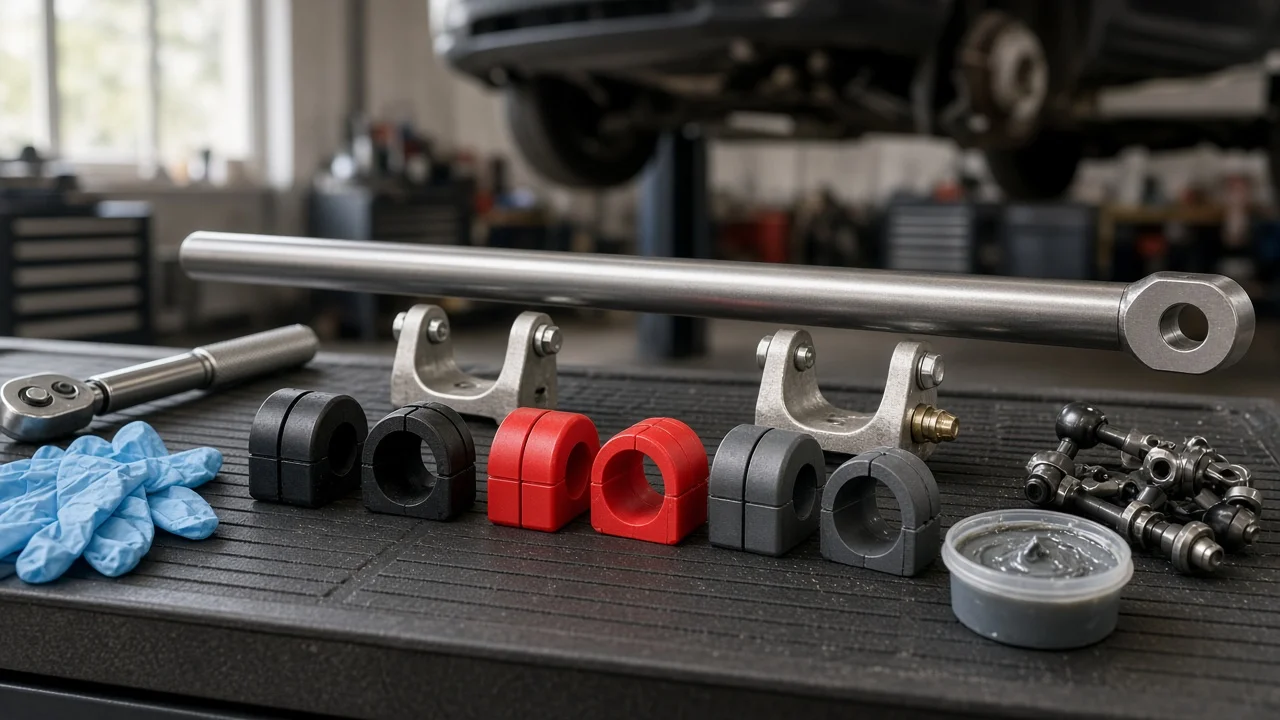
Replacement sway bar bushings are small parts with a specific job. They hold the stabilizer bar against the chassis while letting it twist. Choosing the right ones depends on the bar diameter, the bracket that clamps them, the material, and what else the job may need. This guide walks through those checks so the bushings you buy fit your vehicle configuration and the way you drive.
Define the job the bushings must do
Start with the reason for the replacement. Worn bushings often show up in three ways: a clunk or knock over bumps, a squeak when the suspension moves, or a bar that visibly shifts inside its bracket. Inspect the vehicle while it is safely supported to confirm the source, because worn end links, control arm bushings and strut mounts can make similar noises. Look for rubber that is cracked, split, flattened or oil-soaked. Also look for polished marks on the bar, which show it has been moving where it should be held.
Then decide what you want from the new parts. Restoring the original feel on a daily driver is a different job from sharpening response on a modified vehicle. A truck used for towing or rough roads faces different operating conditions again. Note whether the front bar, the rear bar or both need attention. They are usually different diameters and are often priced and quoted separately. If the service history shows the bushings were replaced recently and the noise came back, find out why before buying the same part again.
Check compatibility before you order
The listed size of a sway bar bushing is its inside diameter, which must match the bar where the bushing sits. Sizes such as 22mm, 25mm, 35mm and 36mm are all common. A few millimeters is the difference between a firm clamp and a bar that rattles or binds. Clean off dirt and old rubber first, then measure with calipers at the bushing location, not at the ends or bends. Do not assume the size from the model name alone. Trim level, engine, drive type and optional sport or heavy-duty suspension packages can all change bar diameter on the same model.
Inner diameter is only half of fitment. The bushing's outer profile, width and shape must also match the bracket that clamps it, and some brackets have tabs or a flat side that locate the bushing. Many factory bushings have a slit for installation. Others are designed around a specific bracket or a collar on the bar that stops it sliding sideways. Use the manufacturer specifications or the parts catalog for your exact vehicle, and compare the new part with the old one before installing it.
Universal sway bar bushings are sold by diameter and generic shape. They can work when the bracket profile is close, but they are a compromise when it is not. A bushing that is too wide, too narrow or a different shape may not clamp evenly. If you choose a universal kit, confirm that the bracket dimensions and bolt spacing work for your vehicle, or that the kit supplies matching brackets.
Features that affect the choice
Material is the main trade-off. Rubber is the usual factory choice. It absorbs vibration and stays quiet, which suits most owners who want original behavior. Polyurethane is firmer and holds the bar more tightly, so the bar reacts sooner. It can also transmit more noise and is more likely to squeak without lubrication. Some polyurethane bushings have internal grooves or grease fittings to help them retain lubricant. Neither material is better for every vehicle. The right choice depends on how the vehicle is used and how much noise you will tolerate.
Check what a sway bar bushings kit actually includes. Some contain only the bushings, while others add brackets, hardware, end link bushings or grease. Treat labels such as heavy-duty, performance or lifetime with caution unless the listing states the material, the dimensions and what any warranty covers. Useful evidence includes a clear diameter, a fitment listing tied to your vehicle and suspension package, a material description and lubrication instructions. Claims of better handling without details tell you little about whether the part will fit or last.
Limitations and ownership costs
New bushings only fix problems caused by the bushings. They will not cure worn end links, a cracked bar, loose bracket mounts or worn shocks, so inspect those parts while the bar is accessible. Installation usually means unbolting the brackets. That is quick on some vehicles and awkward on others, where the exhaust, steering components or a subframe are in the way. Tighten the bracket bolts to the torque value in the service information, and follow its guidance on whether the suspension should be at ride height when you do. Polyurethane bushings need the specified grease at installation, and may need it again later if squeaks return.
The cost to replace sway bar bushings depends on the parts you choose, the labor time for your vehicle and whether related parts are replaced at the same time. Replacement cost for front sway bar bushings can differ from the cost for rear ones, because access and bar size vary between axles. Rusted bracket bolts, seized end links and extra components that must come off all add time. When comparing quotes, ask three things: which parts are included, whether both sides of the bar are being done, and whether the end links will be inspected or replaced. There is no universal replacement interval. Check the bushings during routine inspections and follow your maintenance schedule.
Build a practical shortlist
Before ordering, run each candidate through the same checks. Confirm the inside diameter against your own measurement and against the catalog for your vehicle, including trim and suspension package. Confirm that the outer shape and width match your brackets, or that the kit includes suitable brackets. Decide whether rubber or polyurethane suits your driving and noise tolerance. Check what the kit contains and whether grease is supplied for polyurethane parts. Finally, order front and rear parts separately, each for the correct axle.
Narrow the list to parts with complete, specific information rather than the boldest claims. Keep the old bushings until the new ones are installed and the vehicle has been driven, so you can compare dimensions if something seems wrong. After installation, recheck for noise and movement at the next inspection. Record the work in your service history so any future diagnosis starts from accurate information.