Choosing an S300 Turbo Blanket
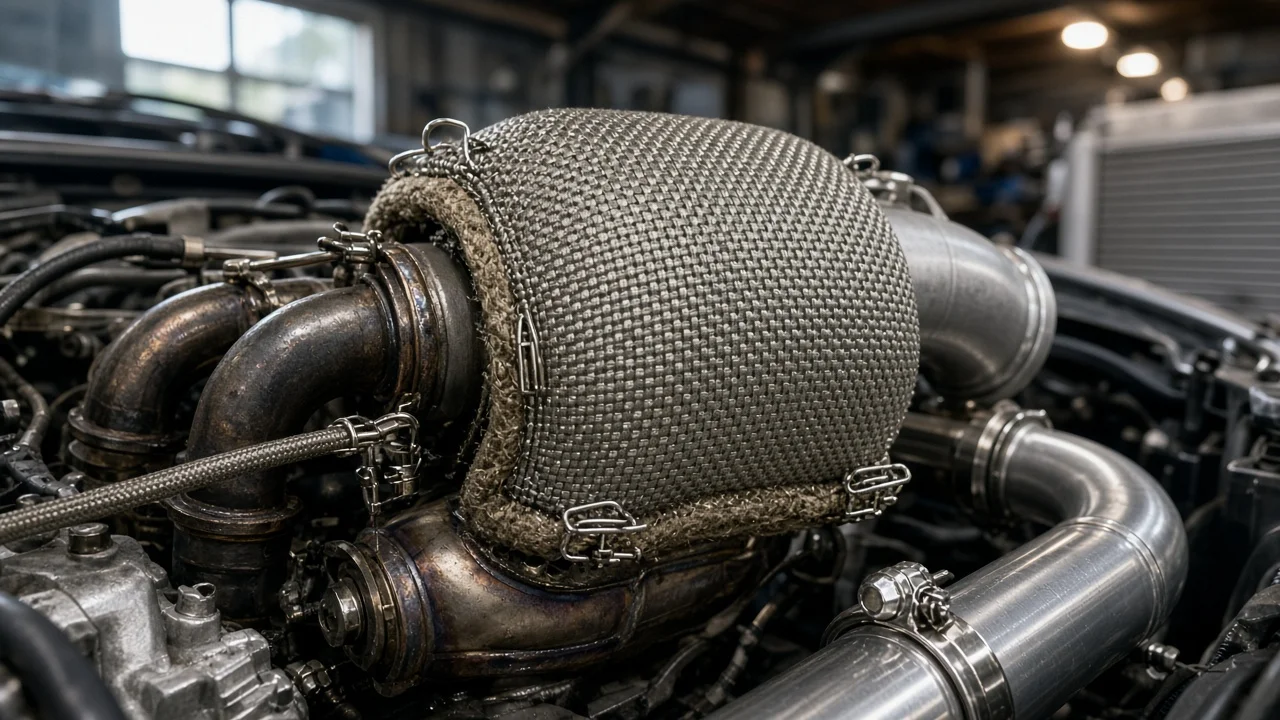
A turbo blanket for a BorgWarner S300 looks like a simple bolt-on, but the wrong one is easy to buy. The S300 name covers many compressor and turbine combinations, and a blanket has to match the turbine housing on your turbo, not just the frame. This guide covers what the blanket should do on your engine, how to confirm fitment, which features matter, and what it costs to own.
Define the job the product must do
A blanket wraps the turbine housing to cut the radiant heat it throws into the engine bay. The practical goal is usually protecting nearby parts: wiring looms, connectors, brake and fuel lines, coolant hoses, plastic intake pieces, the firewall and the hood underside. Start by writing down where the turbo sits and what is close to it. A single S300 on a diesel pickup, an S300 in a compound arrangement next to a second turbo, and an S300 on a gasoline V8 swap each have different clearances and different parts at risk. Engine configuration, model year and engine variant also change the layout, because factory-location kits, aftermarket brackets and swap mounts put the hot side in different places relative to the frame rails, steering components and battery.
Separate verified problems from symptom reports before you buy. Melted loom, cracked connectors or blistered hoses that you can see during an inspection are evidence of a heat issue. A hot hood, an opinion from a forum thread or a general feeling that the bay runs warm is a symptom report, not a diagnosis. If diagnostic codes point to a sensor or circuit near the turbo, test that sensor and its wiring first; a blanket will not repair a failing part. Check the service history too. An exhaust leak at the manifold or turbine flange, or an oil leak above the housing, should be fixed before you insulate anything, because a blanket will hide both.
Check compatibility
The turbine housing is the deciding interface. S300 housings come in several A/R sizes and in single-entry or divided-entry inlet versions, and blanket patterns are cut to the shape of a specific volute. Confirm what you have from the turbo's tag, the original kit paperwork or the casting marks on the housing, then compare that against the seller's fitment statement. A listing that only says it fits the S300 is not enough. Look for one that names the housing A/R and inlet type, or ask the seller directly and keep the answer.
Next, check the openings and joints. The blanket must clear the inlet flange studs, the outlet connection to the downpipe and the joint between the turbine housing and the center housing, so you can still reach those fasteners. Note anything else that passes through or near the housing, such as an EGT probe, a turbo speed sensor or a wastegate port and actuator, and confirm the pattern has cutouts in the right places. Finally, measure the gap between the housing and its neighbors. A thick blanket can rub the firewall, a frame rail, a steering shaft or the hood once the engine moves on its mounts.
If your turbo kit or engine builder provides documentation, check whether it says anything about insulating the turbine housing. Where those manufacturer specifications conflict with a blanket seller's general advice, follow the turbo or kit documentation.
Features that affect the choice
Material and temperature rating come first. Most blankets use an insulating core such as fiberglass, silica or basalt fiber, with a heat-resistant outer layer that is sometimes marketed under names like lava or titanium weave. Those names describe appearance or branding more than performance. What matters is the stated temperature rating and what it means: whether it is a continuous or intermittent figure, and whether it applies to the inner layer that actually touches the housing. A label that only says high temperature, with no number or conditions, tells you very little.
Construction affects fit and service life. Check whether the stitching thread is rated for the same heat as the fabric, because thread failure is a common way blankets come apart. Fastening methods include springs with hooks, safety wire and straps; springs are usually quicker to remove and refit, while wire can hold tighter in cramped spaces but takes longer each time. Thickness is a trade-off between insulation and clearance. A tailored one-piece or two-piece design for your housing generally fits better than a universal wrap, which can leave gaps or bunch around the flanges.
Treat performance claims such as faster spool or a specific temperature drop as unverified unless the seller states how they were measured, including load, ambient temperature and measurement location. If you want your own comparison, record surface temperatures at the same points before and after installation under the same symptom conditions, using the same tool each time.
Limitations and ownership costs
Install only on a cold engine. You may need to remove heat shields or loosen the downpipe for access, so photograph the original layout first. Many coated blankets smoke or smell for the first few heat cycles while the finish cures; follow the seller's break-in instructions and do the first runs in a ventilated area. Budget for replacement springs or safety wire, since hardware is easy to lose during removal.
The biggest ownership cost is inspection. A blanket covers the flange, the housing and nearby joints, so cracks, exhaust leaks and oil seepage are harder to spot. Remove it at regular intervals, such as alongside oil changes or other under-hood service, and look at the housing, studs and gaskets. A blanket that has absorbed oil or fuel can become a fire hazard and should be replaced rather than cleaned and refitted. There are reports that trapping heat in the housing affects housing or fastener life, but these are mostly symptom reports rather than verified failure analyses, so treat them as a reason to inspect, not as settled fact.
Be clear about what the product cannot do. A blanket does not lower exhaust gas temperature, does not cool oil or coolant, does not fix boost or tuning problems and will not stop intake heat soak on its own. Parts that sit very close to the downpipe or manifold may still need their own heat sleeves or shields.
Build a practical shortlist
Compare candidates against the same questions. Does the listing name a turbine housing A/R and inlet type that matches your turbo? Does the pattern leave access to the inlet flange, outlet connection and housing joint, with cutouts for any sensor, probe or wastegate on your setup? Is the temperature rating stated with its conditions? Does the fastening method suit the access you have? Will its thickness clear the firewall, frame, steering parts and hood on your vehicle? Are installation instructions and replacement hardware available, and does the seller accept returns if the fit is wrong? A product that cannot answer the fitment questions should drop off the list regardless of price.
Once you choose, test-fit the blanket on a cold engine before final fastening, and confirm every joint and sensor stays reachable. Record the installation in your service history, recheck the fit and fasteners after the first few heat cycles, and make removal and inspection part of routine under-hood service.