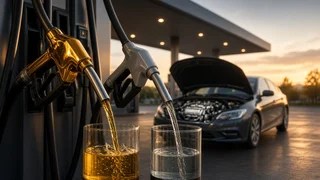
Choosing Octane for a Street Engine Running Pump Gasoline
The right octane for a street engine is the lowest grade that lets it run without knock under all of your normal driving conditions. For a stock vehicle, that is the grade the manufacturer specifies. For a modified engine, it depends on how the engine was built and tuned. Buying a higher octane than the engine needs does not add power, improve cleanliness or extend engine life. Buying less than it needs can cost performance and, in severe cases, damage the engine. This guide explains how octane works on US pump gas, how to read your engine's requirement, and how to decide between regular, midgrade and premium.
The short answer
Stock engine with "regular" specified: use regular. Higher octane gives no benefit. Stock engine with "premium required": use premium. Lower octane risks knock and may void warranty coverage for related damage. Stock engine with "premium recommended": regular is usually acceptable, but the engine may make less power and use slightly more fuel because the computer retards ignition timing to prevent knock. Modified street engine: the octane requirement follows the build and the tune. If it knocks on the best pump gas available to you, the fix is to change the tune or the build, not to keep searching for a better pump.
What an octane rating actually measures
Octane measures a fuel's resistance to knock, also called detonation or pinging. Knock happens when part of the air-fuel mixture in the cylinder ignites on its own from heat and pressure, rather than burning smoothly from the spark plug's flame front. The resulting pressure spike is heard as a metallic rattle or ping, most often under heavy load at low engine speed. Mild, occasional knock is mostly a loss of efficiency. Sustained heavy knock can damage pistons, ring lands and head gaskets.
Octane is not a measure of energy content. Premium gasoline does not contain more energy than regular, and it does not burn "hotter." Its only advantage is that it tolerates more compression, more boost and more spark advance before knocking. An engine that is not limited by knock on regular gains nothing from premium.
How octane is labeled at US pumps
US fuel labeling uses the Anti-Knock Index (AKI), shown on the yellow pump label as (R+M)/2. It is the average of two laboratory measurements: the Research Octane Number (RON) and the Motor Octane Number (MON). Many other markets, including Europe, post RON alone. Because RON is always higher than the AKI for the same fuel, a European "95" fuel and a US "91" fuel can be broadly similar. When a vehicle or engine builder quotes an octane figure, confirm which scale they mean before comparing it to a US pump.
Common US grades are regular (typically 87 AKI), midgrade (typically 89) and premium (typically 91 to 93). The exact premium number varies by region and brand. In some high-altitude areas, stations sell lower-rated regular, such as 85. Older carbureted engines without knock sensors tolerated that better at altitude, but modern vehicle manufacturers generally advise against using it unless the owner's manual allows it.
Finding the requirement for a stock engine
For a factory engine, the fuel specification is in the owner's manual and often on a label inside the fuel filler door. Pay attention to the wording, because it changes the answer:
"Regular" or a minimum of 87 AKI: the engine is calibrated for regular. Premium is wasted money. "Premium recommended": the engine is calibrated to make its rated output on premium but has knock control that lets it run safely on regular, with reduced performance. "Premium required": the manufacturer has not approved lower octane for normal use. Follow it. An ethanol limit, such as "up to E10" or "E15 approved": this is a separate fuel system compatibility requirement, covered below.
Requirements can differ within one model line. A turbocharged engine and a naturally aspirated engine in the same vehicle may have different fuel specs. So can different model years or generations. Check the documentation for your exact engine rather than a general model listing.
Choosing between regular, midgrade and premium
Grade | Best suited to | Main trade-off; Regular | Engines specified for regular; most mainstream naturally aspirated engines | Not enough knock resistance for premium-required or high-compression and boosted engines; Midgrade | Engines whose manual specifies it; occasional light knock on regular in older vehicles under heavy load | Often costs nearly as much as premium; offers no gain in an engine already happy on regular; Premium | Premium-required engines; premium-recommended engines when you want full rated output; most high-compression or boosted modified engines | Higher cost per gallon with no benefit in engines not limited by knock; E85 (flex fuel) | Factory flex-fuel vehicles, or engines specifically built and tuned for it | Requires compatible fuel system parts and calibration; lower energy content per gallon means more fuel used
For a premium-recommended engine, the decision is mostly about priorities. If you tow, carry heavy loads, drive in hot weather or want full performance, premium lets the engine run its intended timing. If you drive gently and cost matters more, regular is a reasonable choice that the manufacturer has allowed. Any change in fuel economy varies by engine and driving style, so judge it from your own records rather than assuming premium will pay for itself.
What drives octane needs in a modified street engine
Once an engine has been rebuilt, swapped or tuned, the factory label no longer tells the whole story. Octane demand depends on how much heat and pressure the mixture sees before the flame reaches it. The main factors are listed here.
Compression ratio: higher static compression raises cylinder pressure and octane demand. Camshaft timing: intake valve closing point changes dynamic compression. The same static ratio can be pump-gas friendly with one cam and knock-prone with another. Combustion chamber design and material: efficient, fast-burning chambers and aluminum heads, which shed heat more readily, generally tolerate more compression than older open-chamber or iron designs. Forced induction: turbocharger or supercharger boost raises cylinder pressure sharply, so boost level and intercooling matter a great deal. Ignition timing: more advance increases knock tendency. Tuning timing to the fuel is the main lever on a pump-gas build. Air-fuel ratio: a lean mixture under load raises combustion temperature and knock risk. Intake air and coolant temperature: hot conditions, heat soak and poor cooling all raise octane demand. Altitude: thinner air lowers effective cylinder pressure, which is why requirements are often lower at elevation.
Builders planning a pump gas street engine usually work backward from the best fuel reliably available locally. They choose compression, cam, chamber and boost so the engine can be tuned safely on that fuel with some margin for hot days and heavy loads. A build that only survives on race fuel or octane boosters is not a practical daily-driven pump-gas engine.
Knock sensors, carburetors and tuning
Most modern fuel-injected engines have knock sensors. When they detect knock, the engine computer retards ignition timing. This protects the engine on lower-than-ideal fuel but reduces power. It is a safety net, not a license to run any fuel: knock control has limits, and an aggressive aftermarket tune can leave too little margin.
Older carbureted engines and many simple aftermarket ignition systems have no knock feedback. On these engines, octane has to be matched by setting base timing and the advance curve conservatively, then listening for ping under load. If an engine pings on premium, back off timing, check for lean conditions, look for cooling problems and inspect for carbon buildup, which raises effective compression. Higher octane may hide the symptom without fixing the cause.
Ethanol blends and fuel system compatibility
Most US gasoline is sold as E10, meaning up to 10 percent ethanol. Ethanol has strong knock resistance, and it contributes significantly to the posted octane of many pump fuels. E15 is sold in some areas. It is approved for many newer vehicles but not all, so check the owner's manual or manufacturer approval before using it. E85 is intended only for flex-fuel vehicles or engines whose fuel system and calibration have been built for it. It needs much more fuel flow than gasoline, along with compatible components and a matching tune.
For older vehicles, classic cars and some small engines, the concern is less about octane and more about compatibility. Ethanol can degrade some older rubber hoses, seals and fuel pump components. It absorbs water, which matters for vehicles that sit for long periods. Owners of older street cars often update fuel lines and seals to ethanol-tolerant materials, or seek out ethanol-free gasoline where it is sold. Note that ethanol-free fuel may have a different octane rating than the blended grades at the same station, so read the pump label rather than assuming.
Octane boosters and mixing grades
Over-the-counter octane boosters vary widely in strength, and the octane gain depends on the product and dose. Treat label claims with caution, and check whether the number quoted is on the RON or AKI scale. They can be useful for an occasional situation, but relying on them every tank suggests the engine's build or tune does not match the available pump gas. Mixing two pump grades in the tank generally gives an octane between the two, roughly in proportion to how much of each you add.
Practical steps for choosing your octane
Stock vehicle: use the grade and ethanol limit in the owner's manual or on the fuel door label. Premium-recommended vehicle: choose premium for towing, heat, heavy loads or full performance; regular is acceptable for gentle driving if you accept some loss of output. Modified engine: ask the builder or tuner which fuel and octane scale the tune was developed on, and keep using that fuel. If you hear ping under load, stop heavy acceleration, switch to a higher grade as a short-term measure, and diagnose timing, mixture, cooling or carbon buildup. Older or stored vehicle: confirm fuel system compatibility with ethanol blends before relying on them long term. Traveling: remember that octane labels differ between altitudes and between US AKI and international RON ratings.
In short, octane is a match between the fuel and the engine, not a quality ladder. Start from the manufacturer's specification or the tune's design fuel. Use more octane only when the engine actually needs the extra knock resistance. If a street engine cannot run safely on the best pump gasoline you can buy, change the engine's calibration or build rather than the pump.