Choosing an OBD2 Scanner and Tuner
What the answer depends on first
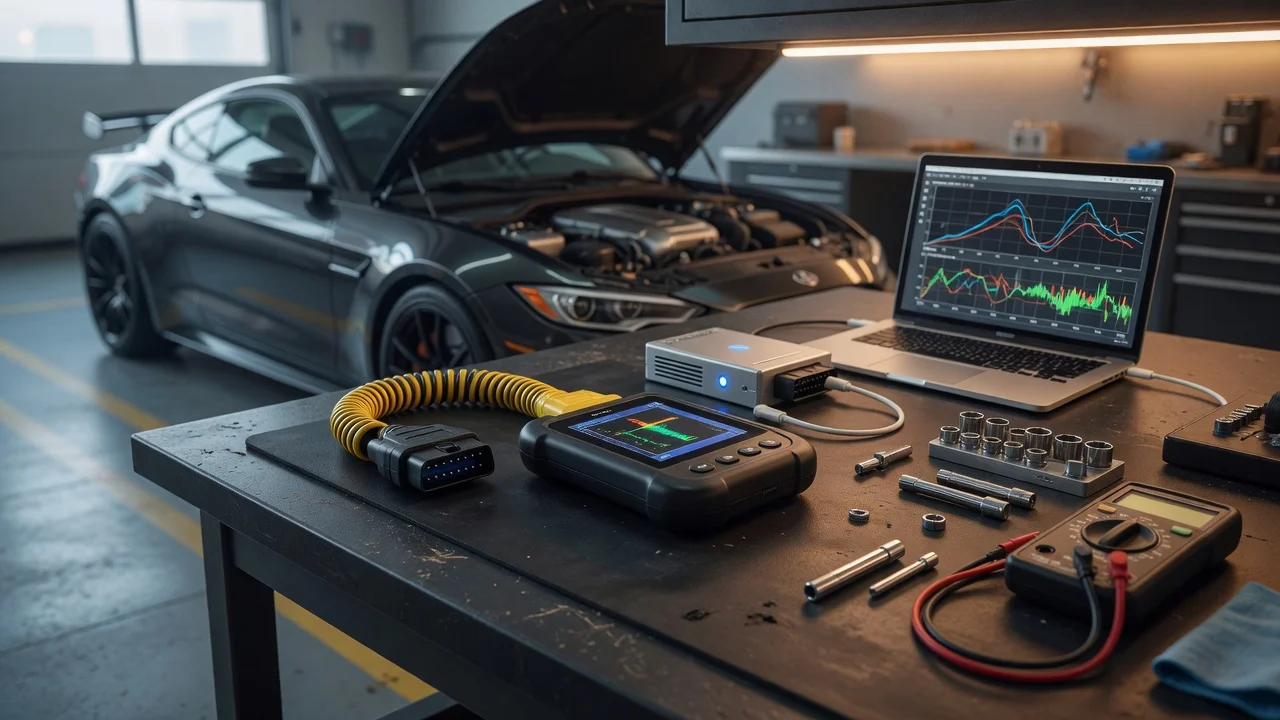
An OBD2 scanner and tuner is not one universal device. The right choice depends mainly on the intended use: reading and clearing diagnostic codes, viewing live engine data, performing service resets, or rewriting engine and transmission calibration. A tool that is suitable for casual code reading may not be suitable for tuning, and a professional bidirectional scanner can cost several times more than a basic code reader.
Checks to make before committing
Confirm compatibility for the exact model year, market, trim and powertrain before purchase. OBD2 became mandatory in the United States for light-duty gasoline vehicles from the 1996 model year, but coverage of manufacturer-specific modules, diesel systems and advanced functions varies widely. A scanner may read generic powertrain codes on a vehicle while still lacking access to ABS, airbag, transmission, body or electronic parking brake modules.
Check whether the tool uses a phone app or a standalone display, because long-term usefulness can depend on future app support and paid subscriptions. The condition that changes the decision most is whether tuning is actually required. A diagnostic scanner reads and clears information; a tuner changes calibration and typically requires vehicle-specific support, custom files or a compatible handheld module. Combining both functions usually means accepting compromises in scan coverage, tuning depth or ease of use.
Include total ownership cost. For quoted prices, establish the market, date and currency, and distinguish advertised prices from completed transactions. A low advertised scanner price does not show subscription fees for extra manufacturers, one-year free updates that later expire, or the cost of additional licenses for tuning multiple vehicles. Warranty length, update policy and whether the tool is locked to a vehicle identification number can change the practical purchase decision.
Comparing options on shared criteria
Compare devices on the same decision criteria: vehicle coverage, module coverage, update cost, required phone or computer, tuning ability, return-to-stock function and ease of use for the planned task. Specifications and performance figures are only comparable when they use the same vehicle versions, units and test conditions.
For basic diagnosis, a phone-based or compact OBD2 dongle can be the lowest-cost fit. For euro-specific modules or older domestic vehicles, a scanner with broader manufacturer coverage may be more suitable. For tuning, a vehicle-specific or ECU-family-specific platform is often more practical than a general-purpose scanner, while a professional bidirectional scanner makes sense for service-level testing and actuator control. Pick the narrowest category that covers the vehicle and the intended work.
Available comparison evidence for specific scanners, tuners, prices and completed-market transactions was not supplied for this article. Independent ranking of named models against tested specifications cannot be completed from the supplied material. Check the tool manufacturer's stated coverage for the exact vehicle before purchase.