Choosing a Tire Changer for Car Tires
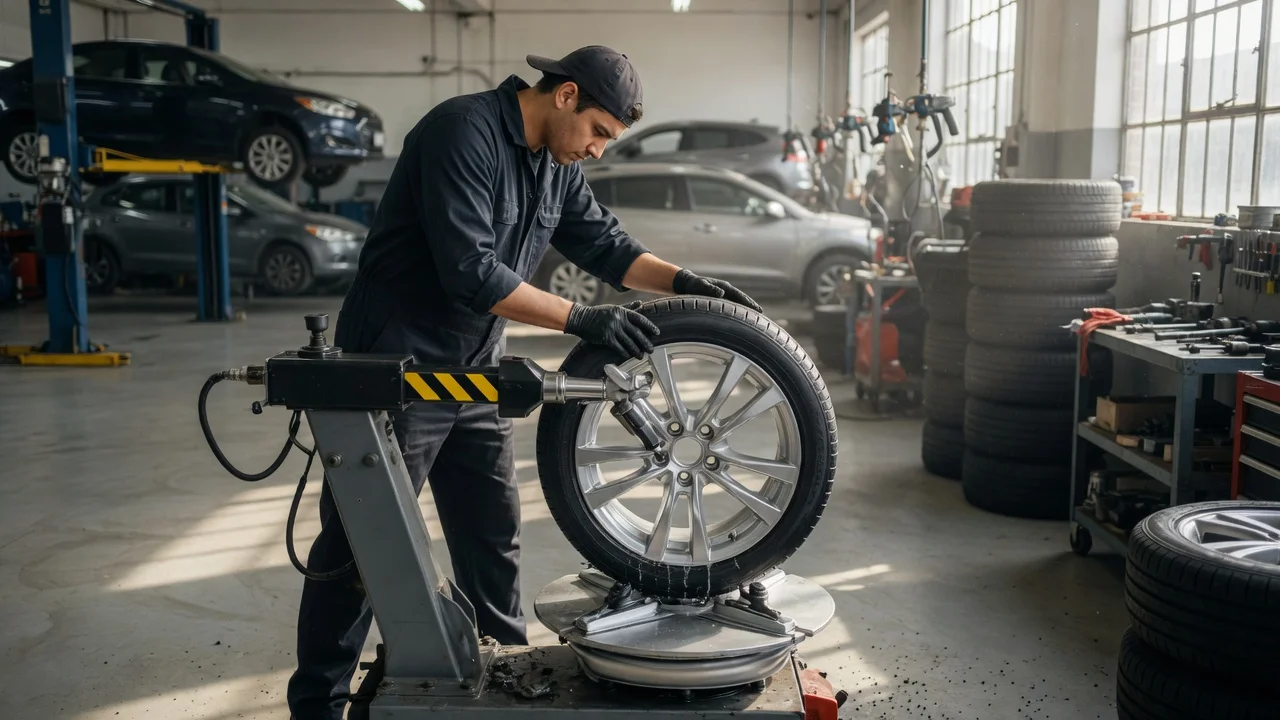
What kind of tire changer should I consider?
For most owners working on car tires, the realistic choice is a manual or semi-automatic tire changer. A swing-arm or tilt-back manual machine handles common passenger tire sizes at lower cost, while a leverless or assist-arm design reduces physical effort. Fully automatic machines are faster and easier on large wheels, but they cost more and make less sense unless you expect frequent use.
What should I check before committing?
Confirm the machine's rim diameter range against the wheels you actually service. Check whether the specified outside clamping or inside clamping range covers your wheel sizes, and note that low-profile or run-flat tires can require more clamping force or an assist arm. Included accessories also matter: a mounting head, bead breaker, tire levers, and a wheel balancer are not always part of the base package.
Budget for the total installed cost, not just the advertised price. A changer may need a solid floor location, air supply, electrical service for powered models, and shipping or lift-gate delivery. Advertised prices do not establish what a completed local transaction will cost, so confirm currency, date, and included components before comparing.
How do the main options compare?
Compare machines on shared criteria: wheel size range, clamping type, effort required, floor space, power and air needs, and total cost. A compact manual changer is the least expensive and occupies little space, but it demands more physical work and is slower on stiff sidewalls. A semi-automatic or leverless machine costs more and takes more space, yet reduces effort and the risk of wheel damage during learning. A full automatic unit is best for high volume or mixed wheel sizes, but only if the higher purchase and maintenance cost is justified by use.
What checks could change the purchase decision?
Measure the largest and smallest wheel sizes you expect to service, including diameter and width. Check the machine's clamping method and stated rim range against those sizes. Verify the power, air, and mounting requirements at the planned installation location. Compare the same configuration: base machine plus the jaws, protectors, and accessories actually needed. Distinguish advertised prices from a completed quote that includes delivery, installation, and required accessories.
What limitations should I expect?
Check rates in this article can be stated only as conditions, not as current market prices, because supplied evidence does not include dated, completed transactions. Without a confirmed model year, market, and configuration, even specification comparisons should be treated as general rather than model-specific rankings. If a machine lists a rim range that does not cover your wheels, that is a direct compatibility gap and should eliminate the option before price comparison.