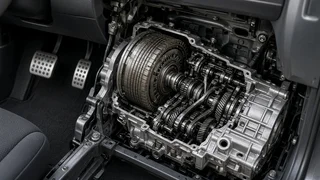
Choose DCT transmission oil
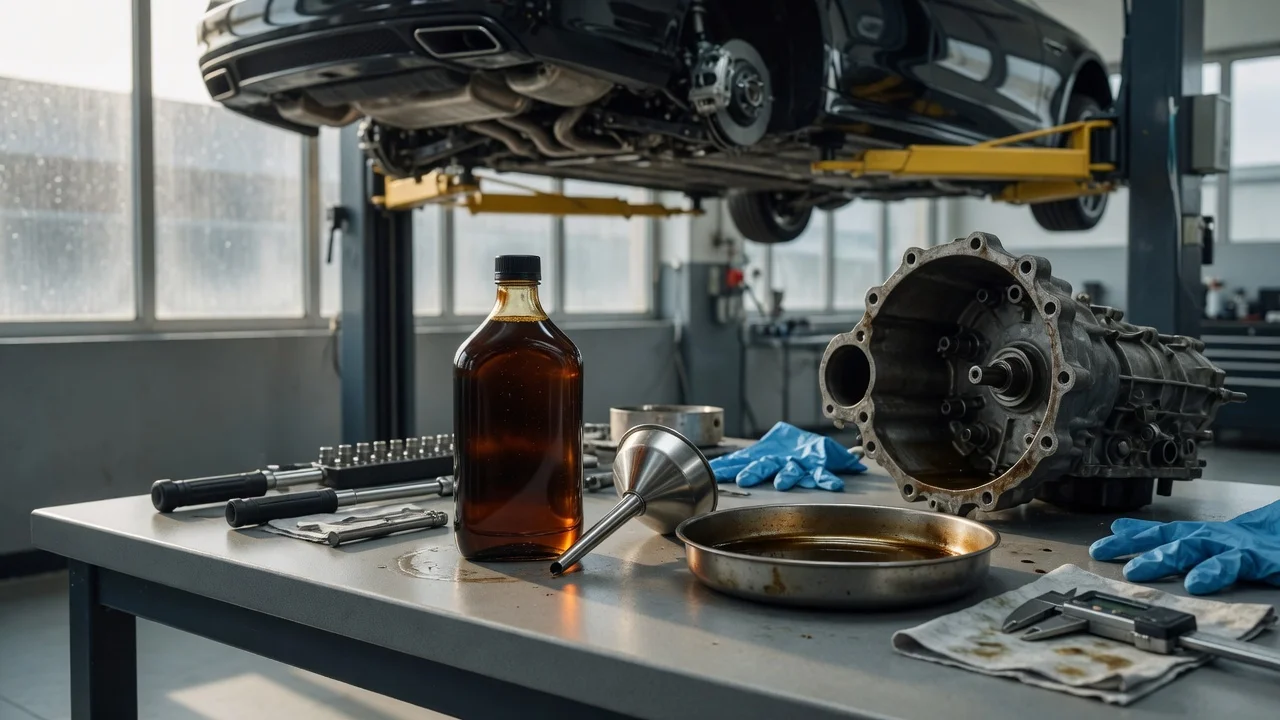
The short answer
The right oil for a dual-clutch transmission (DCT) is the fluid that meets the specification the vehicle manufacturer lists for that specific gearbox. DCT fluids are not interchangeable with each other or with conventional automatic transmission fluid (ATF), manual gear oil or CVT fluid. Which fluid applies depends on the transmission design fitted to your model year, engine and market, so the gearbox must be identified before any product is chosen.
The most important qualification is whether the DCT has wet or dry clutches. That one detail changes what kind of oil the gearbox uses and, in some designs, whether it needs more than one fluid.
Wet-clutch and dry-clutch DCTs need different fluids
A DCT uses two clutches, one for odd gears and one for even gears, so the next gear can be preselected and engaged quickly. In a wet-clutch design, the clutch packs run in oil. The same fluid lubricates the gears, carries heat away from the clutches and often operates the hydraulic controls. Its friction behaviour therefore directly affects how smoothly the clutches engage and slip during take-off and shifts.
In a dry-clutch design, the clutches run in air, much like a manual gearbox. The gearset is lubricated by a gear oil that does not have to manage clutch friction. Some dry-clutch units also have a separate, sealed hydraulic circuit for the control unit (often called the mechatronic unit) that uses its own dedicated fluid. Putting the wrong fluid into either circuit can cause shift problems or component damage.
Wet-clutch DCT: one fluid typically handles clutch friction, cooling, gear lubrication and hydraulic control; friction properties are critical. Dry-clutch DCT: gear oil lubricates the gearset; a separate hydraulic fluid may be used for the control unit. In both cases: the correct fluid is defined by the manufacturer's specification for that gearbox, not by the label 'DCT'.
How to identify the correct specification
Check the owner's manual or service schedule for the transmission fluid specification or approval code. Confirm the gearbox code or type; the same model can use different DCTs depending on engine, drivetrain, model year and market. Ask a franchised dealer to look up the fluid by the vehicle identification number (VIN) if the manual is unclear. Note whether a dry-clutch unit has a separate control-unit fluid, and which circuit is being serviced.
Comparing your options
Once the specification is known, buyers usually choose among three kinds of product. The comparison below uses shared decision criteria rather than prices or test results, because no comparable pricing or independent test data was supplied for this guide.
Option | Specification certainty | Main risk | When it makes sense; Manufacturer-branded fluid | Highest; it is the reference fluid for the specification | Usually limited to availability and cost | Vehicles under warranty, gearboxes known to be sensitive, or when in doubt; Aftermarket fluid with a documented OEM approval | High, if the approval is formally listed for your exact specification | Wording such as 'suitable for' or 'recommended for' may not mean an official approval | When the approval can be verified and you want an alternative source; Universal or multi-vehicle DCT fluid | Variable; claims cover many gearboxes with differing requirements | Friction or viscosity may not match a specific wet-clutch design | Only if the maker explicitly lists your specification and you accept the uncertainty
Editorial judgment: for wet-clutch units, where friction characteristics shape shift quality, the manufacturer fluid or a formally approved equivalent is the safer choice. A universal fluid may still be used where its maker specifically lists your specification, but a generic 'for all DCTs' claim is not evidence of compatibility. Warranty terms can also depend on fluid choice and service records, so check them before using a non-OEM fluid on a newer vehicle.
Service practice matters as much as the bottle
Many DCTs require the fluid level to be set at a specified fluid temperature, often using diagnostic equipment, and wet-clutch units may also need a filter change at the same service. Some vehicles benefit from a clutch adaptation or relearn procedure afterward. The exact procedure, fill quantity and change interval vary by gearbox and are not covered by the information supplied here; take them from the manufacturer's service data for your vehicle.
Information gaps
This guide does not provide model-specific fluid codes, capacities, service intervals, prices or independent fluid test results, because none were supplied. Treat the manufacturer's documentation for your vehicle's model year, powertrain and market as the deciding source.