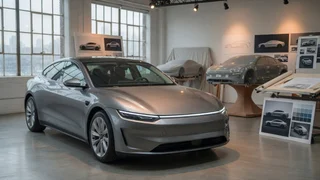
Chinese Car Brands: A Complete Guide to the Makes, Parent Groups and US Availability
There is no short list of Chinese car brands. China's auto industry includes dozens of nameplates, and most belong to a few large parent groups that run several brands aimed at different buyers. For a US reader, one point changes the answer more than any other. Most of these brands are not sold in the United States under their own names. You can find them in China and in many export markets. Americans meet Chinese ownership mostly through brands that started elsewhere and were later bought by Chinese companies. This guide sorts the major Chinese car brands by parent group and covers the newer startups and tech-backed brands. It then explains how these makes differ from established Japanese, Korean, European and American automakers, and why you should be careful when comparing models across markets.
The Short Answer
Chinese car brands fall into four broad groups:
Large state-owned groups, such as SAIC, FAW, Dongfeng, Changan, GAC and BAIC. Large privately owned automakers, such as BYD, Geely, Great Wall Motor and Chery. Newer electric vehicle startups, such as NIO, XPeng, Li Auto and Leapmotor. Technology companies that have entered the car business, such as Xiaomi, and Huawei through its partnerships with established manufacturers.
Many of these companies also run joint ventures in China with foreign automakers such as Volkswagen, Toyota, Honda and General Motors. Cars from those joint ventures usually wear the foreign partner's badge, so most guides do not count them as Chinese brands. This guide follows that convention.
Major Chinese Automakers and Their Brands
The table below groups well-known brands under their parent companies. Brand portfolios in China change often, so treat it as a map of the landscape rather than a permanent roster.
Parent group | Notable brands | General focus; BYD | BYD, Denza, Fangchengbao, Yangwang | Battery-electric and plug-in hybrid vehicles across mainstream, premium and luxury segments; BYD also makes its own batteries; Geely Holding | Geely, Galaxy, Zeekr, Lynk & Co, Volvo Cars, Polestar, Lotus, Smart (joint venture with Mercedes-Benz) | A broad multi-brand portfolio covering mainstream, premium, performance and city cars; SAIC Motor | MG, Roewe, IM Motors, Maxus (sold as LDV in some markets), plus Wuling and Baojun through its joint venture with GM | Mainstream cars, electric vehicles, vans and low-cost small cars; Chery | Chery, Omoda, Jaecoo, Exeed, Jetour, iCar | SUV-heavy lineups with a strong export focus; Great Wall Motor | Haval, Wey, Tank, Ora, plus pickups sold under the GWM name | SUVs, off-road vehicles, pickups and compact electric cars; Changan | Changan, Deepal, Avatr | Mainstream vehicles plus newer electrified and premium lines; GAC Group | Trumpchi (often badged GAC abroad), Aion, Hyptec | Mainstream vehicles, minivans and dedicated electric vehicles; Dongfeng | Dongfeng, Voyah, Forthing, M-Hero, Nammi | Mainstream, premium electric and rugged off-road vehicles; FAW Group | Hongqi, Bestune | Hongqi is China's long-standing prestige marque; Bestune covers mainstream buyers; BAIC | Beijing, Arcfox, Stelato (with Huawei) | Mainstream and off-road vehicles plus electric models; JAC | JAC, Maextro (with Huawei) | Passenger and commercial vehicles plus a high-end electric line
EV Startups and Tech-Backed Brands
Over the past decade, a wave of companies has launched with electric vehicles as their core product rather than adding them to an existing lineup. Their main selling points are software, connectivity and driver-assistance features. Some of the best-known:
NIO: premium electric vehicles, known for battery-swap stations. It has added the Onvo and Firefly brands for more affordable and smaller models. XPeng: electric vehicles with a heavy focus on driver-assistance software. It has introduced a lower-priced Mona model line. Li Auto: best known for extended-range electric SUVs, which drive on electric power while a small onboard engine recharges the battery. It has since added fully battery-electric models. Leapmotor: mainstream electric vehicles. It has a partnership with Stellantis to sell its cars outside China. Xiaomi: the consumer electronics company entered the car market with the SU7 sedan and followed with the YU7 SUV. Aito: built by Seres in partnership with Huawei. It is part of a Huawei-led alliance that also includes Luxeed (with Chery), Stelato (with BAIC) and Maextro (with JAC). Huawei supplies software and technology; the partners build the vehicles.
This part of the industry is volatile. Several startups have paused production, entered restructuring or been absorbed by larger groups. Brands that seem prominent in one model year may be repositioned or gone a few years later, so check a company's current status before treating it as a long-term ownership prospect.
Chinese-Owned Brands Familiar to US Buyers
Several brands that Americans don't think of as Chinese are owned by Chinese companies:
Volvo Cars: Swedish in origin and still headquartered in Sweden, owned by Geely Holding. Polestar: a performance electric brand that grew out of Volvo, also in the Geely family. Lotus: the British sports car maker, majority-owned by Geely. MG: originally a British brand, now owned by SAIC. It is a major seller in Europe, Australia and other markets but is not currently sold in the US.
Chinese ownership does not mean a car was built in China. Engineering, design and assembly for these brands may happen in Europe, the US or China, depending on the model. Some vehicles from Western brands have also been assembled in China for export. The badge, the owner and the factory can all differ.
Why Most Chinese Brands Aren't Sold in the US
US availability is limited for three main reasons:
Tariffs: the federal government imposes steep tariffs on Chinese-made vehicles, especially electric vehicles. These make direct imports hard to price competitively. Connected-vehicle rules: federal rules restrict software and hardware tied to China in vehicles with connectivity features. This affects nearly every modern car, whichever brand sells it. Market entry costs: selling in the US requires meeting federal safety and emissions standards, building dealer and service networks, and supplying parts. These are large investments under any trade policy.
In practice, US buyers usually cannot walk into a dealership and buy a new BYD, Geely, Chery or Great Wall vehicle. Trade policy can change, so this may not stay true, but it describes the market for now. In other markets, including Europe, Australia, Latin America, the Middle East and Southeast Asia, many Chinese brands are actively sold and expanding.
How Chinese Car Brands Differ
Chinese brands vary widely, but several traits come up often when comparing them with long-established automakers:
Powertrain options: many lineups lean heavily toward electrified powertrains, meaning battery-electric, plug-in hybrid and extended-range electric. Combustion-only models remain common in some brands and export markets. Cabin technology: large touchscreens, voice assistants, frequent over-the-air software updates and advanced driver-assistance features are often central to the pitch, even in lower market segments. Fast model cycles: Chinese brands often launch new models and refreshes more quickly than many legacy automakers, so a model can change noticeably from one model year to the next. Body configuration mix: SUVs and crossovers dominate many lineups. Sedans, large MPVs (minivans) and pickups also feature, depending on the brand. Multi-brand strategies: parent groups often launch separate sub-brands for premium, budget or tech-focused buyers rather than stretching one badge across every segment.
Comparing a Specific Chinese Model
The same nameplate can mean quite different cars in different places, so check these details before comparing models or reading a review:
Model year and generation: fast update cycles mean specifications, styling and software can change significantly between years. Regional availability: a model sold in China may differ from its export version in powertrain, battery, safety equipment or name. Some models are sold under different badges in different countries. Powertrain: a single model may come as battery-electric, plug-in hybrid or extended-range, each with very different running costs and range. Equipment level: driver-assistance features, infotainment and comfort features often depend on trim, and some differ by market. Service and parts support: in markets where a brand is new, the depth of the dealer and repair network matters as much as the car itself.
Bottom Line
Most Chinese car brands belong to a small number of groups: BYD, Geely, SAIC, Chery, Great Wall, Changan, GAC, Dongfeng, FAW and BAIC. A fast-moving set of EV startups and tech-backed companies sits alongside them. For US readers, the practical point is that most of these brands are not sold in the United States today, though Chinese-owned brands such as Volvo, Polestar and Lotus are. When looking at any Chinese model, confirm the market, model year, powertrain and trim, because these details shape what the car actually is.