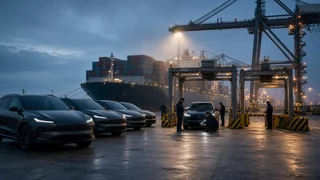
China Car Import Duties and Taxes: How Tariffs Work in Both Directions
People search for China car import duties to answer two different questions. Some want to know what China charges when a foreign-built car enters the Chinese market. Others, especially in the US, want to know what tariffs apply when a car built in China is brought into the United States. Different governments set these rules, and the rules use different taxes. This guide explains both and shows which factors decide the final bill.
The Short Answer
A car imported into China usually faces more than one charge. These are a customs duty, a consumption tax tied mainly to engine size, value-added tax (VAT), and an extra surcharge on very expensive vehicles. Each tax is calculated on a base that already includes the earlier ones, so the total is higher than the headline duty rate suggests. A car built in China and imported into the US faces the standard US duty for its vehicle class plus additional trade-remedy tariffs aimed at Chinese-origin goods. Those additional tariffs are much heavier for electric vehicles. In both directions, a car must also meet the destination market's safety and emissions rules before it can be registered. Those rules often block an import before tax becomes the deciding factor.
Tariff rates on cars have changed several times in recent years because of trade disputes and policy reviews. Check any specific percentage against the current tariff schedule before relying on it. This article explains how the system is structured and does not list rates that may already be out of date.
Which Question Are You Asking?
Situation | Whose rules apply | Main charges | Main non-tax hurdles; A foreign-built car shipped into China | Chinese customs and tax authorities | Import duty, consumption tax, VAT, luxury surcharge on high-priced models | China Compulsory Certification (CCC), Chinese emissions standards, limits on used-car imports; A China-built car shipped into the US | US Customs and Border Protection and US trade law | Base US duty, additional tariffs on Chinese-origin goods, customs processing fees, possible gas guzzler tax | EPA emissions certification, federal motor vehicle safety standards, connected-vehicle technology restrictions
How China Taxes Imported Cars
The China import tax on cars is a set of separate charges, each with its own purpose and calculation base. Importers and dealers pay these at customs clearance, and the cost is built into the retail price buyers see in China.
Customs import duty: a percentage of the vehicle's customs value. The rate can depend on the country of origin, because trade agreements or retaliatory measures can raise or lower it for particular countries. Consumption tax: an excise-style tax on passenger vehicles that rises steeply with engine displacement. Small-engine cars fall in the lowest bands and large-engine cars in the highest. Value-added tax (VAT): a general tax applied to the value of the imported goods after duty and consumption tax have been added. Luxury vehicle surcharge: an additional tax on cars above a high retail-price threshold. The threshold and the vehicle types it covers have been revised over time.
The customs value is generally based on the CIF price, meaning the cost of the car plus insurance and freight to the Chinese port. The taxes compound. The consumption tax is calculated on a base that includes the duty. VAT is calculated on a base that includes both the duty and the consumption tax. As a result, a large-engine imported car can carry an effective tax burden far above any single rate.
Illustrative order of calculation for a car imported into China; (rates are placeholders; use the current official schedule); Customs value (CIF) = vehicle price + insurance + freight; Import duty = CIF x duty rate; Consumption tax base = (CIF + import duty) / (1 - consumption tax rate); Consumption tax = consumption tax base x consumption tax rate; VAT = (CIF + import duty + consumption tax) x VAT rate; Total at clearance = CIF + import duty + consumption tax + VAT; (+ luxury surcharge at the retail stage if the price exceeds the threshold)
Powertrain matters. The consumption tax is structured around engine displacement, so battery-electric vehicles do not fit its standard bands the way combustion cars do. Treatment of high-priced electric models has been adjusted in recent policy changes, so whether an EV is exempt from a given tax depends on the rules in force when it is imported.
Requirements Beyond Tax in China
Vehicle eligibility: China tightly restricts imports of used vehicles. In practice, most legal imports are new cars brought in through authorized channels. Safety and quality certification: imported cars generally need China Compulsory Certification (CCC) before they can be sold or registered. Emissions compliance: vehicles must meet China's national emissions standards, which are set independently of European or US standards. Market specification: a car built for another market may need changes to lighting, labeling, onboard systems or other equipment to qualify. This is one reason manufacturers usually import China-specification versions rather than reselling cars built for other markets. Import documentation: customs clearance requires documents such as the commercial invoice, bill of lading, certificate of origin and certification records. Missing or inconsistent paperwork delays clearance and adds storage costs.
How the US Taxes Cars Built in China
For US readers, the China auto import tariff question usually means the cost of bringing a Chinese-built vehicle into the United States. The answer depends on where the car was manufactured, not on the brand's home country. A vehicle from a Western brand assembled in China is treated as Chinese-origin. A Chinese-brand vehicle assembled elsewhere is judged by the origin rules for that production location.
Base customs duty: the standard rate in the US tariff schedule for the vehicle's classification. Passenger cars, light trucks and other categories are classified differently. Additional tariffs on Chinese-origin goods: trade-remedy duties imposed after US investigations into Chinese trade practices. These are added on top of the base duty, and electric vehicles have been targeted at a particularly high level. Other trade measures: broader tariff actions on imported vehicles and automotive parts may also apply depending on current policy. Whether these measures add up or override each other depends on how each is written. Customs processing fees: the merchandise processing fee and, for ocean shipments, the harbor maintenance fee. Gas guzzler tax: a federal excise tax on new passenger cars whose fuel economy falls below a set threshold. Broker and logistics costs: not taxes, but customs brokerage, port handling and inland transport add to the landed cost.
Unlike China, the US generally values imports on the transaction price excluding international freight and insurance. The same car can therefore have a different dutiable value in each country before any rate is applied.
Compliance Hurdles That Often Matter More Than Tariffs
Safety standards: a vehicle must be certified by its manufacturer as meeting federal motor vehicle safety standards. Cars built for the Chinese domestic market are generally not certified this way. Emissions compliance: the EPA requires a certificate of conformity. California and states that follow its rules may add further requirements. Non-conforming vehicles: a car that was not built to US standards usually cannot be imported for road use unless a registered importer modifies and certifies it, a process that is often impractical. The main exception covers vehicles at least 25 years old. Connected-vehicle restrictions: federal rules restrict vehicles that use certain software or hardware connected to China. These restrictions are being phased in by model year and can bar a vehicle regardless of the tariff paid.
Because of these requirements, an individual cannot practically buy a new car in China and register it in the US. Chinese-built cars sold legally in the US come through manufacturers that certify them for the US market.
Factors That Change the Final Bill
Country of manufacture, which determines origin-based tariffs in both directions. Powertrain: combustion, hybrid or battery-electric. This affects consumption tax in China and trade-remedy tariffs in the US. Engine displacement, which drives China's consumption tax band. Vehicle price, which sets the dutiable value and can trigger luxury surcharges. Vehicle classification, such as passenger car or light truck, which changes the base duty rate. New or used status, which affects whether the car can be imported at all. The date of import, since rates and exemptions change with policy decisions.
How to Estimate the Cost for a Specific Vehicle
Confirm where the vehicle was built and its exact model year, powertrain and engine size. Check vehicle eligibility first: whether the destination market allows it and whether it holds the required safety and emissions certification. Look up the current tariff classification and rates in the destination country's official tariff schedule, including any origin-specific additional duties. Calculate taxes in the correct order and on the correct value base: CIF for China, transaction value for the US. Add fees, brokerage, shipping, insurance, port storage and any modification costs. For commercial imports or anything unusual, have a licensed customs broker confirm the classification before you ship.
Why Online Figures Often Disagree
Estimates of the China import duty on cars vary for a few reasons. Some quote only the customs duty and leave out consumption tax and VAT. Others are years old and predate rate changes. Many do not say which direction of trade they describe. Figures for EVs and combustion cars also differ sharply. When comparing numbers, check which country is collecting the tax, which taxes are included, which powertrain is covered and when the figure was published.
Bottom Line
China car import taxes and US tariffs on Chinese-built cars are separate systems. China layers duty, consumption tax, VAT and a luxury surcharge, each calculated on top of the previous charges. The US adds origin-specific trade tariffs to a base duty, with especially heavy treatment for electric vehicles. In both cases, safety, emissions and technology rules decide whether a car can be imported at all. Confirm eligibility first, then calculate the cost using the current official rates.