Chevy Express steering angle sensor replacement
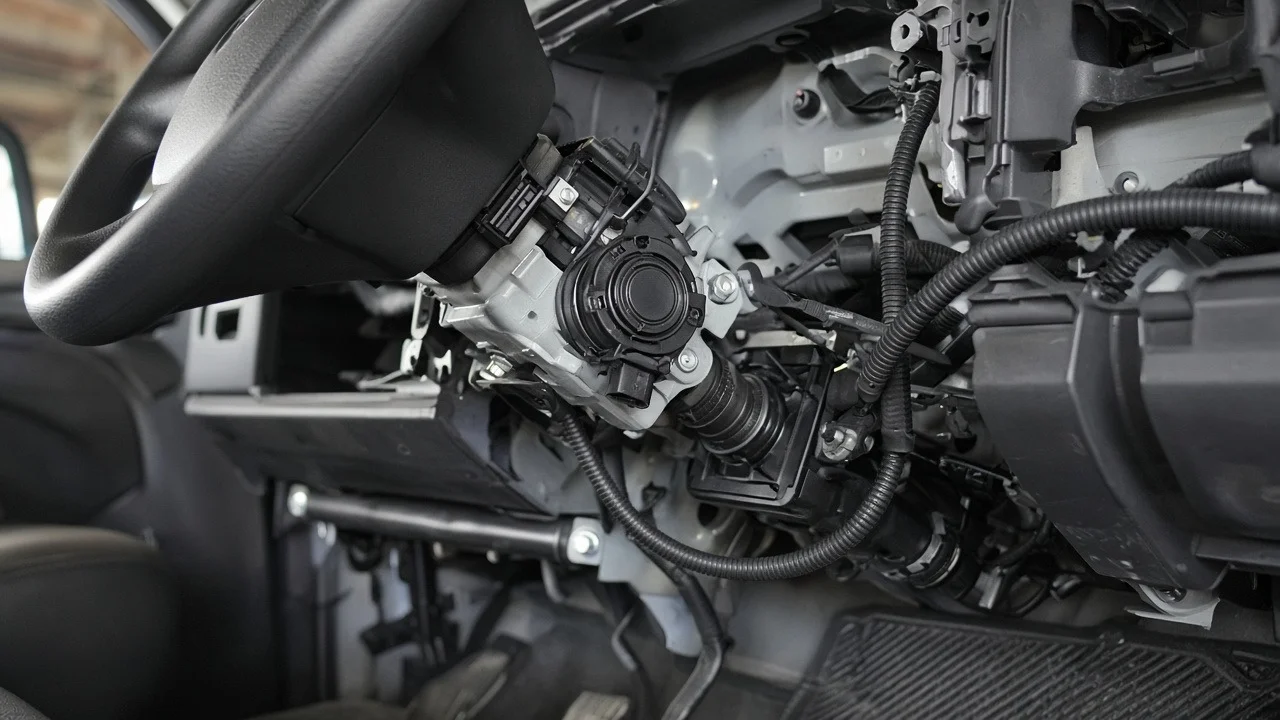
When the steering wheel position no longer matches what the stability control and brake systems expect, a Chevy Express can develop confusing warning lights or inconsistent assist behavior. Replacing the steering angle sensor is often the repair path, but the job is not simply swapping an electronic part. The full-size van’s steering column, wiring, and module calibration all affect whether the new sensor works correctly. Understanding how the sensor reports driver input, where it lives in the column, and why relearning is usually required helps owners avoid replacing good hardware and gives a realistic view of the repair before spending money.
Essential answer
The steering angle sensor measures the driver’s rotational input and converts it into a signal the electronic stability control, traction control, and sometimes the electric power steering system use to judge vehicle direction. On a Chevy Express, replacement generally requires access to the steering column area, careful handling of the clockspring if it is integrated, and a calibration or relearn procedure after installation. Simply removing the old sensor and bolting in a new one does not complete the job because the module must establish the straight-ahead reference before its data becomes useful.
A replacement is warranted when the original unit sends an erratic, missing, or implausible signal that cannot be corrected by learning the zero position or repairing damaged wiring and connectors. Because the sensor is often part of a larger steering column assembly on full-size vans, the exact replacement path can vary. Some applications allow the sensor to be serviced separately, while others may require swapping a column-integrated component. Checking the specific van configuration before buying parts is the most practical first step.