Chevrolet Tahoe 12V Battery Size and Replacement
The short answer
No single battery fits every Chevrolet Tahoe. The Tahoe has been built across several generations, and the correct 12V battery depends on the model year, the engine and the factory equipment. Equipment such as engine stop-start can require a specific battery type. The reliable way to choose a replacement is to match four things to your own truck: the group size, the terminal type and layout, the cold-cranking amp rating, and the battery construction (conventional flooded or AGM).
This guide does not include verified group-size or rating data for each Tahoe model year, market or powertrain. Confirm those details from the sources described below instead of relying on a generic answer for all Tahoes.
What to match when choosing a replacement
Group size: a standardized code for the battery case's length, width and height and the position of its terminals. The wrong group size may not fit the tray or hold-down clamp, and the cables may not reach. Terminal type and orientation: batteries use top posts, side terminals, or both. Positive and negative positions also vary. The replacement must match the cable ends on your truck. Cold-cranking amps (CCA): the current a battery can deliver at low temperature to start the engine. Choose a rating at least equal to the original equipment specification. This matters most if you live in a cold climate. Reserve capacity: how long the battery can power the electrical system if the charging system stops working. It is useful for comparing batteries of the same group size. Battery type: if the original battery is AGM (absorbent glass mat), replace it with an AGM battery. This is especially important on vehicles with stop-start, where a conventional flooded battery may wear out faster.
Where to find the correct specification for your Tahoe
The label on the battery currently installed, which usually shows the group size, CCA and type. This is only reliable if that battery is the correct original-equipment fitment and not an earlier mismatched replacement. The owner's manual or the official service information for your model year. A parts lookup that uses your vehicle identification number (VIN), which can account for engine and option differences that year alone may not capture. A dealer parts department, which can confirm the factory battery from your VIN.
If two sources disagree, for example a store lookup lists more than one group size for the same year, measure the battery tray and check the terminal layout before you buy. Do not assume either listing fits.
Replacing the battery: general procedure
The steps below are standard practice for a conventional 12V battery swap. Check your owner's manual or service information for anything specific to your Tahoe, such as the battery location, extra covers or a second battery on some configurations. Wear eye protection and gloves, and keep sparks and flames away from the battery.
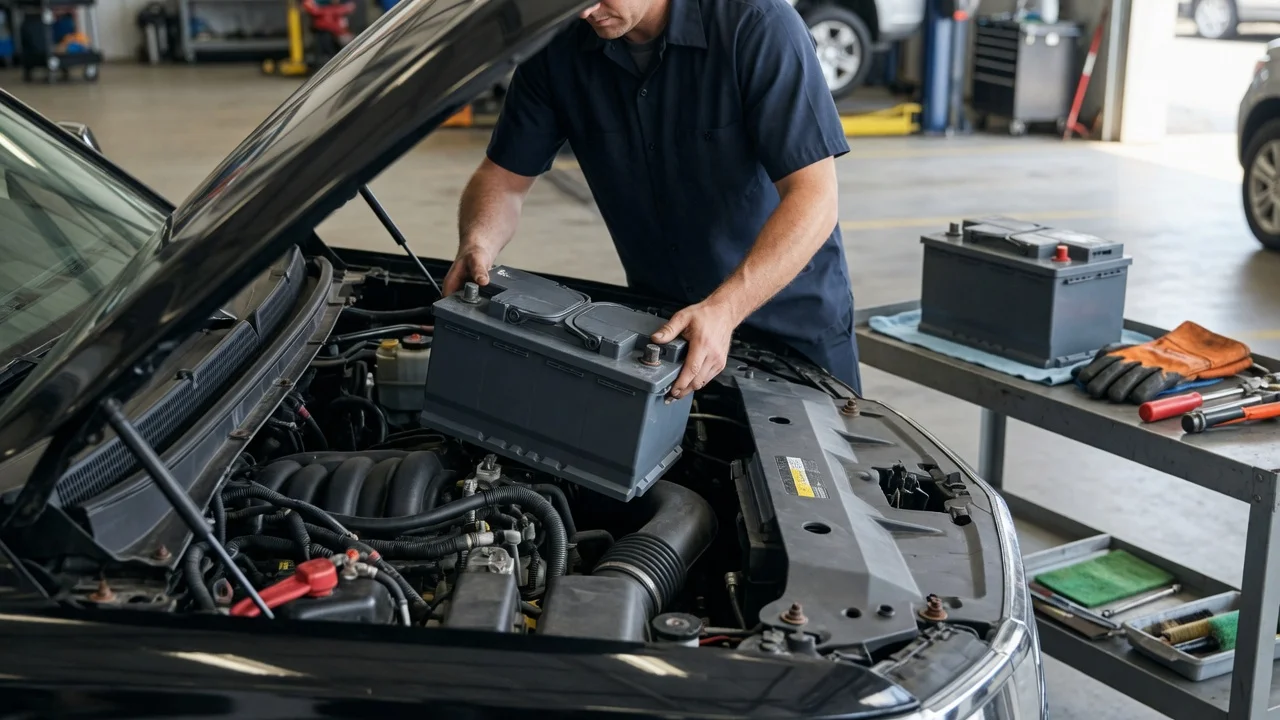
Turn off the engine and all accessories, and remove the key or move the keyless fob away from the vehicle. Disconnect the negative (black, minus) cable first, then the positive (red, plus) cable. Remove the hold-down clamp or bracket, then lift the battery out. Batteries are heavy, so lift with care. Clean the cable ends and the tray, and check for corrosion or damaged cables. Place the new battery in the same orientation as the old one and secure the hold-down. Connect the positive cable first, then the negative cable, and tighten both firmly. Start the vehicle and confirm it runs normally with no warning lights.
Disconnecting the battery can reset stored settings such as radio presets, the clock and some driver preferences. Some systems may need a short drive to relearn idle or other adaptive values. If keeping settings matters to you, ask whether a memory-saver device is appropriate for your vehicle. Return the old battery to a retailer or recycling point, because lead-acid batteries should not go in household waste.
When to get help instead
A shop or dealer is the better choice in these situations: the battery is hard to reach, your Tahoe has stop-start or other equipment that may need configuration after a battery change, or a new battery fails to fix starting or electrical problems. In that last case, the cause may be the charging system, the cables or a parasitic drain rather than the battery itself.