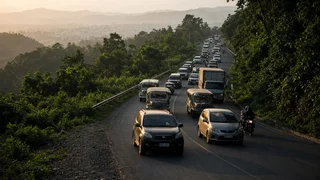
Check a traffic jam on Highway 280
A "traffic jam on Highway 280" usually describes a sudden slowdown rather than a fully stopped road, and the phrase most often points to the heavily traveled Interstate 280 corridor in New Jersey or the San Francisco Peninsula segment in California. Your location context matters because the same words produce very different driving conditions. The short answer is to treat the report as a query: if you have not yet entered Highway 280, check the delay before committing to the route; if you are already in it, manage forward visibility and following distance instead of relying on incomplete traffic information.
Essential answer
Checking a jam on Highway 280 means identifying whether the delay sits ahead of you or on a different branch of the corridor, then separating stopped traffic from merely heavy flow. The direct answer is not a single speed or travel time, because congestion shifts with merge points, collisions, construction zones and commuter load. Look at the direction of travel, the nearest exits, and the time of day before acting on the report. A delay near an interchange can clear temporarily while the queue simply moves upstream, so a one-time check gives only a snapshot.
Driver attention and road conditions shape the practical meaning of any network report. Road markings and right-of-way rules remain active even when traffic crawls, and visibility near curves, overpasses or wet pavement changes how much room you need. Treat a jam warning as a guide to reduce speed before reaching the back of the queue, not as permission to focus on a phone. On a divided limited-access route such as Highway 280, merging vehicles and sudden brake lights often create secondary stops that do not appear in the original alert.