Certified Pre-Owned Porsche 911: How to Find and Evaluate Offers
The Short Answer
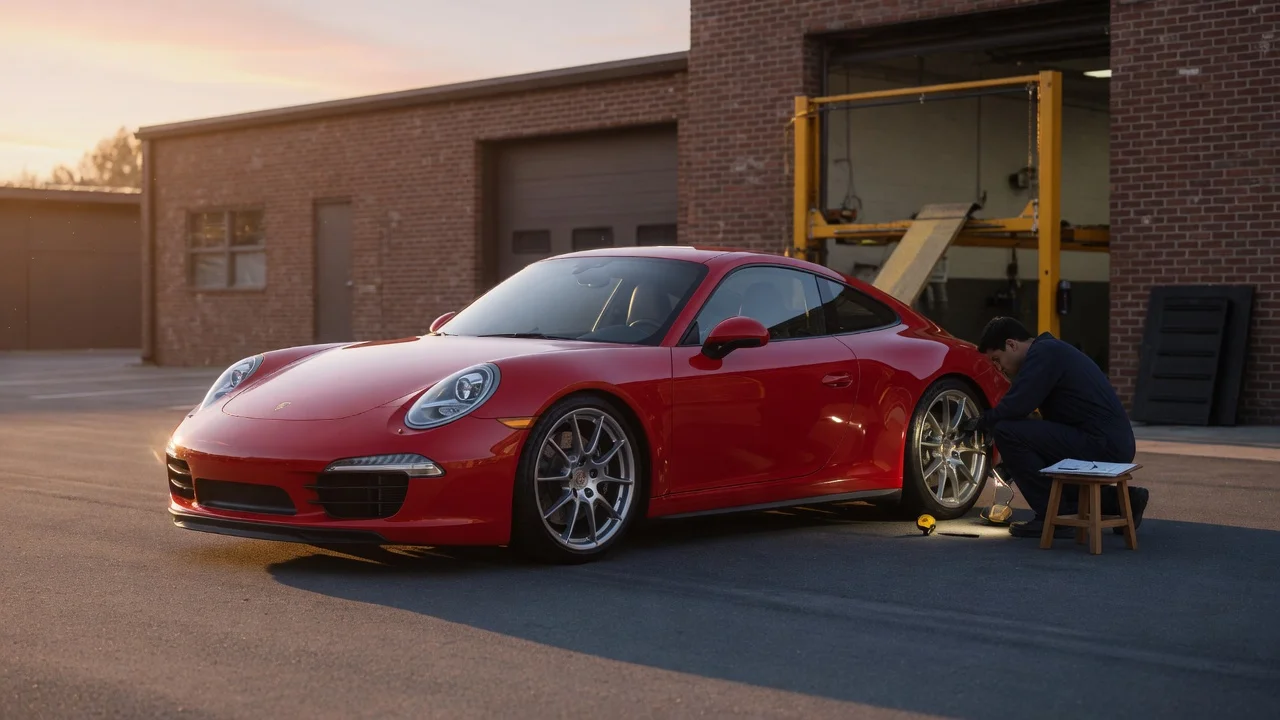
A certified pre-owned (CPO) Porsche 911 is a used 911 that has passed a manufacturer-defined inspection and is sold with a Porsche-backed warranty through an authorized Porsche dealer. In the United States the program is branded Porsche Approved Certified Pre-Owned. Other markets use similar names, such as Porsche Approved. To find one, search inventory at authorized Porsche dealers or through Porsche's own pre-owned search tools and filter for factory certification. To evaluate an offer, confirm the certification in writing, read the warranty terms, review the service and inspection records, check the vehicle history, and compare the price against similar cars of the same generation, trim and equipment.
One condition changes the answer: the word "certified" only means factory certification when the car is sold under Porsche's own program by an authorized dealer. A car that an independent dealer calls "certified" may carry only that dealer's inspection or a third-party service contract. That is a different product with different protections.
Eligibility limits, warranty length, deductibles and inspection scope are set by Porsche for each market and are revised over time. This guide does not state current figures for any market because none were verified for it. Confirm the terms in force where you are buying before you rely on them.
Key Terms
Factory or manufacturer certification: certification carried out under Porsche's own program, with a warranty backed by Porsche rather than by the selling dealer. Authorized dealer: a dealership franchised by Porsche to sell and service new Porsches. Porsche calls these Porsche Centres in many markets. Only these dealers can sell a car as factory-certified. Dealer-certified: a label an individual dealer applies based on its own inspection. It does not carry the manufacturer's program or warranty unless the dealer explicitly says so. VIN: the 17-character vehicle identification number. It identifies the specific car and is used to check history, recalls and warranty status. Generation: the 911 has been produced in successive generations known by internal codes. Recent ones include 996, 997, 991 and 992. The generation strongly affects engine design, equipment, typical issues and price. PDK: Porsche's dual-clutch automatic transmission, offered as an alternative to the manual gearbox on many 911 variants.
How to Tell a Genuine Factory-Certified 911 from Look-Alikes
Listings use "certified" loosely, so identify which kind of certification a car actually carries before you compare prices. Look for these cues:
Seller: the car is offered by an authorized Porsche dealer. A factory CPO 911 sold by a non-Porsche dealer or a private seller should be treated as unconfirmed until verified. Program name: the listing and paperwork use Porsche's official program name for that market, not a generic phrase such as "certified inspected" or "dealer certified."; Warranty document: the warranty is issued under Porsche's program and names Porsche as the warranty provider, not a third-party administrator or the dealer alone. Inspection record: a completed checklist from the certification inspection is available for that specific VIN. Verification: the dealer will confirm the certified status and warranty dates in writing, tied to the VIN.
Type of sale | Who backs the warranty | What to verify; Factory-certified (Porsche program) | Porsche, under program terms for that market | Program name, warranty start and end, coverage limits, deductible, transferability; Dealer-certified | The dealer or a third-party contract, if any | Who pays claims, exclusions, cancellation terms, whether a Porsche dealer will accept the contract; Ordinary used or private sale | Any remaining original factory warranty only | Remaining warranty by VIN, service history, independent inspection
If the car is still within its original new-car warranty, certification may extend or follow that coverage rather than start a separate warranty. How the two interact depends on the market and program version, so ask the dealer to show both end dates.
How to Find Certified 911 Offers
1) Decide on scope first. Choose the generation or generations, body style (Coupe, Cabriolet, Targa), drivetrain (rear-wheel drive or all-wheel drive "4" models), trim (for example Carrera, Carrera S, GTS, Turbo or GT models) and transmission (manual or PDK). These choices drive price more than mileage alone. 2) Search Porsche's official pre-owned inventory tools for your market and filter for factory-certified vehicles. Porsche's search covers participating authorized dealers. 3) Check authorized dealer websites directly. Some inventory appears there first or with more photos and equipment detail. 4) Widen the search area if your preferred specification is rare. Ask distant dealers about transport and whether certification and warranty apply across regions or borders. Program terms usually differ by country. 5) Save each candidate's VIN, mileage, price, listed options and the dealer's contact details so you can compare cars on the same basis.
How to Evaluate an Offer Step by Step
Before you start, have the VIN, the listing, and access to a vehicle history report service used in your market. Ideally, also line up an independent Porsche specialist who can carry out a pre-purchase inspection.
1) Confirm certification in writing. Ask the dealer to state that the car is factory-certified under Porsche's program and to give the warranty start date, end date or mileage limit, deductible, and whether coverage transfers to a later owner. Stop here if the dealer cannot or will not put this in writing; treat the car as an ordinary used car and price it accordingly. 2) Read the warranty terms, not just the summary. Note what is excluded. Wear items, cosmetic damage, damage from modification or misuse, and track use are common exclusion categories in vehicle warranties, but check the actual wording for the program you are buying under. 3) Request the certification inspection checklist for this VIN. Review what was checked, what was repaired or replaced during reconditioning, and whether any items were noted but not addressed. 4) Review the service history. Look for maintenance at the intervals Porsche specifies for that model, and note gaps in time or mileage. Ask whether the car has outstanding recalls and whether recall work has been completed. 5) Run a vehicle history report on the VIN. Check for reported accidents, title brands, odometer inconsistencies and the number of previous owners. A history report can miss events that were never reported, so use it alongside physical inspection. 6) Verify the equipment. Options strongly affect a 911's value. Compare the car's actual equipment with the listing, and ask the dealer for the factory equipment or option code list for the VIN. On many 911s option codes also appear on a data label and in the maintenance booklet, but locations vary by generation and market, so confirm with the dealer or the documentation for that car. 7) Research known issues for the specific generation and engine. Ask how the certification warranty treats them. Do not assume an issue documented on one generation applies to another; engine and transmission designs changed between generations. 8) Arrange an independent pre-purchase inspection if the dealer allows it. Certification reduces risk but does not replace a second opinion from a specialist working for you. Some dealers will permit an inspection on site or allow the car to be taken to a nearby specialist; ask before you commit. 9) Inspect and test-drive the car yourself. Check that warning lights extinguish after start-up, that the tyres match in brand and specification, and that the car drives, shifts and brakes smoothly. Stop the test drive and report it to the dealer if a warning light comes on, or if you notice brake, steering or overheating problems. 10) Compare price against like-for-like cars. Use the same generation, trim, transmission, body style, equal or similar mileage and comparable options. Expect certified cars to cost more than non-certified equivalents. Judge whether the warranty length and reconditioning work justify the difference. 11) Review the final paperwork before signing. The purchase agreement should identify the car by VIN, state its certified status, and include or reference the warranty. Check that no unrequested add-on products have been included.
Completion check: you are ready to buy when you have the dealer's written confirmation of factory certification, the warranty document with dates and terms, the inspection checklist, the service history, a clean or explained vehicle history report, and, if you arranged one, a satisfactory independent inspection report.
What This Guide Cannot Tell You
No verified program documents were available for this article. As a result, it does not state current age or mileage eligibility limits, warranty duration, deductible amounts, the number of inspection points, or typical price premiums for any market. These details vary by country and program version and can change. Confirm them with an authorized Porsche dealer or Porsche's official program information for your market before making a decision.