Car Smells Like Burning Transmission Fluid
A burnt odor inside the cabin often points to transmission fluid reaching a hot surface, where it degrades and releases an acrid, oily smell. Because the scent can resemble overheated engine oil or melting plastic, drivers may not recognize it immediately. Automatic transmissions, manual gearboxes, and CVTs all circulate fluid that must stay clean and within temperature limits. When that fluid is low, oxidized, or leaking onto exhaust components, the smell becomes a useful early warning. Identifying whether your car is burning transmission fluid helps determine if the symptom is a minor seep, an overheating condition, or a slipping transmission that needs prompt attention.
Essential answer
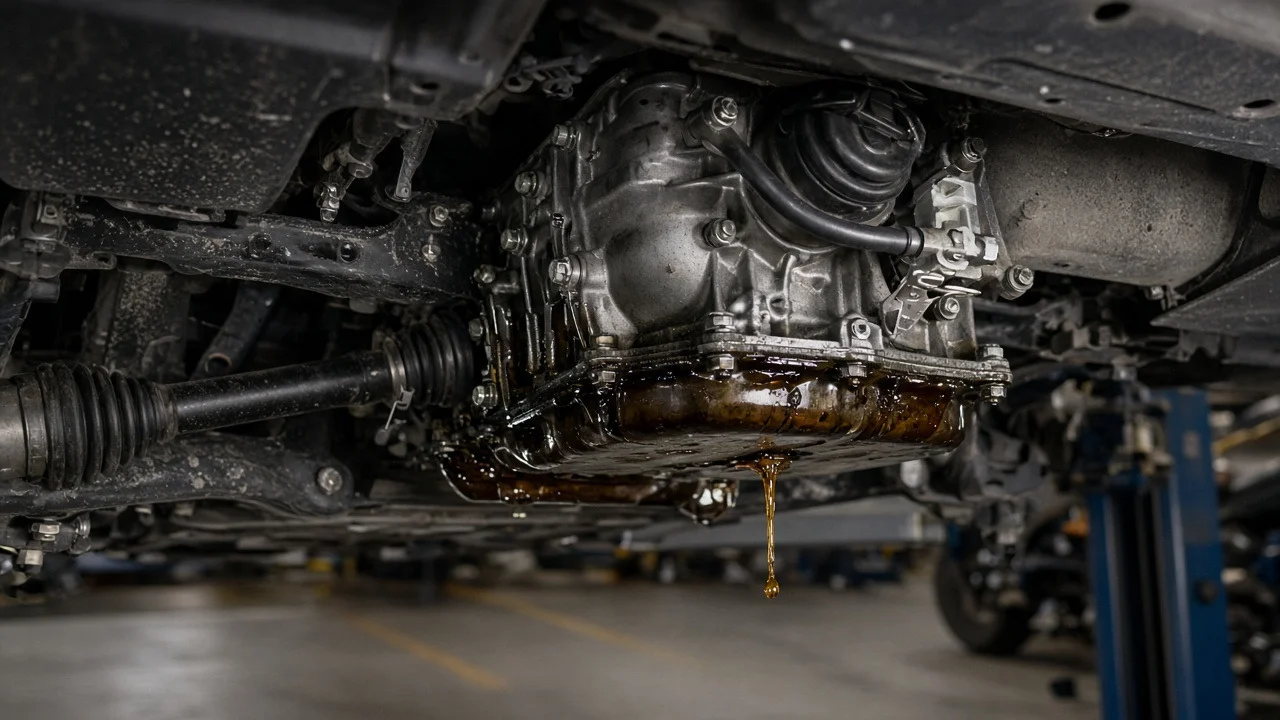
If your car smells like transmission fluid, the most likely explanation is that automatic transmission fluid, gear oil, or CVT fluid has escaped its sealed system and landed on a hot exhaust pipe, catalytic converter, or transmission housing. The heat causes the fluid to smoke without necessarily producing visible fire. This odor is often described as sweet, sharp, or similar to warm oil mixed with a chemical tang. A car burning transmission fluid should be treated as a sign of fluid loss first, not immediately as proof that the transmission itself has failed. The next step is to locate the source of the leak or overheating.
The exact cause depends on the transmission type and service history. A failing pan gasket, output shaft seal, cooler line, or axle seal can allow fluid to drip onto nearby components. In other cases the fluid remains inside the unit but overheats because of low level, heavy load, a restricted cooler, or slipping clutches. Diagnostic codes and shift behavior provide supporting clues, but a stored code alone does not identify which seal or hose is leaking. Manufacturer-dependent hydraulic circuits require vehicle-specific confirmation before assuming a particular part is at fault.