Car only starts with fuel sprayed into the throttle body
When a car will not fire on its own but starts after a small amount of fuel is sprayed into the throttle body, the observation points away from ignition and mechanical compression and toward fuel delivery. The engine can run briefly on the supplemental fuel because spark and base airflow are present. The real question is why the normal injector flow is missing, reduced, or mistimed during cranking. Understanding the difference between a cold-start enrichment problem and a complete fuel-system failure helps narrow the diagnosis before parts are replaced.
Essential answer
A car that only starts when gas is introduced through the throttle body is showing that the cylinders, spark timing, and intake passage can support combustion once a combustible mixture reaches them. The problem is usually that the normal fueling path is not supplying enough cranking fuel. In many cases the cause is low fuel pressure, an injector pulse that is absent or too short, or a coolant-temperature signal that prevents cold-start enrichment. The sprayed fuel bypasses that failed path and acts as a temporary substitute rather than a permanent repair.
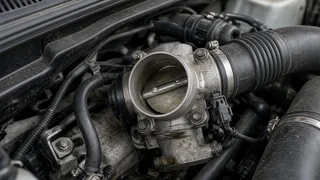
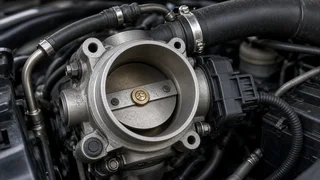
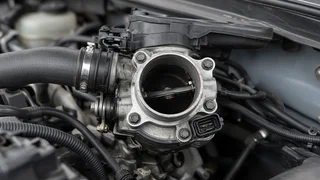
The throttle plate and idle adaptation are worth checking because they control how much air enters during a no-throttle start. If the position sensor sends an incorrect control signal, the engine computer may not command the expected cranking fuel. An air leakage in the intake boot or manifold can also lean the mixture beyond what the cold-start calibration can correct. Until the underlying fuel or signal issue is confirmed, adding starting fluid or gasoline through the intake only proves that combustion can occur when mixture strength is forced to a flammable range.