Car Key Fob Battery Replacement: How to Do It and What to Expect
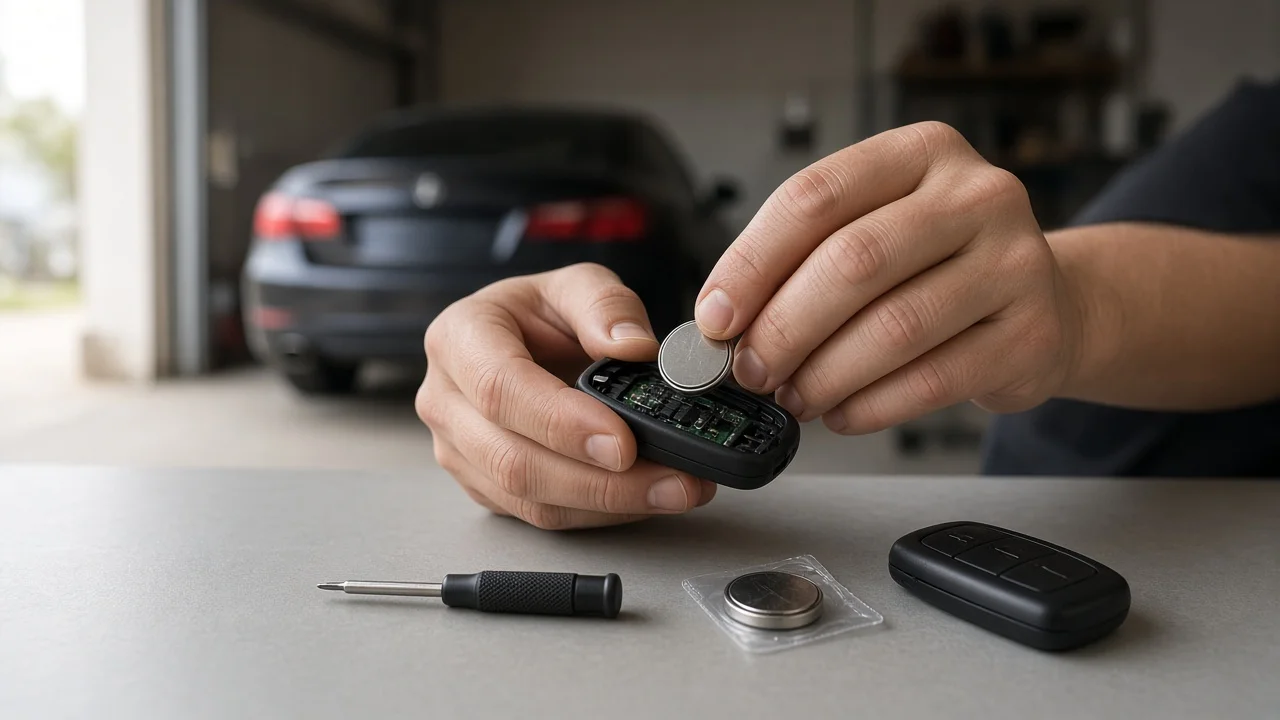
Car fob battery replacement is usually a simple job that most owners can do at home in a few minutes. Many key fobs run on a single lithium coin cell, and swapping it rarely requires reprogramming the key. The main qualifications are that battery type, case design and any resynchronization step vary by manufacturer, model year and key style. A fob that still fails after a fresh battery points to a different problem, such as damage to the remote transmitter or a programming issue.
What the fob battery actually powers
The car key battery powers the remote transmitter, the small radio circuit that sends lock, unlock, trunk and panic commands. On vehicles with keyless entry and push-button start, it also lets the car detect the fob nearby so you can open the doors and start the engine without pressing a button.
Most keys also contain an immobilizer transponder, a chip that the car reads before it allows the engine to run. On many vehicles this chip can be read at very short range without battery power, which is why a car may still start with a dead fob if you use the backup method described below. Replacing the battery does not normally erase the transponder or remote codes, because that data is stored in memory that does not depend on the cell.
Signs your car fob battery is getting weak
You need to stand closer to the car before the remote responds. Buttons work only after several presses. Some functions work while others, such as remote start, become unreliable. The dashboard shows a low key battery message, which many newer vehicles display. Keyless entry or push-button start intermittently fails to detect the key. The fob's indicator light is dim or no longer flashes when you press a button.
Range loss tends to be gradual, so replacing the battery at the first signs of weakness avoids being caught with a fob that stops working entirely.
How to identify the right car remote battery
The most reliable way to find the correct car remote battery is to open the fob and read the code printed on the existing cell. The owner's manual usually lists it as well. Common sizes in key fobs include CR2032, CR2025, CR2016 and CR1620, but the exact type depends on the vehicle and key design, so do not assume based on the brand alone.
Coin cell codes follow a standard naming pattern. The letters indicate the chemistry and shape, and the numbers give the size.
Part of code | Meaning | Example: CR2032; C | Lithium manganese dioxide chemistry | Lithium coin cell; R | Round cell | Round; First two digits | Diameter in millimeters | 20 mm; Last two digits | Thickness in tenths of a millimeter | 3.2 mm
Cells with the same diameter but different thickness, such as CR2032 and CR2025, may physically fit the same slot, but a thinner cell can make poor contact and a thicker one can stop the case from closing. Use the size specified for your fob.
How to replace a car key fob battery
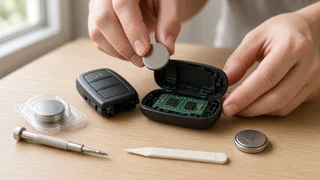
Fob designs differ, but most follow the same general sequence. Work on a clean, flat surface so small parts do not get lost.
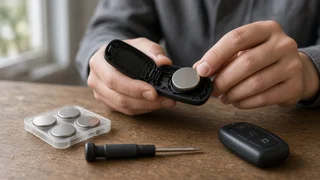
1) Remove the mechanical key if your fob has one. On many fobs, a release button or slider frees an emergency blade, and the slot it leaves often reveals the notch used to open the case. 2) Open the case. Depending on the design, this may mean prying the halves apart at a marked notch, removing a small screw, or sliding off a cover. A coin or plastic pry tool reduces the risk of scratching or cracking the housing. 3) Note the battery orientation before removing it. Most coin cells sit with the positive side, marked with a plus sign, facing a particular direction. 4) Lift out the old cell gently. Avoid bending the metal contacts or touching the circuit board more than necessary. 5) Insert the new battery in the same orientation, handling it by the edges so skin oils do not coat the contact surfaces. 6) Check any rubber seal or gasket is seated correctly, then snap or screw the case closed. 7) Test the lock, unlock and other buttons, and confirm the car starts normally.
Some fobs house the circuit board in a separate inner module inside the outer shell. If the case does not open easily, stop and check the owner's manual rather than forcing it, since broken clips can make the fob loose or allow moisture in.
Do you need key programming after a battery change?
In most cases, no. The remote and immobilizer codes are retained when the battery is removed. A small number of vehicles, often older ones, may require a brief resynchronization step, such as pressing a button several times near the car or cycling the ignition with the key. If the fob does not respond after a correct battery swap, check the owner's manual for a resync procedure before assuming the key needs professional programming.
Full key programming is a different job. It is typically required when you add a new or replacement key, not when you change a battery, and it usually needs dealer or locksmith equipment. Because programming a key grants access to the car, providers commonly ask for proof of ownership, such as registration or title along with identification.
What to do if the fob dies completely
A dead fob does not always mean you are stranded. Most vehicles with remote keys include a backup method, although the exact procedure depends on the make and model.
Unlock the door with the mechanical key. On some vehicles the keyhole is hidden behind a removable cap on the door handle. On many push-button start vehicles, holding the fob against the start button, or placing it in a designated spot in the console or steering column, lets the car read the immobilizer chip and start. On vehicles with a traditional ignition key, the car will usually still start because the immobilizer chip does not rely on the fob battery; only the remote buttons stop working.
Opening the door with the mechanical key may trigger the alarm until the car recognizes the key. If you cannot get in or start the vehicle, roadside assistance through your insurer, auto club or vehicle manufacturer program may be able to help, depending on your coverage.
When the problem is not the battery
If a new, correctly installed battery does not restore normal operation, other causes are more likely. A fob that has been dropped or exposed to water may have a cracked solder joint or corroded board. Worn button contacts can make one function fail while others still work. A weak or failing receiver in the car, interference from other radio sources, or a lost programming link can also cause symptoms that resemble a low battery. Testing the vehicle's spare key helps narrow it down: if the spare works, the fault is likely in the original fob; if neither works, the problem may be on the vehicle side.
DIY or professional replacement?
For most fobs, doing it yourself is straightforward, and coin cells are widely sold at general retailers and auto parts stores. Dealers, locksmiths and some battery or phone repair shops will also replace the cell, which can be worthwhile if the case is hard to open, the fob is expensive to replace if damaged, or you are unsure about the correct battery. A professional is the better choice when the fob still fails after a new battery, when the housing is broken, or when a new key needs programming.
Practical tips
Replace the batteries in both your main and spare fobs around the same time, since a spare sitting unused still loses charge over time. Buy cells from reputable sources and check the packaging date where available. Keep spare coin cells sealed in their original packaging until use. Store coin cells and opened fobs out of reach of children and pets. Swallowed lithium coin cells can cause serious internal injury, and swallowing one requires immediate medical attention. Recycle used lithium cells where local battery collection is available rather than placing them in household trash.
Bottom line
Replacing a car fob battery is usually a quick, low-risk task: identify the correct coin cell from the old battery or owner's manual, open the case carefully, match the orientation and test the key. Reprogramming is rarely needed, though some vehicles use a short resync step. If the fob still fails, or you are locked out with a dead key, use the mechanical key and backup start method first, then turn to a dealer, locksmith or roadside assistance.