Car interior repair cost
What interior repair usually costs
There is no single price for car interior repair. Cost depends on the damaged part, the material, whether a technician can restore the surface in place or must replace a cover, pad, or trim assembly, and how much labor the job takes. A small tear, burn, stain, or scuff is typically cheaper than replacing a whole seat, carpet set, dashboard, or door panel. Luxury materials, color-matched finishes, and parts that include airbags, heaters, motors, or sensors raise the bill. Exact figures were not supplied for this guide, so treat any quote as vehicle- and shop-specific rather than a national average.
Get a written estimate that splits parts, labor, and related work such as airbag handling or electronic calibration. Compare that estimate against replacing the damaged piece and against living with the damage if it is cosmetic only. Materially different answers apply when the damage is limited to fabric or vinyl, when a hard plastic panel is cracked, and when a safety component is involved.
What shops actually repair
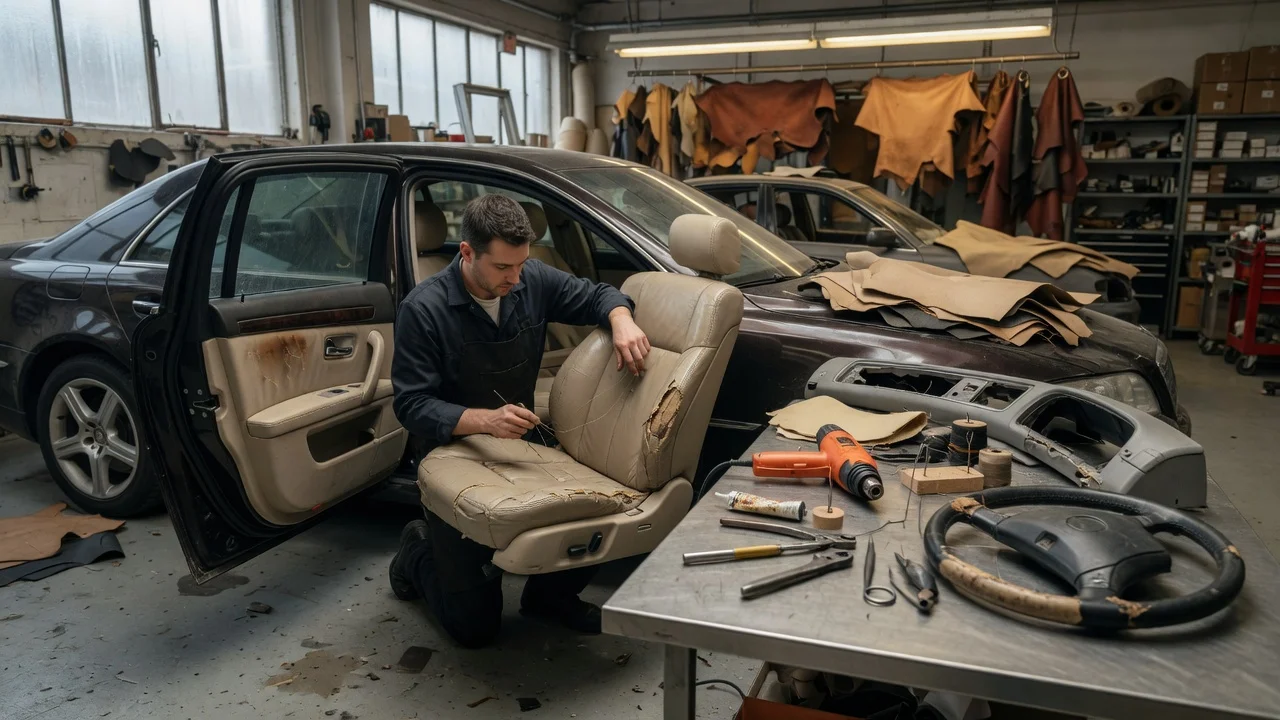
Interior work covers seats, carpets and floor mats, headliners, door cards, dashboards and instrument panels, center consoles, steering wheels, shift boots, and trim. Mobile interior repair and upholstery shops often restore cloth, vinyl, and leather in place with patches, dyes, fillers, or restitching. Dealers and body shops more often replace complete parts, especially when the piece is a molded plastic assembly or includes an airbag.
Common jobs and what usually drives their cost:
Seat fabric or leather tears, burns, and worn bolsters: repair is cheaper when the foam and frame are sound; a new cover, foam, or complete seat costs more, especially with heaters, airbags, or occupancy sensors. Carpet stains, burns, and water damage: cleaning or a patch can be enough for a small area; soaked padding, odor, or rusted floorpan work expands the job. Sagging or stained headliner: re-gluing fabric to the existing board is the usual path; a warped board or a board with sun visors, consoles, and wiring already attached is more labor. Cracked dash, console, or door panel: plastic welding or filler can hide a crack; a replacement panel must match color, grain, and any fitted switches, speakers, or airbags. Steering-wheel wear: leather wrapping or a replacement wheel; wheels with airbags, heating, and controls are sold as assemblies and need correct handling.
What changes the price
Labor time is often the largest share. Removing seats, a dashboard, or a headliner takes more hours than treating a visible tear with the part still in the car. Access is worse in tightly packaged cabins, and extra time is needed to photograph, bag, and reconnect electrical connectors so nothing is left unplugged.
Material and finish matter next. Cloth is usually simpler to patch or re-cover than perforated leather, Alcantara-style suede, or two-tone vinyl. Hard plastic with a specific grain and color is difficult to make invisible after a crack; a dye or filler repair can look acceptable from the driver’s seat and still show under raking light. Matching a faded original is harder than matching a recently refinished surface.
Parts policy then splits the quote. Some trim is sold only as a complete assembly. A door panel may include the handle, switches, speaker grille, and vapor barrier. A seat may include the frame, tracks, airbag, and wiring. If the damaged skin is not sold separately, replacement of the assembly is the only factory path, even when the underlying structure is fine. Aftermarket covers and used parts can lower that cost if they fit the model year, trim, and powertrain, including the correct airbag and sensor configuration.
Cost driver Why it moves the quote; In-place repair vs replacement Repair uses less part cost; replacement adds OEM or used-part price plus removal and fitment time. Cloth, vinyl, leather, or plastic Soft materials can often be patched or dyed; cracked molded plastic is harder to hide and may force a new panel. Safety and electronics Airbags, seatbelt pretensioners, occupancy sensors, heaters, and motors add parts, handling rules, and sometimes programming. Color, grain, and fade A blend into surrounding trim takes skill; a mismatch is cheaper but visible. Vehicle and trim Luxury, limited, or older interiors may have scarce covers and long parts lead times. Shop type Mobile interior repair, upholstery shop, body shop, and dealer quote different labor rates and different repair-versus-replace habits.
Repair, replace, or re-cover
Repair the existing surface when the structure underneath is intact, the damaged area is small, and a close color match is acceptable. This is the usual path for cigarette burns, small cuts, scuffs, and localized staining.
Replace the part when the plastic is shattered, the foam has collapsed, the carpet padding is rotten, or the piece includes a deployed or compromised airbag. Replacement is also the cleaner path when several adjacent panels are damaged, because one repaired panel next to unrestored trim still looks uneven.
Re-cover or reupholster when the foam and frame are usable but the skin is worn across a large area, such as driver’s-seat bolsters. A new cover can outlast a patch on a seat that is already thinning. Confirm that the cover is specified for that model year, market, and seat option, including side airbags and heating elements, before paying for the job.
Safety parts change the decision
Seats, steering wheels, dashboards, and some door panels can contain airbags or sensors. A torn seat side bolster is not only a fabric problem if an airbag module sits behind it. Do not cut, glue, or heat an airbag cover. If a warning lamp is on, if the bag has deployed, or if the trim over a module is damaged, have the vehicle inspected by a shop that can confirm the system is intact. A diagnostic code or warning lamp points to a system to test; it does not by itself prove that a cover, module, or sensor must be replaced.
How to get a quote you can use
Photograph the damage in daylight, including a wide shot of the whole cabin area and a close shot of the defect. Note the vehicle year, make, model, trim, and any seat or interior packages. Tell the shop whether the foam, frame, or backing is soft, rattling, or wet, not only that the surface is torn. Ask whether the quote is for a cosmetic blend, a structural repair, or a replacement part, and whether used, aftermarket, or original-equipment parts are included.
Ask the estimator to put these items in writing:
Parts versus labor, listed separately. Whether color and grain matching is included, and whether the surrounding panel will be dyed. Whether seats, trim, or the headliner must come out. Whether airbag, heater, or sensor work is included, and who is responsible if a warning lamp appears after the job. Warranty on materials and workmanship, including dye transfer and peeling.
Insurance, wear, and who pays
Collision or vandalism damage may be an insurance claim if coverage applies and the deductible is lower than the repair. Everyday wear, pet damage, spills, and sun fade are typically paid by the owner. If you are claiming through insurance, wait for the adjuster’s scope before authorizing extra re-dyeing or upgrading materials, because those extras may not be covered.
Choosing a next step
If the damage is a small surface defect on cloth, vinyl, or leather and no warning lamps are on, start with a mobile interior repair or upholstery quote for an in-place fix. If a hard panel is cracked, get both a plastic-repair quote and a replacement-part quote. If an airbag cover, seat side, steering wheel, or dashboard module area is involved, stop cosmetic DIY work and have that system inspected first. Use the written split of parts and labor to decide among repair, used replacement, and new replacement rather than comparing a single lump-sum number from one shop.