Car door repair cost
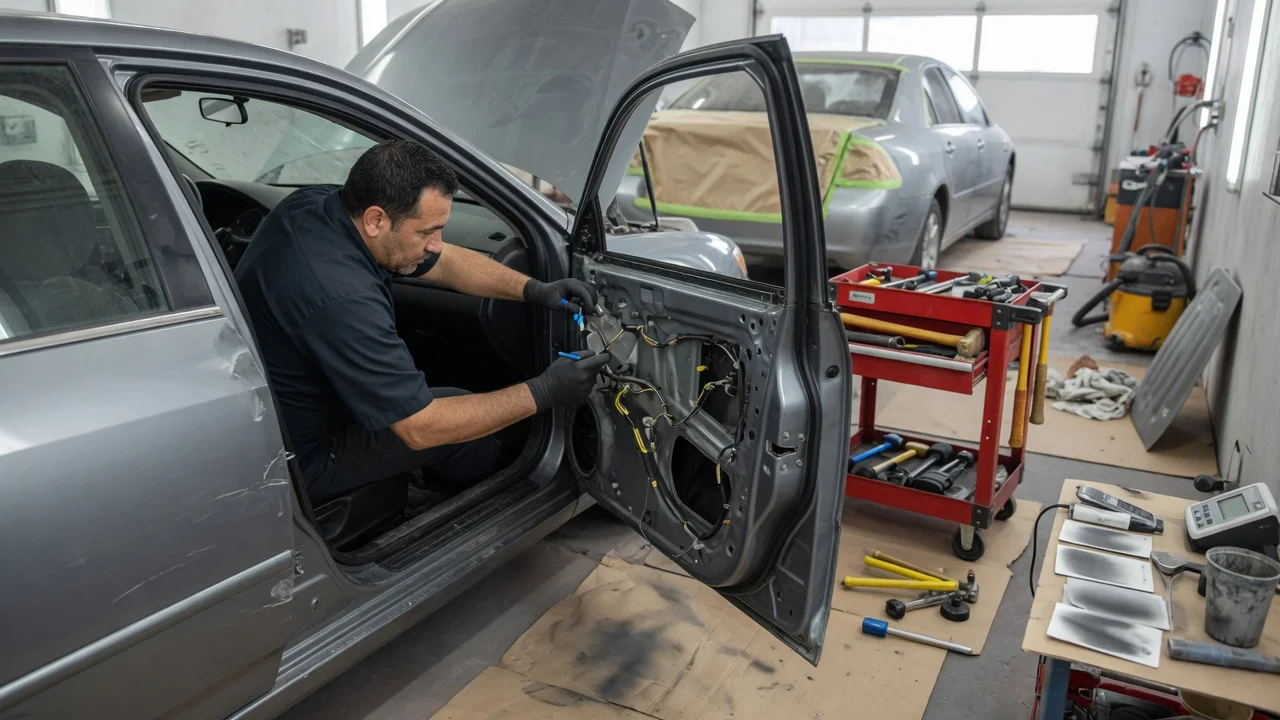
What a car door repair costs
There is no single price for a car door repair. The bill depends on the kind of damage or failure, whether the existing door can be restored or must be replaced, how much paint and blending the job needs, labour rates in your area, and the vehicle’s make, model year, trim and market. A shop estimate on the actual door is the only figure you can use to decide. Published ranges, forum anecdotes and parts-catalogue list prices do not replace that quote, and this article does not assign dollar amounts.
Two conditions change the answer in a material way. A mechanical fault on an otherwise sound door—window regulator, lock actuator, handle, latch or wiring—is usually a parts-and-labour job that leaves the outer skin in place. Collision, rust-through or a bent door shell that no longer seals or aligns is a body-repair or full-door replacement job, and paint plus adjacent-panel blending often becomes the largest share of the total.
What drives the bill
Cost is a mix of diagnosis, parts, bodywork, refinish and related operations that only show up after the door is opened or removed. Ask the estimator to separate those lines so you can see which items are required for your vehicle and which are optional.
Type of work: paintless dent repair, conventional bodywork, rust repair, glass, hardware, or complete door replacement. Whether the inner structure, intrusion beam, hinges or latch striker is distorted. A wrinkled shell or a door that will not close flush usually points to replacement rather than skin repair. Paint system, colour, and how far the refinish must blend into the fender, quarter panel or adjacent door for a match. Three-stage, pearl and some factory colours cost more to match than a solid single-stage colour. Parts source: original-equipment, aftermarket or a used door from a matching year, market and trim. Fit, corrosion protection, wiring connectors and crash hardware can differ across those sources. Labour: removal, alignment, glass and regulator transfer, wiring, weatherstrip, interior trim and road test. Luxury, aluminium or tightly packaged doors take longer. Related damage: side-mirror glass or motor, impact sensor, door harness, speaker, run channel and belt moulding. These are easy to miss until the panel is off. Vehicle specifics: model year, market, trim, powertrain-adjacent options such as keyless entry, soft-close, power sliding doors or laminated glass change both parts and procedure.
Common jobs and what they involve
Match the estimate to the actual fault. A door that looks fine but will not lock, drop the window or sit on the striker is a different job from a creased outer skin.
Job Typical scope What usually changes the cost; Paintless dent repair Small, accessible dents with intact paint Panel access, aluminium skin, previous refinish, or a crease that will not massaged out; Conventional dent and refinish Fill, straighten, prime, paint and blend Blend into neighbouring panels, colour type, and whether the inner door needs work; Rust repair Cut out, weld or section, treat, refinish How far rust has travelled into the frame, sill or hinge pillar; Window regulator or motor Trim panel off, regulator or motor replaced, glass reset Cable versus scissor design, seized glass, and whether the door module must be coded; Lock, latch or handle Actuator, latch, cable or handle replacement Keyless, alarm and soft-close hardware; used versus new coded parts; Hinge, alignment and striker Adjust, shim or replace hinges and striker Bent hinge pillar or a door that dropped after a side impact; Glass only Door glass, run channel or weatherstrip Laminated or acoustic glass, and whether the regulator must come out; Complete door replacement New, aftermarket or used door, then transfer glass, trim, harness and hardware, then paint and align Paint, donor match, airbag or impact-sensor wiring, and corrosion on the replacement shell
Repair the existing door or replace it
Repair is usually the path when the inner structure is straight, the door opens and latches, paint is intact or locally repairable, and the fault is a dent, chip, regulator, lock or trim piece. Replacement is the path when the shell is creased through the intrusion beam, the door will not gap evenly around the opening, rust has opened the structure, or the combined bodywork and refinish on the original door exceeds a sound replacement plus paint.
A used door can lower the parts line if you match year range, market, colour code, wiring and crash equipment. It still needs alignment, often a full refinish, and a transfer of glass, regulator, harness, mirrors and interior trim. A new painted door avoids unknown collision history and hidden rust, at a higher parts price. Aftermarket shells vary in fit; confirm hinge and striker alignment and that side-impact hardware is present before you commit.
Paint, gaps and work you cannot see from the kerb
Refinish often outweighs the metalwork. Factory colour is mixed to a code, then blended so the repair does not leave a visible edge on the fender or neighbouring door. Skipping the blend saves money and is more likely to show. Clearcoat, interior jambs and the door edge add time if those surfaces were scuffed in the incident.
A door that closes but sits high, low or proud of the quarter panel still needs hinge and striker work after the skin is straight. Misalignment wears weatherstrip, lets in wind noise and water, and can keep the latch from fully engaging. Water leaks after a regulator or glass job usually point to a disturbed run channel, vapour barrier or drain hole, which belongs on the same invoice if the shop opened the door.
Power windows, locks, mirrors and side airbag or impact sensors share the door harness. A side impact can crush a connector or the module inside the door even when the outer skin looks minor. Confirm that warning lamps, window travel and lock cycling are checked after the repair; a stored diagnostic code is a clue to test the circuit, not by itself proof that a module must be replaced.
Insurance, deductible and paying yourself
Collision or comprehensive cover may pay for impact, vandalism or storm damage after the deductible. A small dent or a single hardware failure is often cheaper to pay directly than to file, especially if the repair sits near the deductible or you expect the claim to affect future premiums. Ask the insurer how the estimate will be written—repair versus replace, aftermarket versus original-equipment parts, and whether betterment applies to wear items such as weatherstrip.
If the door is a safety item—latch will not hold, window drops into the opening, or a crash sensor is damaged—treat continued driving as a separate decision from the cost. A door that will not stay shut, or glass that will not stay up, is a reason to stop using that entrance until it is secured.
How to get a quote you can act on
Take the vehicle to a body shop for skin, rust, alignment or replacement work, and to a general or mobile technician for regulator, lock and handle jobs that leave the shell alone. Give the year, market, trim, paint code and a clear description of what failed. A photograph of the inner door with the trim panel off helps a remote parts quote; it does not replace a hands-on gap and latch check.
Ask for a written breakdown: diagnosis, parts, labour hours, refinish, blend, alignments, glass, hardware transfer and consumables. Confirm parts type: original-equipment, aftermarket or used, and whether paint is included. Require a colour-code match and a statement of which neighbouring panels will be blended. Have the shop cycle the window, locks, mirror and courtesy lamp, and check for warning lamps, before you collect the car. If two quotes disagree on repair versus replace, compare the inner-structure findings, not only the bottom line.
Specific local prices, parts availability for a given VIN, insurance payout and labour times are gaps until a shop inspects that door. Use the estimate, the repair-versus-replace finding and the condition of the inner structure to choose the next step: authorise a mechanical repair on the existing door, approve bodywork and paint, source a replacement shell, or open an insurance claim.