Car door hinges repair: bent or wind-damaged hinges
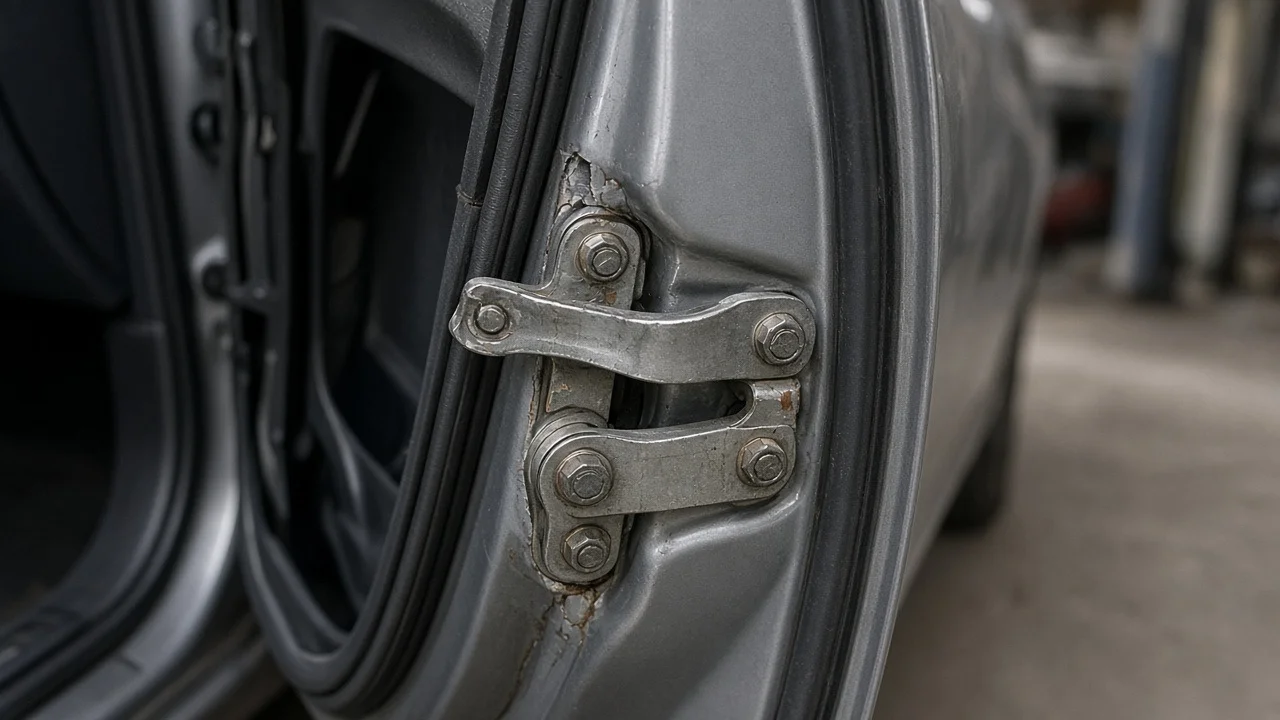
A car door that drops, binds, or refuses to close squarely usually points to hinge trouble rather than a latch fault. Wind can whip a door open hard enough to bend the hinge, its mounting pad, or the attaching bolts, especially on long two-door panels. Car door hinges repair covers inspection, realignment, replacement of worn bushings or pins, and correcting bent or wind-damaged hinges so the door seals properly again.
Essential answer
Car door hinges repair can mean tightening loose fasteners, replacing a worn pin and bushing set, or correcting bent hinges and mounting surfaces after wind damage. A sagging door that must be lifted to latch usually has wear at the hinge pivot, while a door pushed past its normal opening arc often shows deformation at the hinge strap or A-pillar area. The right fix depends on whether movement is loose, stiff, or visibly offset.
Wind-damaged hinges often need more than adjustment because the sheet metal around the hinge can stretch or tear before the hinge itself bends. If the door closes too high or too low at the striker, or the gap at the front edge changes sharply, the hinge geometry has shifted. Repair may require realigning the door, replacing the damaged hinge, or having body dimensions checked before new hardware is fitted.
Diagnosing a problem
Start by supporting the door and watching each hinge as the panel is raised slightly. Movement between the hinge pin and its bushing means the pivot is worn, producing a clunk or vertical play. If the hinge body moves while its bolts stay still, the bushing or pin is loose. If the entire hinge moves against the door face or body pillar, the fasteners or mounting surface may be distorted, especially after a wind gust yanked the door open.
Next check the latch and striker relationship. A door that shuts hard against the striker but still rattles may be sagging from hinge wear, not a misadjusted latch. Gently operate the door while watching the gap at the rocker, fender, and roof line. Wind damage often creates a forward or rearward shift that weather seals cannot hide, leading to wind noise or water entry until the hinge alignment is restored.