Car Body Repair Jack: Choosing the Right Tool
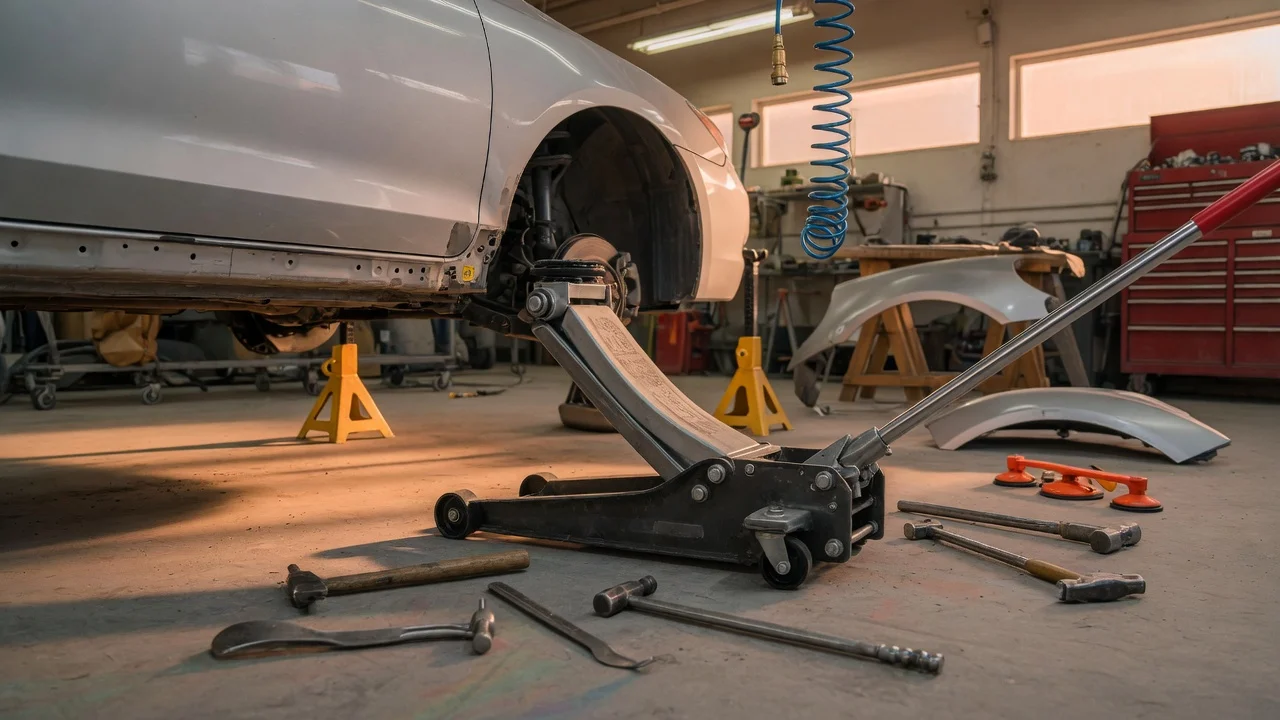
A car body repair jack usually means a portable hydraulic ram kit used to push or spread damaged bodywork during collision repair. If you need to raise a car for access underneath, you need a vehicle lifting jack and suitable supports instead. Choose the tool according to the repair task; a body repair ram is not a substitute for a lifting jack or a complete structural repair system.
What a body repair jack does
A typical kit combines a hydraulic pump, hose and ram with extensions and contact attachments. Hydraulic pressure extends the ram, applying force between two contact points. Depending on its approved attachments, the kit can help push displaced metal or spread an opening. Pulling requires equipment specifically designed and rated for pulling; do not assume a pushing ram can do both.
Match the equipment to the damage
For a cosmetic dent in an outer panel, dent repair tools or panel repair may be more appropriate than a hydraulic ram. Damage affecting structural members, suspension mounting points or the shape of a door opening requires assessment against the vehicle manufacturer’s repair procedures. A portable ram alone cannot establish whether the body is correctly aligned or whether a damaged component may be straightened.
What to check before choosing a kit
Check the required force, the space available for the retracted ram, its travel and the contact attachments needed for the job. Ram travel means how far it extends. A higher force rating does not by itself make a kit suitable: the tool must fit, and both contact points must withstand the load without slipping or causing further damage.
Use the kit manufacturer’s ratings for the complete configuration. Extensions and attachments can have different limits from the ram itself. Replacement hoses, couplings, pumps and attachments must be approved as compatible; matching appearance or connector fit is not enough.
Safe use and the next step
Follow the equipment instructions for setup, inspection and loading. Keep people clear of the force path, where a slipping attachment or moving panel could strike them. Stop if the tool slips, a hose leaks or a contact point begins to collapse. Never work beneath a vehicle supported only by a jack; use suitable supports at the vehicle’s specified support points.
No vehicle details, damage assessment or kit specifications were supplied, so a particular capacity, attachment set or repair method cannot be recommended. Before buying, identify the damaged area and the vehicle’s model year, market and body construction, then check the applicable manufacturer repair procedure. For structural collision damage, have a qualified body repair shop determine the required measuring, anchoring and repair equipment.