Car Battery Problems in Hot Weather
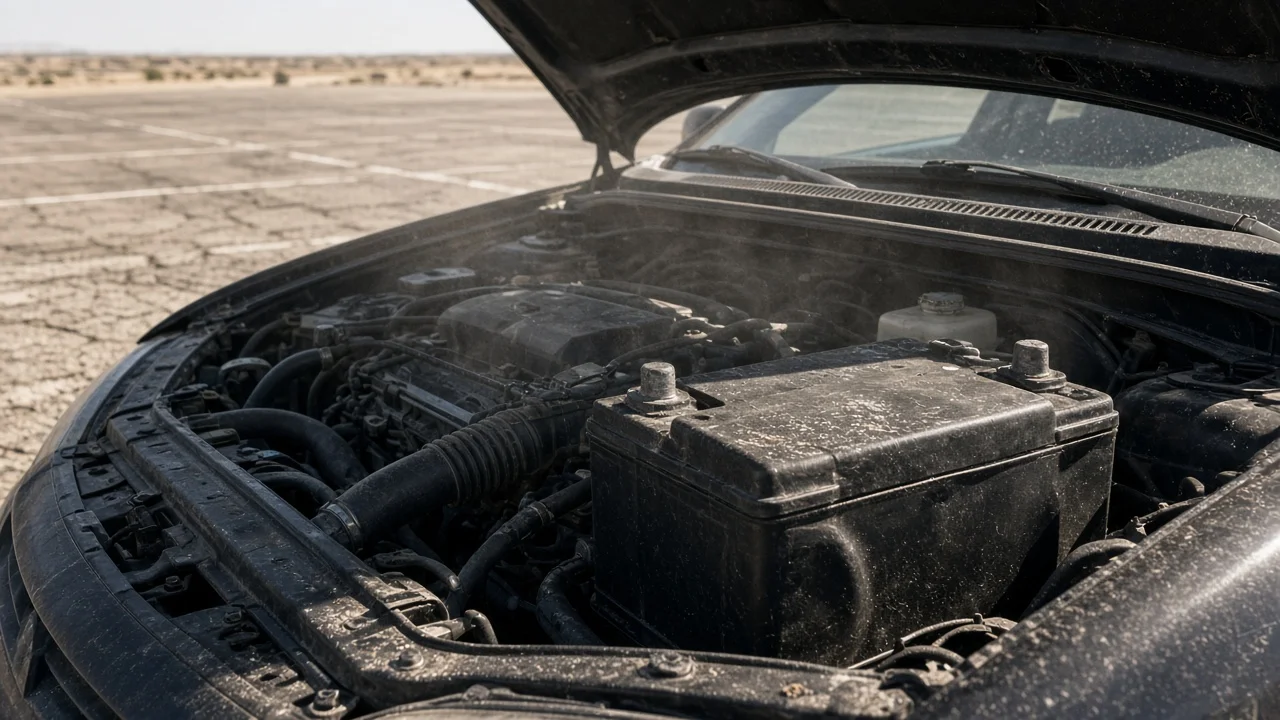
High ambient heat places unusual stress on a vehicle’s electrical system, and the battery often reveals that strain first. When temperatures climb, the chemical reaction inside a lead-acid battery accelerates, which can increase self-discharge and water loss while the underhood environment adds thermal load. A driver researching car battery problems hot weather may notice slow cranking, swollen case sides, a sulfurous odor, or repeated no-start events after short trips. These symptoms do not always mean the battery is defective. Heat exposure, charging output, mounting location, and accumulated sulfation all interact, so the same warning sign can point toward several causes. Understanding how heat changes battery behavior helps separate a weakened unit from a correctable system voltage or connection issue.
Essential answer
Hot weather can shorten battery life and expose marginal electrical health even though cold cranking gets more attention. Heat raises the rate of internal corrosion and water consumption, especially in conventional flooded batteries under a hot hood. A battery that performed adequately through spring may lose reserve capacity during a summer heat wave, producing sluggish starts after heat soak. The essential answer is that high temperatures reveal and accelerate battery problems rather than creating one simple failure. Observable checks around battery terminals, case condition, and charging output help separate heat-related aging from a loose connection or undercharging alternator response.
The scope is broader than a dead battery on a ninety-degree day. Repeated exposure to engine bay heat can warp plates, increase parasitic draw sensitivity, and cause electrolyte loss through venting. Short drives with heavy electrical loads may leave the battery undercharged, while a hot charging system can reduce effective voltage. Because battery chemistry is temperature-dependent, a reading that looks normal in mild weather may be misleading after heat soak. Drivers should treat slow hot cranking, visible case distortion, or terminal corrosion as evidence for electrical inspection, not automatic proof that the battery must be replaced.
Diagnosing a problem
Begin with the battery terminals and main cable connections before condemning the battery itself. Heat promotes oxidation and loosening, so a voltage drop across a corroded clamp or poor ground can mimic a weak cell. After the vehicle has been off and stabilized, inspect the case for bulging, cracks, or moisture near the vent caps. A swollen case often indicates excessive heat and overcharging, while a hot battery surface right after driving points to underhood heat soak. Clean, secure terminals should be confirmed before load testing, because a good battery connected through a poor terminal can produce slow cranking and low system voltage on startup.
A no-start after a heat-soaked engine may also come from excessive parasitic draw or a charging output that drops when the alternator is hot. If the engine cranks slowly only when warm, heat-related resistance in the starter circuit or a battery with reduced reserve capacity is plausible, but a fault code is only a starting point for diagnosis, not proof of a failed part. Manufacturer-dependent codes and charging strategies require vehicle-specific confirmation. Stop driving and seek professional diagnosis if the battery case is visibly deformed, leaking, or extremely hot to the touch, because continued charging in that state can create a safety hazard.