Car Battery Delivery and Installation: What AutoZone, Advance Auto Parts and Mobile Services Typically Offer
The short answer
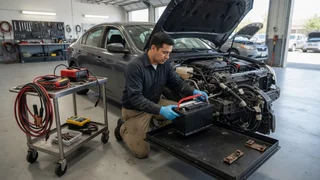
Major US parts chains such as AutoZone and Advance Auto Parts commonly install a battery at no extra charge when you buy it from them and the job can be done in the parking lot with basic hand tools. That is the usual arrangement, not a guarantee. Whether a particular store will install your battery depends on the vehicle, the battery's location, local store policy, staffing and the weather. If your battery sits under a seat, in the trunk, behind a wheel-well liner, or requires removing other parts or electronic registration afterward, the store may decline and suggest a repair shop. Call the specific store, give your year, make, model and engine, and ask directly whether they can install it.
If you cannot get the car to a store, a delivery-and-installation service is the alternative. This can come from a mobile mechanic, a roadside assistance provider, a battery-specialist service or, in some areas, a retailer partnership. These services bring the battery to you and fit it on site, usually for a fee or a higher battery price than a counter purchase.
How in-store installation usually works
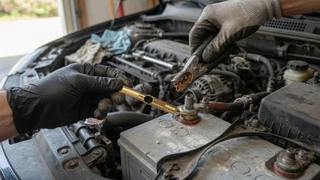
At a parts store, the typical sequence is: the staff test your existing battery and often the charging system, look up the correct replacement for your vehicle, and then swap it in the lot if you buy the new battery there. The old battery is handed in as a core, which means it is returned for recycling and usually offsets a core charge added to the purchase. Installation is generally a courtesy tied to the sale rather than a standalone paid service, so stores typically will not fit a battery you bought elsewhere.
What to expect at the counter: • A battery and charging-system test, often free, to confirm the battery is actually the problem; • A lookup by year, make, model and engine to match group size and specifications; • Installation in the parking lot if the vehicle is a straightforward swap; • A core charge that is refunded or waived when you return the old battery; • Warranty registration tied to your receipt or account
When a store may not install the battery
Store staff are generally limited to quick swaps that need only hand tools and minimal disassembly. The following situations often fall outside what a store will do, and they vary by store, so treat them as reasons to call ahead rather than fixed rules.
• The battery is mounted under a seat, under the rear floor, in the trunk or behind interior trim; • Reaching the battery requires removing an air intake, wheel, fender liner, cowl panel or other components; • The vehicle needs the new battery registered or coded to its battery management system after installation; • The battery is a hybrid or electric vehicle high-voltage pack rather than the 12-volt auxiliary battery; • The terminals or hold-down hardware are badly corroded, seized or broken; • There is no qualified staff member available at that moment, or conditions are unsafe
Battery registration is worth understanding because it affects many newer vehicles. Some cars use a battery management system that adjusts charging based on the battery's age and type. After a replacement, the system may need to be told a new battery is fitted, using a scan tool. Skipping this step on vehicles that require it can lead to incorrect charging and shorter battery life. Requirements depend on the manufacturer, model year and equipment, so check your owner's manual or ask a dealer or independent shop before assuming a simple swap is enough.
Delivery and installation services compared
If your car will not start and you have no jump-start option or second vehicle, getting to a store is the problem, not the installation itself. Options differ mainly in convenience, cost structure and how well they handle complex installations.
Option | Typical strengths | Things to check; In-store at a parts chain | Testing and installation usually included with purchase; wide stock | Car must reach the store; complex installs may be declined; Mobile mechanic | Comes to you; can often handle harder-to-reach batteries and registration | Service or call-out fee; confirm battery brand, type and warranty; Roadside assistance provider | Fast response if you are already a member; may test and replace on site | Coverage area, membership terms and battery pricing; Dealer or independent repair shop | Handles registration, trunk or under-seat batteries and diagnosis | Usually higher labor cost; may need a tow or jump to get there; Self-installation | No labor cost; works anywhere | Needs correct tools, safety care and possibly registration equipment
What to check before you buy
Whichever route you choose, the battery itself has to match the vehicle. Fitment and specifications can differ between model years, trims, engines and markets for the same model name, so always look up the battery using the full vehicle details rather than the model name alone.
• Group size: the standardized case size and terminal layout; the wrong size may not fit the tray or hold-down; • Terminal position and type: polarity orientation must match so the cables reach without strain; • Cold cranking amps (CCA): the battery's ability to start the engine in cold weather; meet or exceed the vehicle's requirement; • Reserve capacity: how long the battery can run essential electrical loads if the alternator stops charging; • Battery type: flooded (conventional), enhanced flooded (EFB) or absorbent glass mat (AGM); vehicles with start-stop systems often require EFB or AGM, and downgrading to a conventional battery can cause problems; • Warranty: free-replacement period versus prorated period, and whether claims require the original receipt; • Manufacture date: a battery that has sat on a shelf for a long time may have lost some charge
Make sure the battery is really the problem
A dead battery is often a symptom rather than the cause. If the alternator is not charging properly, or something in the car draws power while it is parked (called a parasitic draw), a new battery can go flat again within days or weeks. This is why a charging-system test before purchase is useful. Signs that point beyond the battery include a battery or charging warning light while driving, dimming lights at idle that brighten with engine speed, repeated dead batteries despite a recent replacement, or a whining noise from the alternator area.
If a test shows the battery is healthy but the charging system is weak, replacing the battery will not fix the problem. In that case, the next step is diagnosing the alternator, belt, wiring or a parasitic drain, which is usually work for a repair shop rather than a parts-store lot.
Preparing for the installation
• Have your year, make, model, engine and trim ready, or your VIN; • Find any radio or navigation security code in case the system locks after power is disconnected; • Expect clock, radio presets, power-window auto functions and some seat or mirror memory settings to reset; • Ask whether a memory-saver device will be used to keep settings during the swap; • Bring or plan to return the old battery so the core charge is handled; • Keep the receipt and confirm how warranty claims are made
Choosing your next step
If your car can reach a parts store and the battery sits in an easy-to-reach spot under the hood, buying from a chain that offers free installation is usually the simplest and least expensive route; call the store first to confirm they will do your vehicle. If the car will not start or move, a mobile mechanic or roadside service saves you the trip at an added cost. If the battery is in the trunk or under a seat, the vehicle requires battery registration, or you suspect a charging problem, go to a repair shop that can handle the installation and diagnosis together.