Car audio amplifier power cable
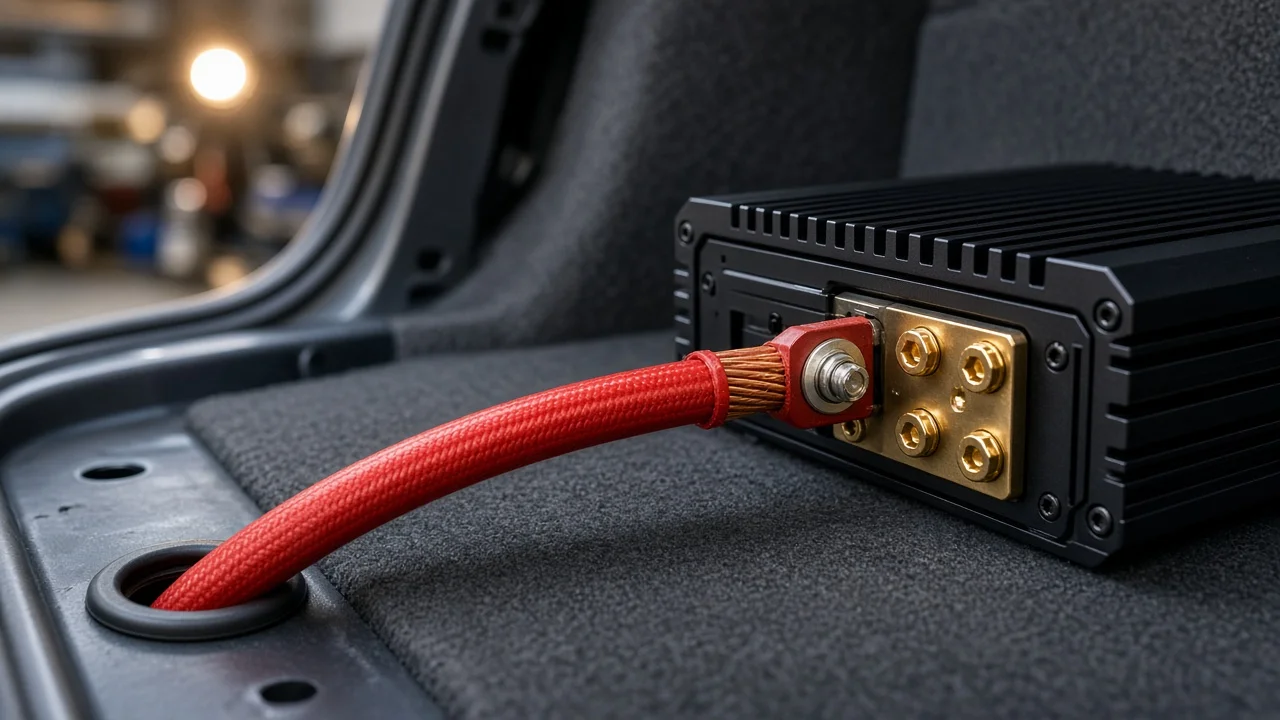
A car audio amplifier power cable is the dedicated current path between the vehicle battery or distribution point and the amplifier. It carries much more current than typical speaker wiring or head unit leads, so its size, routing, and termination directly affect amplifier performance and electrical safety. Choosing the right cable means balancing current demand, run length, and vehicle integration. The goal is stable voltage under load, clean audio output, and protection against heat or shorts. This overview explains the essential role of that cable and how it differs from the rest of the audio system wiring.
Essential answer
A car audio amplifier power cable is a heavy-gauge insulated conductor that feeds fused battery voltage from the vehicle electrical system to an amplifier, usually with a separate ground cable completing the circuit. Its core job is to minimize voltage drop under the amplifier’s dynamic current draw, which can rise sharply during bass passages. Unlike the low-current turn-on lead from the head unit or the shielded cables that carry audio signal, the power cable is sized for sustained amperage. A short, thick, properly terminated run helps the amplifier receive consistent voltage and reduces unwanted heat at connections.
Because the audio source and head unit send only a small control or signal voltage, the power cable must handle the real workload of the amplifier. Speaker wiring also carries an AC-like musical signal, but at the amplifier output and often over shorter distances. The power cable runs through the vehicle body, so routing near sharp metal, heat, or moving parts affects reliability. A fused main cable near the battery and a solid chassis ground are part of the same current loop; both sides need adequate gauge and clean contact for stable sound.