Can You Put Too Much Transmission Fluid in a Car
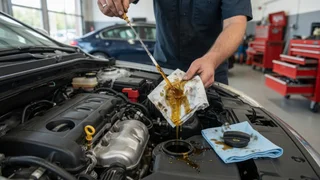
Overfilling an automatic transmission is possible, and the surplus fluid can create problems that mimic low-fluid or mechanical faults. The question matters because the dipstick and fill procedure vary widely by transmission type, so a reading that looks safe on one vehicle may be dangerously high on another. In most cases, the risk is not instant destruction but aeration, foaming, and pressure buildup that alter shift behavior and can force fluid past seals. Understanding why the correct level matters helps you separate a simple overfill condition from a developing transmission repair issue.
Essential answer
Yes, you can put too much transmission fluid in a car. The harm usually comes from the rotating parts churning the excess fluid into foam. Aerated fluid is compressible and does not maintain the consistent hydraulic pressure that valves and clutches rely on. Shift behavior may become soft, delayed, or erratic, and the transmission may slip under load. The condition is not purely a fluid volume problem; it changes how the automatic transmission fluid behaves inside the valve body and torque converter.
The qualification depends on transmission type and fill procedure. Many modern units do not use a conventional dipstick and require a specific temperature-based level check. Adding fluid without following that procedure can easily create an overfill. Manufacturer-dependent diagnostic codes, fluid specification, service history, and observed shift behavior are all relevant when deciding whether a rough shift or hesitation points to excess fluid, a low level, or a separate hydraulic fault. A code alone is evidence to interpret, not proof that a specific part has failed.