Can a Bad Ignition Coil Cause Overheating
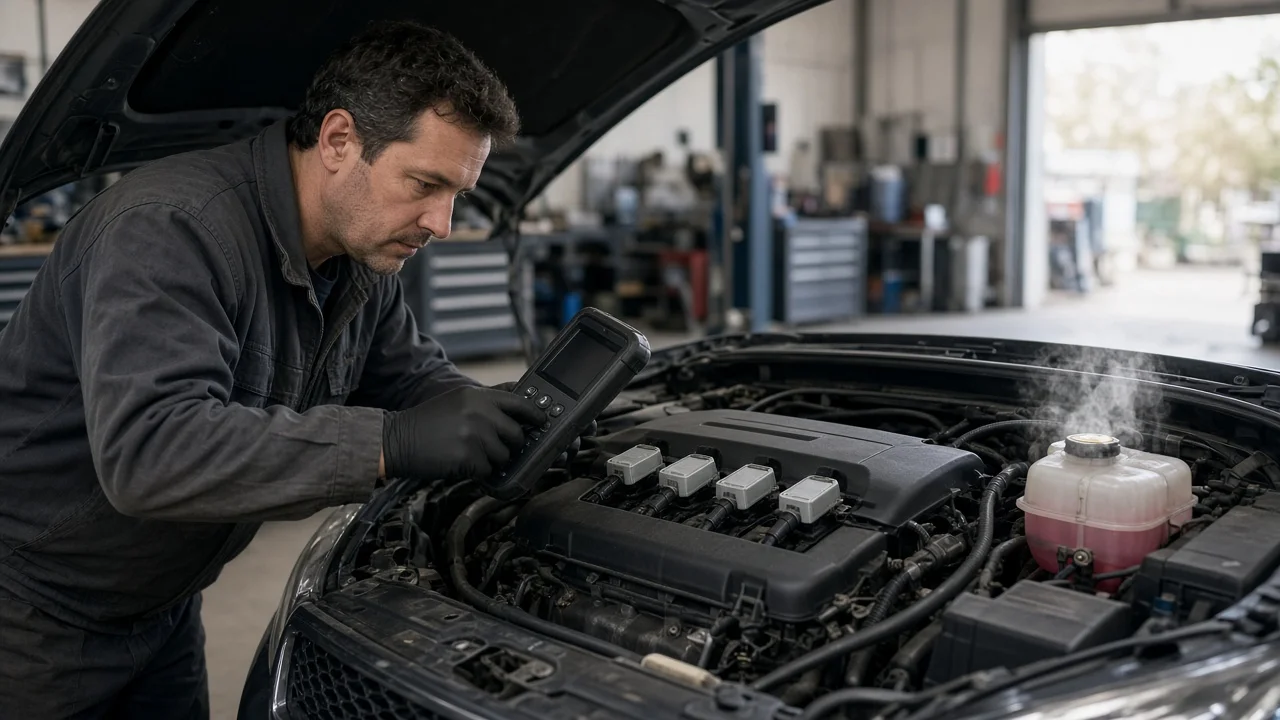
A rough-running engine that also creeps toward the hot zone can feel like two separate failures, but drivers often wonder whether one ignition misfire is behind both symptoms. In most vehicles, a failing ignition coil does not directly force coolant temperatures upward the way a stuck thermostat or low coolant level does. However, the connection is not impossible. Understanding how unburned fuel and altered combustion affect cylinder temperatures and exhaust components explains why an ignition problem may sometimes appear alongside overheating.
Direct answer
A faulty ignition coil typically causes a misfire rather than direct engine overheating. When the coil cannot deliver enough secondary voltage, the air-fuel mixture in that cylinder may burn incompletely or not at all. The engine often feels rough at idle and under load, and the check engine light may flash or stay on. This loss of combustion efficiency does not automatically raise the coolant temperature, because the cylinder is producing less usable power instead of extra heat that must be rejected through the radiator.
There are indirect paths that can make a bad coil contribute to a hotter-running engine. An ongoing misfire allows raw fuel to reach the catalytic converter, where it can oxidize and create very high exhaust temperatures. Excess backpressure or a damaged converter can then increase engine load and underhood heat. In addition, a driver may compensate for rough acceleration by pressing the throttle harder, which raises combustion heat during the firing cylinders. Even so, a dedicated cooling-system diagnosis is usually required before blaming the coil.