Camper van office conversion
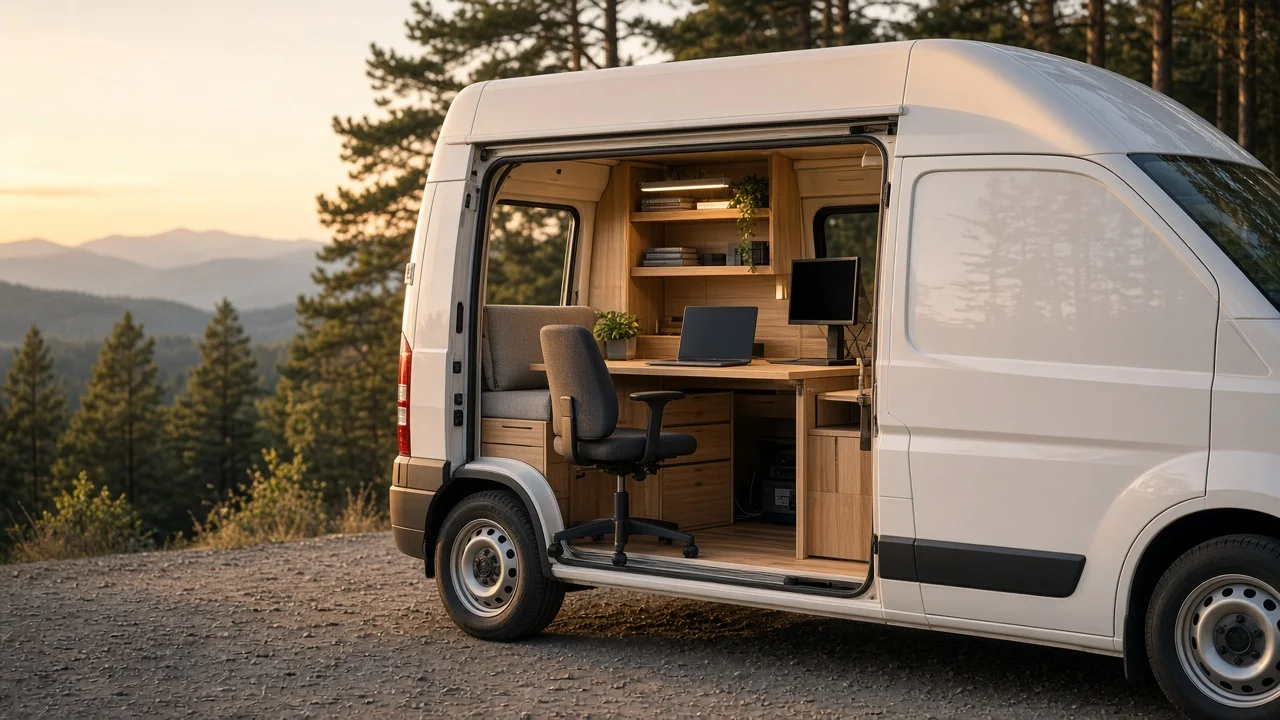
A camper van office conversion turns a cargo or passenger van body into a compact workspace that can also support overnight stays. This approach changes how seating layout, cargo access, and wheelbase affect daily use, because the same square footage must serve desk time, driving ergonomics, and basic living needs. Buyers often evaluate powertrain options, insulation, electrical capacity, and market specification before committing. The essential question is what the conversion actually involves, where its limits appear, and how a practical build differs from a recreational layout that only occasionally holds a laptop.
Essential answer
A camper van office conversion is a van prepared for focused computer work inside while retaining enough camping function for travel or remote work trips. The build typically combines a flat work surface, a supportive seat or swivel base, secure device mounting, and a separate power system for monitors, chargers, and lighting. Unlike a basic desk-in-a-van arrangement, the layout must account for body configuration and cargo access so equipment stays usable when the vehicle is parked on uneven ground or when rear doors are opened for ventilation.
The scope varies by wheelbase and starting vehicle. A shorter wheelbase improves urban maneuverability but reduces the distance between the bed platform and the desk, while a longer wheelbase allows a more natural divide between driving, working, and sleeping zones. Seating layout also changes the outcome: a factory passenger seat may rotate to serve the desk, or a removable second-row seat may be replaced with an office chair base. Market specification matters because window count, sliding-door placement, and available upfitter wiring influence where a secure workstation can be installed without blocking an exit or a storage compartment.