Camper Van Conversion Kits: What They Include and How to Choose One
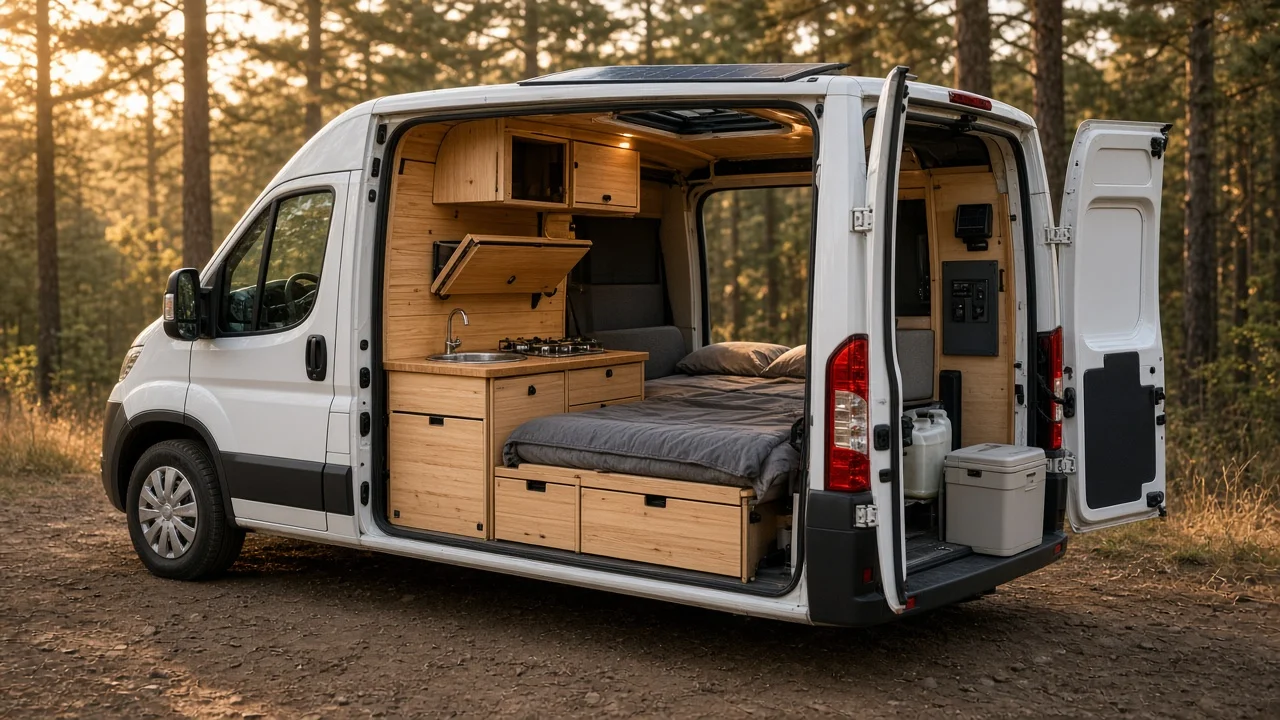
A camper van conversion kit gives you pre-designed furniture and fittings for turning a panel van into a place to sleep, cook and store gear without building everything from scratch. Whether a kit is a good buy depends less on the brand than on three things: how well it matches your specific van, how you plan to use it, and how much of the remaining work you are prepared to do yourself.
Are conversion kits worth it for your van?
For many owners, a camper van conversion kit is a sensible middle ground between a fully custom build and buying a finished camper. A well-made kit designed for your exact van gives you parts already cut to the body's curves, a tested layout and fixing hardware. That removes much of the measuring and trial fitting that slows a DIY build. The important qualification is that most kits are not complete campers. Many cover the furniture, such as the bed platform, cabinets and a kitchen unit. Insulation, wall lining, electrical systems, ventilation, water and cooking equipment may be optional extras or left entirely to you. A kit shifts some of the labor and design risk to the manufacturer, but it does not remove it.
Kits tend to suit owners who want a proven layout, plan weekend or seasonal trips, or need the van to keep working as a load carrier. They make less sense in three cases: you need an unusual floor plan, you intend to live in the van full time with specific storage demands, or few suppliers support your van model. A poorly fitting generic kit can take more effort than building from scratch.
How a van to camper conversion kit works
Kits generally fall into three groups. Flat pack furniture kits arrive as panels, often machine-cut plywood or composite board, that you assemble inside the van and fix to the floor, walls or a supporting frame. Modular kits are sold as separate camper van conversion modules or units. You choose individual pieces, such as a bed module, a galley or an overhead locker, and add them over time. Camper van conversion boxes are self-contained units, often combining a bed and a small kitchen. They slide in through the rear or side doors and are secured to the load floor, so the van can go back to cargo use when the box comes out.
Most fixed kits assume the shell has been prepared first. That usually means laying a floor, insulating and lining the walls and ceiling, fitting any windows or roof vents, and running cables before cabinets close off access. Before buying, read the supplier's instructions to find out three things: what condition the van must be in, how the furniture attaches, and whether the kit uses factory mounting points or requires drilling into the body.
What changes the answer: van, layout and use
The single biggest factor is vehicle configuration. Wheelbase, roof height, wheel arch shape, sliding door position, rear door style and the location of factory tie-down points differ between models. They often differ between generations of the same model too. A kit built for a long-wheelbase, high-roof van will not fit a shorter or lower version. This is why VW camper van conversion kits are usually sold for a specific van generation and wheelbase. It is also why cargo van camper conversion kits for full-size vans are rarely interchangeable across brands. Roof height shapes the layout as well, because whether you can stand inside affects where a kitchen can usefully sit and how the bed is arranged.
Your ownership needs change the trade-offs too. Keeping rear passenger seats leaves less floor area for furniture, and any added seating must use properly engineered, tested anchorages rather than improvised mounts. Fixed furniture maximizes storage but commits the van to camper use. A removable box preserves cargo access at the cost of a more compact layout. Operating conditions also matter. Cold-weather trips put more emphasis on insulation and heating, hot climates on ventilation, and rough roads on how securely the furniture is fastened. Every kit adds weight, so it must fit within the payload the van is rated to carry along with people, water and gear.
Location affects both supply and paperwork. Kits sold in the UK may be laid out for a different driving side than those sold in mainland Europe or the USA. The driving side changes which side the sliding door is on and how the furniture is oriented. Rules on registering a converted van as a motor caravan or camper, vehicle inspections and insurance also vary by country and, in the USA, by state. A kit that is popular in one market may not suit your local requirements without changes.
How to choose a kit that fits
Start with the exact details of your van: make, model, model year, wheelbase, roof height and door configuration. Take these from the vehicle documents rather than from memory. Give them to the supplier and ask for a clear list of what the kit includes and what it leaves out. Inclusions to ask about are fixings, assembly instructions, worktops, cushions, sink or cooker cut-outs and any wiring. Ask for the assembled weight and compare it with the payload figure on your vehicle's label or documents. Leave room for occupants, water, fuel and luggage.
When comparing camper van conversion kits for sale, budget for the whole build, not just the kit price. Insulation, flooring, lining, electrical components, ventilation and any professional installation can add significantly to the total. If you are considering a used kit, confirm it was made for your model and wheelbase, check that every panel and fitting is present, and look for swelling or water damage along board edges. For new kits, ask about lead times, since made-to-order furniture may not be available immediately.
Planning the DIY work around the kit
Even with a DIY camper van conversion kit, you will need basic tools, a dry space to work and enough time to fit insulation and run cables before the furniture goes in. Decide early where the battery, fuse box, water tanks and any heater will sit, because these affect which cabinet spaces remain usable. A good camper van conversion book can help with this planning. Guides marketed as a conversion bible or step-by-step manual usually cover insulation, electrics, ventilation and layout in more depth than kit instructions do. Treat general books as planning aids. For anything model-specific, such as fixing points and cable routes, rely on the kit supplier and your vehicle's own documentation.
Limitations and when to get professional help
A conversion kit does not make a van safe or road legal on its own. Gas appliances, mains hookup wiring and larger battery systems may need a qualified installer or certification, depending on where you live. Cutting the body for windows or roof vents can weaken the structure or its corrosion protection if done poorly. Vehicle manufacturers often publish guidance for converters on where the body can be drilled or loaded, so ask a dealer or the kit supplier whether such guidance exists for your van. Tell your insurer about the conversion before you use the van.
As a next step, gather your van's exact specifications, decide whether you need a permanent layout or a removable box, and contact a few suppliers that list your model. If rules on registration, seating or gas apply in your area, check them with the relevant authority or a professional converter before committing to a kit.