Buy a complete brake assembly
The short answer
Buying a complete brake assembly is usually worthwhile when several parts at the same wheel position are worn, seized or damaged, or when you want matched components in a single purchase. It is not automatically the better choice when only the pads or rotors are worn, because you may pay for parts that still have useful life. Fitment is what most changes the answer. An assembly has to match your vehicle's model year, market, trim, powertrain and brake package, as well as the axle (front or rear) and side (left or right). If you cannot confirm all of those, sort out fitment before comparing prices.
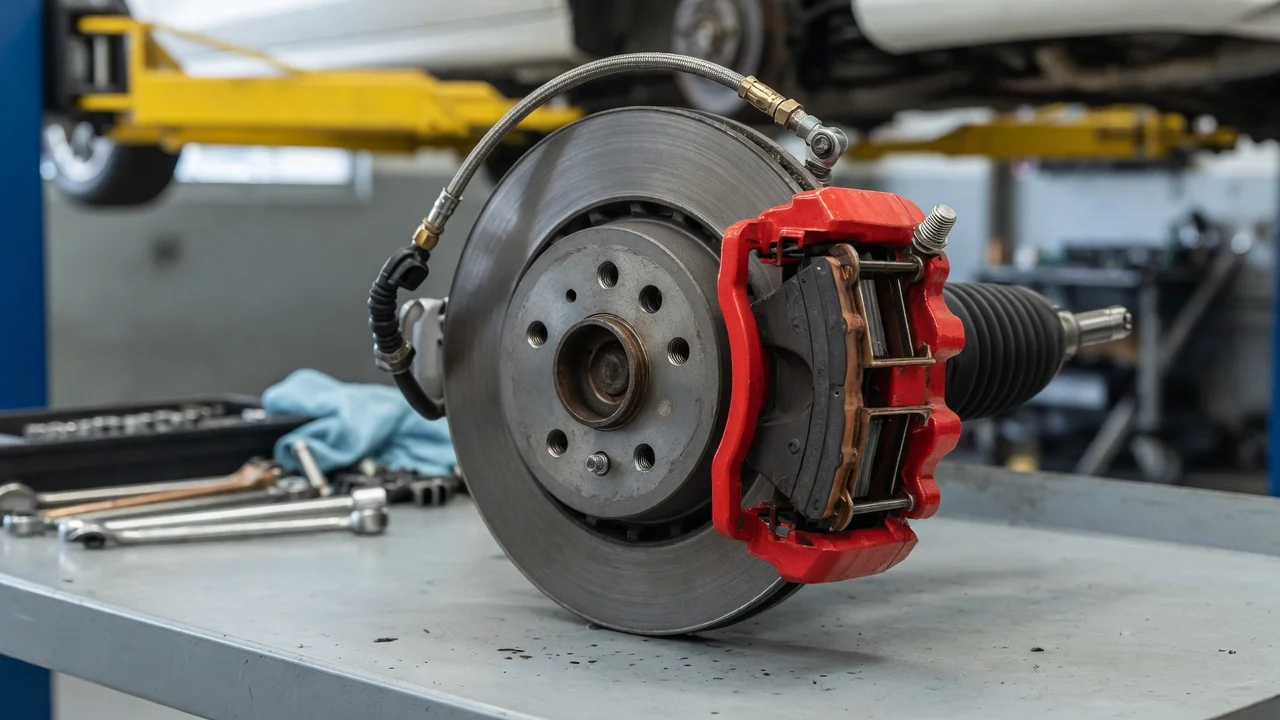
What a "complete brake assembly" usually includes
Sellers use this term loosely, so the listing's contents matter more than its title. The common versions are listed below.
Loaded caliper: a brake caliper (the clamp that squeezes the pads against the rotor) supplied with pads and mounting hardware already fitted, sometimes including the caliper bracket. Caliper, rotor and pad kit: a set for one axle, typically pairing calipers with rotors and pads so the parts are designed to work together. Rotor and pad kit: often sold under similar names but contains no caliper, so it is not a full assembly. Drum brake assembly: for vehicles with rear drums, a backing plate pre-assembled with shoes, springs, adjuster and sometimes the wheel cylinder.
Before ordering, check whether the kit includes brackets, hardware clips, guide pins, banjo bolts and sealing washers, and whether the parts are sold individually or in axle pairs.
When a complete assembly makes sense
A caliper is sticking, leaking or seized, and the pads and rotor at that position are also worn or damaged by it. Corrosion has made separating old parts difficult, so replacing the whole unit saves labor. You want pre-matched parts and fewer separate orders. You are restoring an older vehicle on which several brake components are past their service life. On drum brakes, the many small springs and parts make a pre-assembled unit easier to install correctly.
When individual parts may be enough
If the calipers slide freely, do not leak and the piston retracts properly, replacing only pads, or pads and rotors, is often sufficient. A technician's inspection, or your own if you are qualified, should determine whether the caliper actually needs replacing. Brake parts are commonly replaced in axle pairs so that braking stays even from side to side, which affects how many parts you need to buy either way.
How to confirm fitment
Brake hardware can differ within a single model and year, so do not rely on make and model alone. Check each of the following against the part listing.
Vehicle identification number (VIN): the most reliable way to match parts, because it encodes details the model name does not. Brake package: many vehicles were offered with more than one brake size depending on trim, engine, towing package or performance option. Some listings ask you to measure the existing rotor or check a production code. Market: vehicles built for different regions can use different brake parts even under the same model name. Position: front and rear assemblies differ, and calipers are often side-specific. Parking brake design: a drum-in-hat rotor, a caliper with an integrated mechanical parking brake, or an electronic parking brake each need a matching caliper. Wheel clearance: larger brakes may not fit inside smaller wheels.
Where possible, compare the replacement part number with the original equipment number for your exact configuration. If a listing's fitment notes list unresolved variations, such as split production dates within a model year, contact the seller or a dealer parts department with your VIN before buying.
Other points to compare before buying
New versus remanufactured: remanufactured calipers are rebuilt from used cores and often carry a core charge that is refunded when you return your old caliper. Pad type: pad compounds trade off noise, dust, wear life and performance in different ways; check what the kit includes. Warranty terms and the conditions for claiming them. Whether brake hoses, fluid or bleeder screws are included or must be bought separately.
Installation considerations
Replacing a caliper opens the hydraulic system, so the brakes must be bled afterward using the fluid type specified in the owner's manual or service information. Vehicles with electronic parking brakes may need a service mode or scan tool to retract the rear caliper. Fasteners should be tightened to the manufacturer's torque specifications for your vehicle, and new pads usually need a bedding-in procedure. Brakes are safety-critical; if you are not equipped for these steps, a professional installation is the sensible choice.
What this guide does not cover
No vehicle-specific specifications, part numbers, prices or availability were provided for this article, so it cannot confirm which assembly fits a particular vehicle or what it should cost. Use your VIN with a parts supplier or dealer to resolve those details.