Automotive Wiring Harness Assembly
An automotive wiring harness assembly is the organized network of wires, connectors, terminals, and protective coverings that routes electrical power and signals through a vehicle. Understanding what this assembly is helps when diagnosing faults, planning repairs, or evaluating replacement work. The assembly differs from a loose collection of wires because it is built as a structured bundle designed for a specific vehicle layout. Recognizing its components and the role of system voltage, wiring diagrams, and connection quality gives a clearer view of how electrical problems develop.
Essential answer
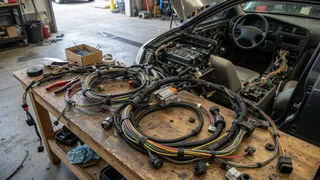
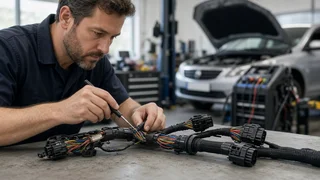
Automotive wiring harness assembly is the process and product of grouping vehicle wiring into a protected, routed harness that connects electrical devices, sensors, actuators, and control modules. Each harness includes conductors, insulation, connectors, terminals, seals, and often loom or tape to resist heat, moisture, vibration, and abrasion. Unlike random wires under a dashboard, a harness is manufactured or rebuilt to follow predictable paths so that harness branches reach the correct components and keep circuits separated where needed.
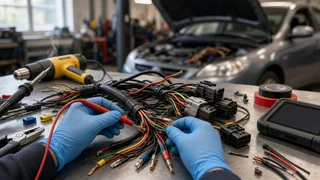
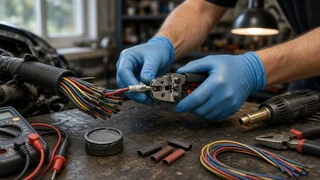
The core components of automotive wiring harness assembly include wire of appropriate gauge, connector housings, metal terminals, fuses or fusible links in some circuits, grommets, and mounting clips. Assembly also depends on correct circuit routing, terminal crimping, and connector seating. System voltage matters because a loose terminal or undersized conductor may produce voltage drop that dims lights or slows motors. A wiring diagram identifies the expected wire colors, pin positions, splice locations, and grounding points needed to compare a harness against the vehicle circuit design.