How to Reset or Turn Off a Brake Warning Light After Fixing the Cause
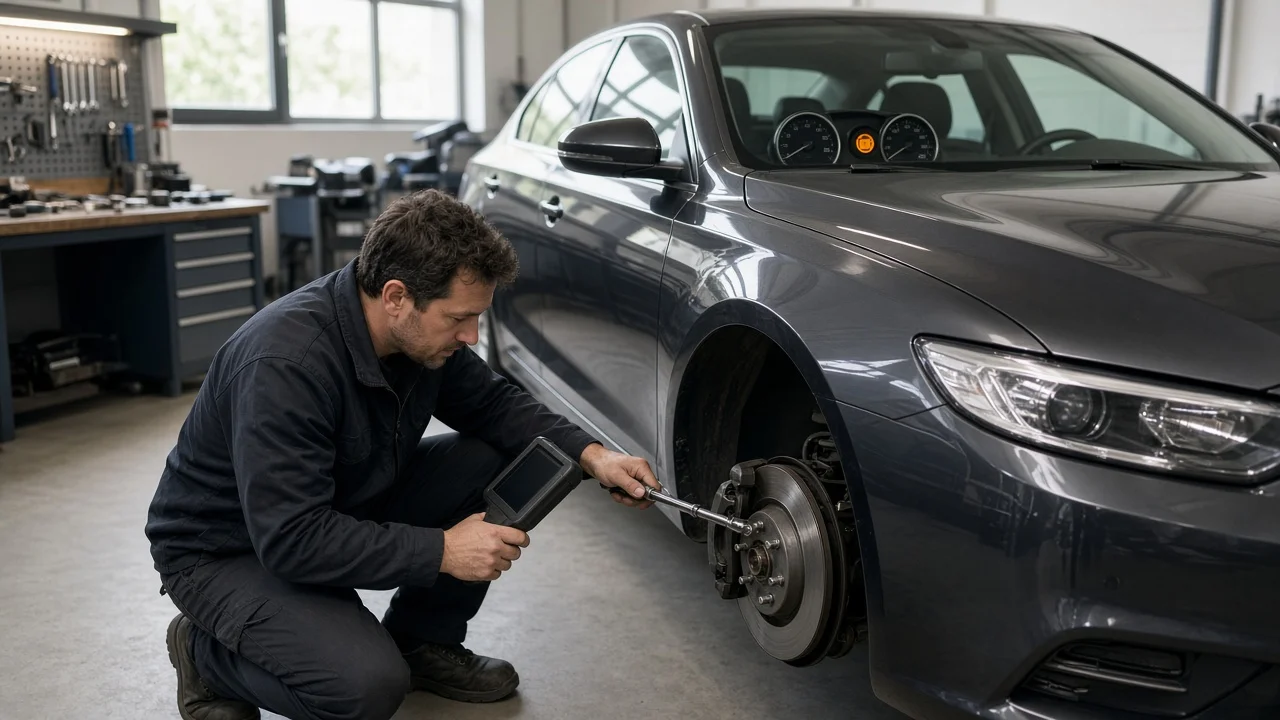
A brake warning light usually goes out on its own once the condition that triggered it has been corrected. Some vehicles, however, need a new sensor, a menu reset or a scan tool before the dash clears. This guide explains how to confirm the fault is actually fixed, how to reset or turn off the brake warning light correctly, and when a lamp that stays on means the car should not be driven.
Establish the symptoms
Start by identifying exactly which lamp is lit, because several separate warnings are commonly called the brake light. A red BRAKE message or a circle with an exclamation mark usually relates to the parking brake or the hydraulic system. An amber ABS lamp points to the anti-lock system. A circle with dashed arcs on either side commonly indicates worn brake pads. Vehicles with an electronic parking brake may also show a separate parking brake fault symbol. The owner's manual shows the exact symbols used on your vehicle.
Next, note when the lamp appears. It may be on constantly from startup, only after some driving, intermittently over bumps or in turns, or only when the pedal is pressed. Record any associated signs, such as a low or soft pedal, grinding, pulling to one side, or fluid around a wheel. Also list recent work, including new brake pads or rotors, a fluid flush, a caliper replacement, a battery change or tire service. A light that appeared right after work usually points back to that work.
Distinguish plausible causes
If the red light stays on after a repair, the common candidates are a parking brake that is not fully released, a parking brake switch that is out of adjustment, brake fluid still at or below the MIN mark, or a sticking float in the reservoir level sensor. A light that flickers over bumps or while cornering points to a borderline fluid level. A light that goes out when you lift the parking brake lever slightly or press its switch points to the switch.
A pad wear lamp that persists after new brake pads often means the wear sensor was reused, left unplugged or damaged during installation. Many sensors are single-use: the friction material wears through a wire loop, and once that circuit is broken the sensor must be replaced. Some vehicles also keep a brake wear counter or service reminder that must be reset separately, so a correct sensor alone will not clear the message. Pads without a sensor provision for your vehicle fitment can also leave the sensor circuit disconnected.
An ABS or electronic parking brake lamp after brake work suggests a disturbed wheel speed sensor connector, a damaged sensor or tone ring, or a stored fault code. It can also mean the electronic parking brake was not retracted or recalibrated as the service procedure requires.
Checks in a useful order
Begin with checks anyone can make safely with the car parked on level ground and the engine off. Confirm the parking brake is fully released. Read the fluid level against the MIN and MAX marks on the reservoir, without opening it unless you need to add fluid. Look for wetness on the inner tire sidewalls, behind the wheels and under the master cylinder. Make sure pad wear sensor wires are plugged in, clipped into their holders and not rubbing a rotor or caliper. Check the owner's manual for an instrument-cluster reset or service menu.
Some tests need tools or specifications. These include measuring pad thickness against the manufacturer's wear limits, checking brake rotors against the minimum thickness stamped on the rotor or listed in service information, testing a wear sensor or level switch for continuity with a multimeter, and reading ABS or parking brake fault codes. A basic engine code reader often cannot access brake modules, so a scan tool with ABS and parking brake functions is usually needed. Leave caliper retraction on electronic parking brakes, bleeding, and any work that opens the hydraulic circuit to a qualified technician unless you have the right tools and the procedure for your vehicle.
Interpret the findings
If the light turns off when the parking brake switch is pressed or the lever is fully lowered, the hydraulics are probably not the problem. The switch or its adjustment still needs correcting so the warning works when it should. If the fluid was low and the lamp went out after topping up, you have only confirmed that the level sensor works, not that the system is healthy. Fluid level drops naturally as pads wear, so a low reading with worn pads is expected. A low reading with thick pads points to a leak that must be found. Adding fluid to a system with worn pads can also cause overflow later, when the caliper pistons are pushed back to fit new pads.
For pad wear and ABS lamps, a code or service reminder that clears and stays cleared after a test drive indicates the repair is complete. A code that returns immediately, or a sensor circuit that still reads open with new parts fitted, means the fault remains in the wiring, the connector or the component. Confirm this with measurements before replacing a second sensor, a module or a caliper.
How to reset the warning once the cause is fixed
Many brake warnings have no separate reset. The red lamp switches off as soon as the parking brake switch opens or the fluid rises above the sensor. On simpler systems, the pad wear lamp goes out when a new, intact sensor is connected. Some ABS faults clear on their own once the car is driven and the module sees plausible wheel-speed signals. Others stay stored until cleared with a scan tool.
Vehicles with condition-based service or electronic pad wear tracking often need a reset through the instrument cluster menu or a diagnostic tool after brake pads are replaced. Some also require the new wear sensor to be registered. Electronic parking brakes may need a calibration, or an exit from service mode, before their warning clears. Disconnecting the battery is not a reliable way to turn off a brake warning light. It rarely clears latched brake faults, it can reset other vehicle settings, and if the fault is real the lamp will simply return.
Urgency and next action
Stop driving and arrange professional service if any of these apply: the red brake light stays on with a soft, low or sinking pedal; you see brake fluid leaking; braking pulls hard to one side or makes metal-on-metal grinding; or the red and ABS lamps are lit together. On many vehicles, that last combination can mean electronic brake force distribution is disabled. None of these signs leaves a predictable safe distance, so have the vehicle towed rather than driving it to the shop.
For any lamp you cannot clear, give the technician the year, make, model and VIN, a photo of the warning, and any fault codes. Add the fluid level you observed, pad and rotor measurements if you took them, the parts installed with their part numbers so vehicle fitment can be confirmed, and what changed just before the light appeared. This information shortens diagnosis and avoids replacing parts that were never faulty.