Brake Pad Grease: Correct Application During Replacement
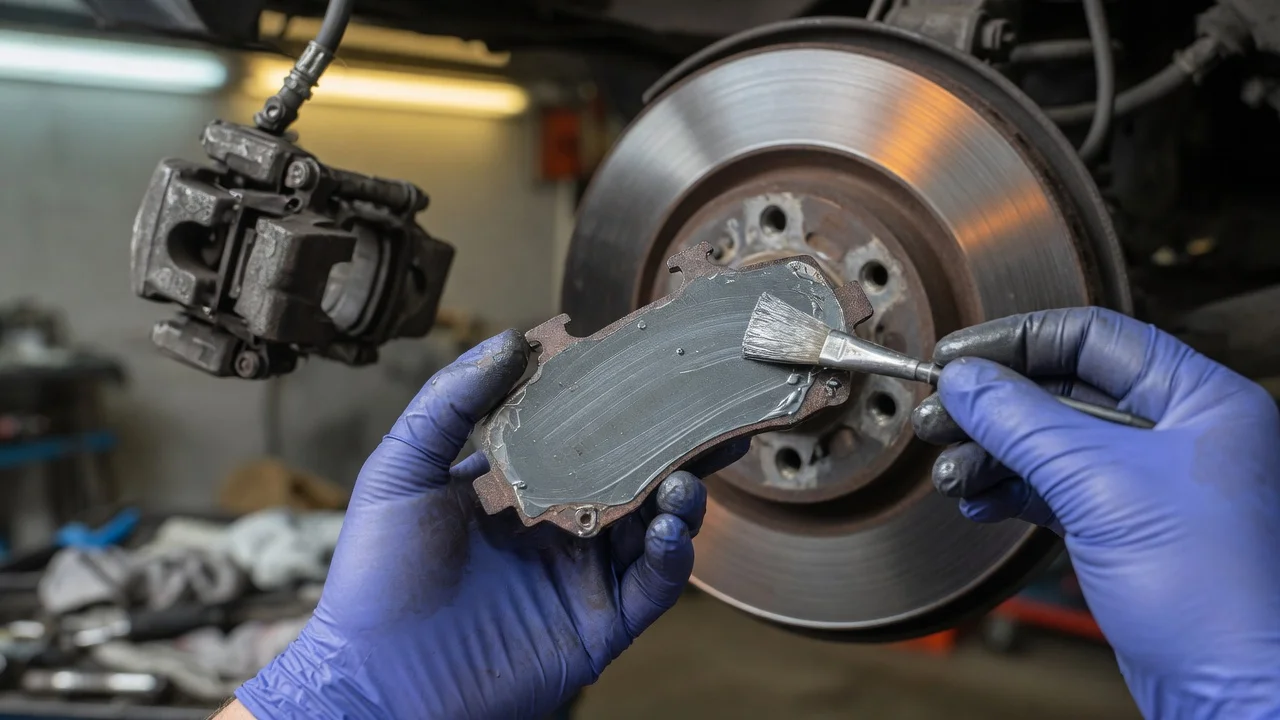
Brake pad grease is a high-temperature, brake-system lubricant applied during pad replacement to the metal contact points that let a pad slide and retract in the caliper. A thin film belongs on the backing plate, abutment tabs and related hardware. The friction material and both rotor faces stay clean and dry. The vehicle’s service information for that model year, caliper design and pad kit is the controlling specification; some kits include a paste packet, and some pads use adhesive shims that change where extra compound is allowed.
Where lubricant belongs
The job of this compound is to cut squeal, let the pad move as the piston applies and releases force, and slow rust at the bracket seats. Typical contact points on a disc brake are:
The pad backing plate where it meets the caliper piston or the inner and outer caliper fingers; Pad abutment tabs, often called ears, and the matching lands or anti-rattle clips in the caliper bracket; Caliper slide pins or guide pins on a floating caliper, using the pin lubricant specified for those rubber boots; Metal contact faces of anti-rattle springs or clips when the service procedure calls for it
Surfaces that stay dry
Grease on the friction pair reduces braking torque and can glaze the pad. Leave these areas free of lubricant and of solvent film that will attract dirt:
The pad friction material, edges of the lining, and any slots or chamfers in the lining; Both rotor friction surfaces, including the hat only if the procedure treats it as a dry mounting face; Rubber dust boots, piston seals and other elastomers unless the named product is specified as rubber-safe for that part; Phenolic or plastic piston faces when the maker requires a dry contact with the pad
Choosing a brake lubricant
Use a product sold as brake grease, ceramic brake paste, synthetic caliper grease or the OEM compound named in the pad kit. Silicone-based and other synthetic brake greases are commonly specified because they stay in place at caliper temperatures and are more compatible with rubber than ordinary chassis or wheel-bearing grease. Petroleum chassis grease is the wrong product here. Copper-based anti-seize is used in some shops on pad backs; several manufacturers restrict or prohibit it on given models because copper can interfere with wheel-speed sensors, promote galvanic corrosion or remain electrically conductive. When the kit or service manual names a family of paste, that instruction overrides shop habit. Slide-pin grease and pad-back paste are often different products; mixing them, or using pin grease on a pad face, is a common error.
How much to apply
Clean rust, old compound and scale from the bracket abutments and pad seats first so the new film sits on metal, not on debris. A thin, even coat is enough: you should still see the metal through it. Excess is squeezed onto the pad edge or rotor as the piston seats and contaminates the friction pair. Keep lubricant off the disc while you install hardware. After the pads are in, pump the brake pedal until the pedal firms so the piston contacts the new pads before the vehicle is moved. Specific film thickness, approved brand names and torque figures are vehicle- and kit-dependent and are not stated here.
Disc, drum and special hardware
On a floating caliper, lubricating the slide pins is a separate step from greasing the pad back; seized pins cause taper wear even when the pad ears are correctly pasted. On a fixed, opposed-piston caliper the emphasis is the abutment slides and quieting the backing plate against the pistons. Drum-brake shoes get lubricant on the shoe webs, the raised pads on the backing plate and the adjuster threads; the linings and the drum friction surface stay dry. Rear calipers with an electronic parking brake follow the same pad-lube rules, with the added requirement that the piston is retracted by the method given for that motor-on-caliper design. Pads that arrive with bonded shims are usually greased on the outer shim-to-caliper contact, not between a factory-adhered shim and the backing plate.
What this does not replace
Correct grease application does not correct a scored rotor, a seized pin, a collapsed hose or a pad that is below minimum thickness. It also does not substitute for bedding the new friction material to the rotor as the pad maker describes. Without a specific vehicle, generation, caliper type and pad kit, the exact approved compound and every lube point cannot be listed here; use the service information that matches the vehicle in hand.