Brake Caliper Compression Tools and Pad Spreaders: How to Choose and Use Them
Start with the intended use
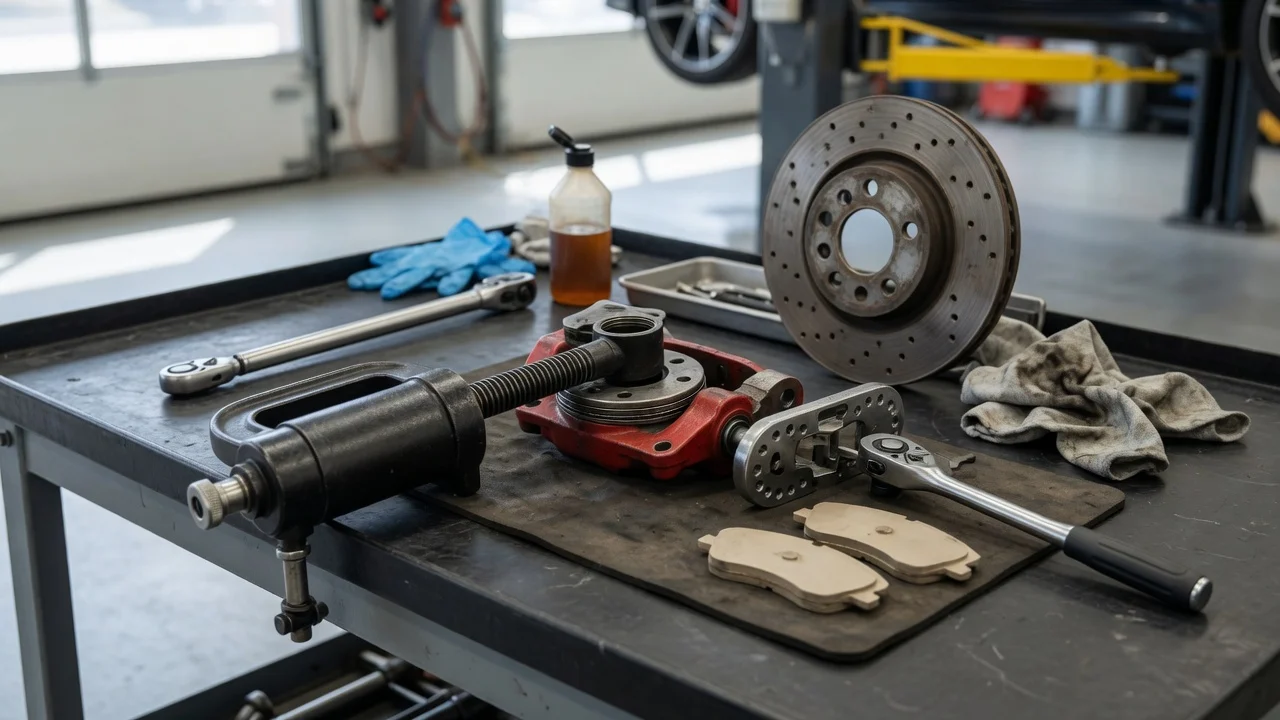
A brake caliper compression tool pushes the caliper piston back into its bore so new, thicker brake pads can fit over the rotor. You need this during a pad replacement when the piston has extended to follow the worn pads. The same category includes tools sold as brake pad spreaders, which may be a simple plate-and-screw design or a handled spreader used on a caliper that has already been removed. For most home brake jobs, the goal is the same: move the piston back evenly without damaging the piston boot, caliper finish, or brake hardware.
Features that matter
The main difference among brake pad tools is whether the piston turns while it retracts. Many rear calipers use an integrated parking brake mechanism that requires rotation; a plain compression tool will not retract those pistons because it only applies straight-line pressure. Front calipers and many rear calipers use a piston that can be pushed straight back. A universal kit often includes several adapter plates, a threaded forcing screw, and a handle. Dedicated caliper piston tools may combine rotation and pressure for a faster fit on specific vehicles. Tool size matters less than pad contact area, clearance, and the depth needed to reach the piston.
Check compatibility
Compatibility depends on the caliper design rather than the brake pad brand. If the piston face has notches, holes, or a raised pattern, check whether it must rotate as it is pressed. Consult the vehicle service procedure before forcing a piston. Also check whether the parking brake is actuated by the caliper or by a separate drum-in-hat assembly. The latter type does not require piston rotation at the caliper. Tool compatibility does not involve an operating system or app, so the only relevant inspection is the physical match between the tool adapter and the piston face.
Build a shortlist
Use a concrete checklist before selecting a brake caliper compression tool. Identify whether the job includes a rotating rear piston, measure available working space around the caliper, and confirm that the kit includes an adapter that covers the piston face without bridging the dust boot. A simple pad spreader is enough when the caliper is already removed and the piston only needs straight retraction. A universal compression kit suits mixed vehicles where different pistons may appear. A specific wind-back caliper tool is appropriate when the parking brake mechanism requires rotation and the vehicle will be serviced repeatedly.
Safe usage steps
Place the vehicle on a level surface, secure it with wheel chocks and jack stands, and remove the wheel. Before compressing the piston, open the brake fluid reservoir or remove some fluid if the system is near the maximum level, because pushing the piston back can force fluid up and overflow. Take care not to let fluid contact painted surfaces. Position the tool so the adapter seats evenly on the piston face. Compress slowly and stop if the piston stops moving or the boot twists. On a rotating piston, turn and apply light pressure according to the service procedure rather than using maximum force.