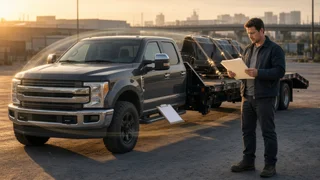
Box Truck Insurance: What Coverage You Need and How to Choose a Policy
The short answer
If you use a box truck to earn money, whether hauling freight, making deliveries, moving furniture for customers or carrying tools and stock for your own business, you generally need a commercial auto or commercial truck policy rather than a personal auto policy. Personal policies typically exclude business use of this kind, and many insurers will not write a personal policy on a box truck at all. The right setup depends on three things: whether you haul your own goods or other people's goods for pay, whether you cross state lines, and how heavy the truck is. Those factors decide which coverages are legally required and which are simply wise to carry.
The main exception is a one-time personal move in a rented box truck. In that case the question is less about buying a policy and more about whether your existing auto insurance, a credit card benefit or the rental company's protection covers you. That situation is covered in its own section below.
Conditions that change what you need
For-hire vs. private carrier: Hauling other people's cargo for compensation usually brings stricter requirements, including cargo coverage expectations and, for interstate work, federal insurance filings. Interstate vs. intrastate: Crossing state lines in commerce can bring the truck under federal motor carrier rules. Operating only within one state means that state's rules apply, and these vary. Vehicle weight: In the US, commercial vehicles with a gross vehicle weight rating (GVWR) of 10,001 pounds or more used in interstate commerce generally need a USDOT number, and for-hire carriers in that category face federal minimum liability requirements. Many box trucks fall above this line; some smaller ones do not. Owned vs. leased onto a carrier: An owner-operator driving under another company's operating authority may be covered for liability by that carrier while under dispatch, but still needs coverage for the truck itself and for time off dispatch. Contract requirements: Delivery networks, freight brokers, shippers and property managers often set their own minimum limits and coverage types, which can be higher than what the law requires.
Coverage types for a box truck
A box truck policy is usually assembled from several parts. Some are required, some are required only by lenders or contracts, and some are optional protection for your business.
Coverage | What it pays for | Who typically needs it; Primary liability coverage | Injuries to other people and damage to their property when you are at fault | Every operator; legally required; Collision coverage | Damage to your truck from a crash, regardless of fault | Owners of trucks with meaningful value; required by most lenders and lessors; Comprehensive coverage | Damage to your truck from theft, fire, vandalism, weather, falling objects or animal strikes | Same as collision; often bundled as physical damage coverage; Motor truck cargo | Loss or damage to goods you are hauling for others | For-hire carriers; often required by brokers and shippers; General liability | Injuries or property damage not caused by driving, such as damage at a customer's site during loading | Movers, delivery businesses and anyone working on customer premises; Uninsured/underinsured motorist | Your losses when an at-fault driver lacks enough insurance | Required in some states; recommended elsewhere; Medical payments or PIP | Medical costs for you and passengers | Required in no-fault states; optional in others; Non-trucking or bobtail liability | Liability when an owner-operator drives off dispatch | Owner-operators leased to a motor carrier; Hired and non-owned auto | Liability for vehicles your business rents or employees' vehicles used for work | Businesses that sometimes rent extra trucks; Rental reimbursement or downtime | Replacement vehicle cost or lost income while the truck is repaired | Operators who cannot afford a truck out of service; Gap coverage | The difference between the payout and the remaining loan or lease balance after a total loss | Financed or leased trucks
Workers' compensation is separate from your auto policy. If you have employees, including drivers and helpers, your state may require it, and an auto policy will not cover their on-the-job injuries in its place.
Federal filings for interstate for-hire carriers
If you operate as a for-hire carrier across state lines under your own authority, your insurer usually must file proof of liability coverage with the Federal Motor Carrier Safety Administration (FMCSA), and your policy will typically carry an MCS-90 endorsement. That endorsement guarantees that the public can be compensated up to the federal minimum, even in some situations the policy would otherwise exclude. If that happens, the insurer may seek repayment from you. Federal minimum liability levels depend on the type of cargo, and brokers frequently require more than the minimum. Confirm the current requirement for your operation with your agent or directly through FMCSA before you apply for authority.
Policy limits and deductibles
Policy limits are the maximum amounts an insurer will pay for a covered claim. Liability limits may be written as a single combined limit per accident or as split limits for bodily injury per person, bodily injury per accident and property damage. Because a loaded box truck can cause serious damage, minimum limits often leave the business owner exposed to the remainder of a large claim. Choose limits based on what your contracts require and what you could lose in a lawsuit, not only on the legal floor.
A deductible is the amount you pay before physical damage or cargo coverage pays out. A higher deductible lowers the premium but raises your out-of-pocket cost after a loss. A practical test is whether you could pay the deductible tomorrow without disrupting the business. Cargo policies sometimes have their own deductible separate from physical damage.
Exclusions to read before you sign
Exclusions are situations a policy will not cover. They differ between insurers, so read the policy form itself rather than relying on a quote summary. Common areas to check include:
Unlisted or unapproved drivers: Many commercial policies cover only scheduled drivers who meet the insurer's criteria. Radius of operation: Policies are often rated on a declared operating radius, and traveling well beyond it may cause coverage problems or a premium adjustment. Excluded or restricted cargo: Cargo policies commonly exclude or limit items such as electronics, alcohol, tobacco, jewelry, cash, live animals and temperature-sensitive goods. Unattended vehicle theft: Some cargo forms limit coverage when a loaded truck is left unattended or unlocked. Refrigeration breakdown: Spoilage from reefer unit failure is often excluded unless you add specific coverage. Use outside the declared business: A policy written for local delivery may not cover long-haul freight, moving services or rideshare-style app work. Wear and tear and mechanical failure: Physical damage coverage pays for sudden damage, not gradual deterioration or breakdowns.
What affects the cost
Box truck premiums vary widely, and any quote reflects how an insurer rates your specific risk. The factors that usually carry the most weight are:
Driving records and experience of every listed driver, including commercial driving history; Years in business, since new ventures are often rated higher than established operations; Cargo type and its value; Operating radius and whether you cross state lines; Garaging location and the density of the area you drive in; Truck value, age and size, which drive physical damage cost; Claims history for the business and drivers; Limits, deductibles and the optional coverages you select; Safety practices such as driver qualification files, maintenance records and telematics or dash cameras, which some insurers credit
Renting a box truck for a personal move
If you rent a box truck to move your own household, start by calling your auto insurer and asking whether your personal policy extends to a rented truck of that size. Many personal policies limit or exclude trucks above a certain weight or size. Credit card rental benefits also commonly exclude trucks and cargo vans, so do not assume a card will cover the vehicle. If neither applies, the rental company's damage waiver and supplemental liability options may be the only coverage available for the truck and for damage you cause to others. Your belongings inside the truck are usually a matter for your homeowners or renters policy, or for cargo protection offered by the rental company. If you rent a box truck for a business, even a single job, ask about business-use coverage specifically, since personal policies and some rental protections exclude it.
How to shop for a box truck policy
Define your operation: what you haul, for whom, how far, which states, and the truck's GVWR. Collect contract requirements: list the minimum limits, cargo coverage and certificate-of-insurance rules set by every customer, broker or delivery network you work with. Gather documents: driver licenses and records, vehicle identification numbers, truck values, any USDOT or operating authority numbers, prior insurance and loss history. Use a commercial specialist: an independent agent or broker who writes trucking and commercial auto can compare several insurers, including carriers that do not sell directly to consumers. Compare like with like: line up quotes with identical limits, deductibles, covered drivers, radius and cargo terms before comparing prices. Read the forms: ask for the actual policy forms and endorsements, and check the exclusions listed above. Confirm filings and certificates: make sure any required federal or state filings are submitted and that you can get certificates of insurance quickly when customers ask. Review yearly: update the policy when you add trucks or drivers, change cargo or expand your operating area.
If you need to file a claim
After an accident, make sure everyone is safe and contact police when required. Then document the scene with photos, collect the other parties' information and note any witnesses. Report the claim to your insurer promptly, since policies typically require timely notice. For cargo losses, record the condition of the goods, keep the bill of lading and delivery receipts, and avoid discarding damaged items until the insurer says you may. If you are leased to a motor carrier, notify the carrier as well, because its policy may respond to the liability portion. Keep copies of all communication and repair estimates, and ask the adjuster which coverage, limit and deductible apply so you can plan for downtime and out-of-pocket costs.
Choosing your next step
If you are starting a box truck business, decide first whether you will run under your own authority or lease onto a carrier, since that choice shapes nearly every coverage decision. Then gather your contract requirements and get quotes from a commercial trucking specialist. If you already have a policy, compare its limits, listed drivers, radius and cargo terms against how you actually operate today. Any gap between the policy and your real-world use is where claims tend to be denied.