Bolt pattern drill jig for redrilling
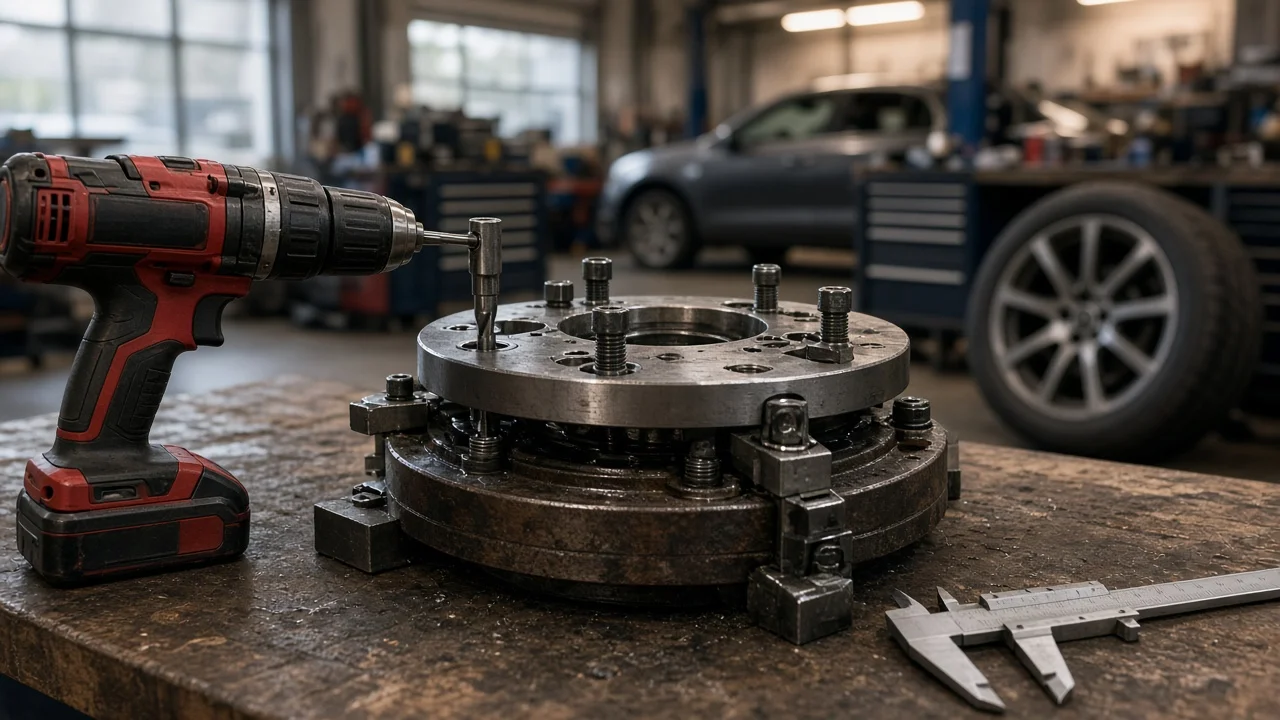
Redrilling a wheel changes its bolt circle, making a drill jig the practical way to keep the new hole pattern centered and consistent. A wheel bolt pattern drill jig locates each hole relative to the existing hub bore or original lug openings, reducing the chance of an off-center pitch circle diameter. For a commercial purchase, the useful question is not simply which jig exists, but whether its lug count spacing, hub fit, and material will hold the bit accurately during the layout and drilling work. This helps you decide whether a general fixture or a more specific design matches your redrilling task without assuming the jig alone guarantees a safe result.
The direct answer
A wheel bolt pattern drill jig is worth choosing when you need to relocate a bolt circle on a hub, adapter, or wheel blank and want repeatable hole placement. The fixture works by referencing a center bore or a known set of holes, then guiding the drill at the new lug count and pitch circle diameter. The condition that matters most is compatibility with the target pattern and the existing center reference. A jig that fits the pilot diameter and marks the correct angular spacing can produce a cleaner layout than freehand measuring, but it does not correct an incorrect target pattern or a damaged center bore.
The main practical limitation is that the jig controls location, not the full safety of the redrilled wheel. After drilling, fastener clearance, hub fit, and material thickness around each new hole still need to be inspected because the jig only positions the bit. In a buying context, look for a tool that clamps or registers firmly without shifting under drill pressure. A rigid steel guide with properly sized bushings is generally more useful for repeated holes than a thin template, especially when the redrilling moves a wheel from one common lug count to another.