BMW N57 oil leak
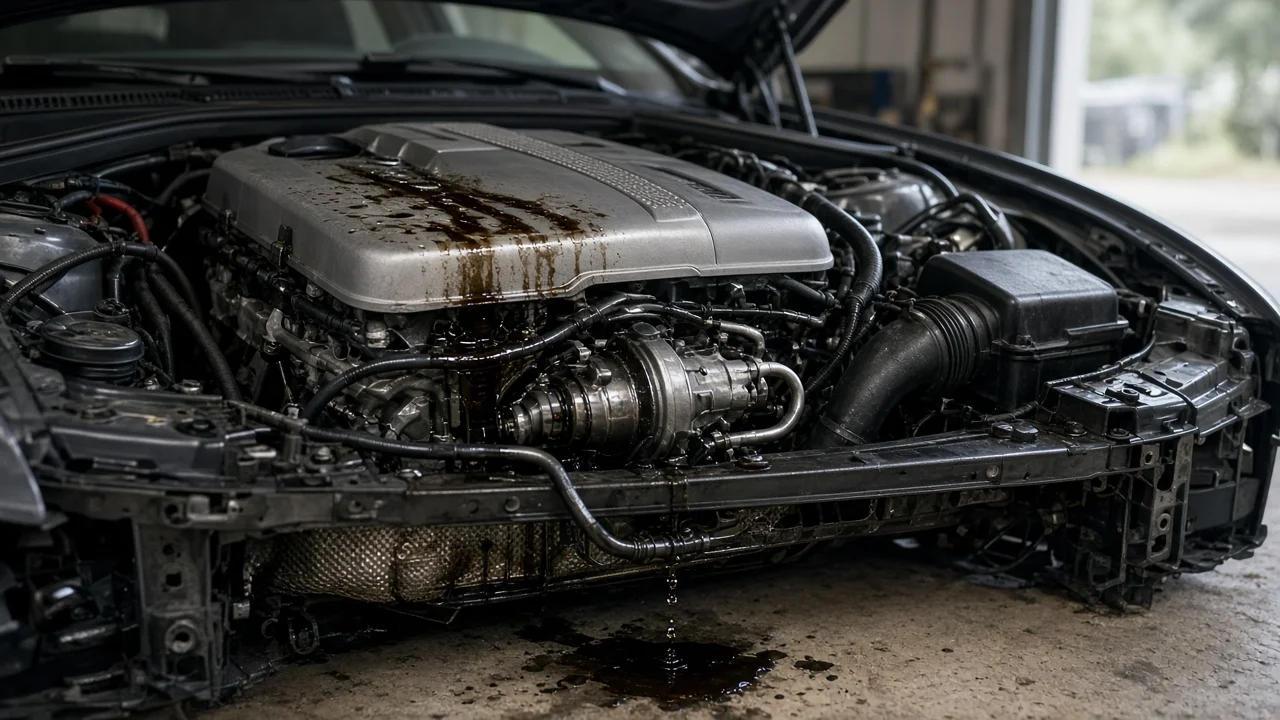
An oil leak on a BMW diesel equipped with the N57 engine can appear as spots on the driveway, a burning smell from the engine bay, or a gradual drop in the level shown on the dipstick or electronic monitor. Because this inline-six platform packages the turbocharger, emissions equipment, and lubrication system tightly together, tracing the source requires separating common seepage points from less frequent failures. The first useful step is to clean the underside, confirm how much oil is being lost, and inspect the highest wet areas before replacing any seal or gasket.
Direct answer
The most likely sources of an N57 oil leak are the valve cover and its gasket, the oil filter housing gasket, and the oil pan seal, although the leak can also come from the turbocharger oil feed or drain connection. Oil tends to migrate downward and rearward with airflow, so the lowest wet component is not always the origin. A slow seep that only stains the block may be tolerable for a short time, while a leak that drips onto the exhaust or lowers the level quickly deserves immediate attention.
Begin by checking the lubricant level and verifying that the correct fill quantity is present, because an overfilled sump can force oil past seals and mimic a gasket failure. Next, inspect the top of the engine around the oil filter housing and valve cover, then look beneath at the oil pan and turbo lines. The correct lubricant specification and manufacturer approval matter for this engine, but no oil choice will cure a failed gasket or cracked fitting. The goal is to locate the highest wet point before cleaning and replacing parts.