BMW E36 Wheel Center Bore
When a replacement wheel does not seat cleanly against the BMW E36 hub, the likely issue is a mismatch in the wheel center bore. This circular opening at the back of the wheel must align with the raised hub pilot on the brake rotor or axle. A bore that is too small prevents mounting, while an oversized bore leaves the wheel dependent on the lug bolts for centering. Understanding this interface helps owners avoid vibration, uneven torque, and damage to the mounting surface.
Essential answer
The wheel center bore is the machined hole in the middle of the wheel that fits over the hub pilot, the raised circular ledge on the vehicle. On the E36 chassis, this hub pilot locates the wheel concentrically on the axle centerline before the lug bolts are tightened. When the center bore matches the hub pilot diameter with the correct fit tolerance, the wheel sits flush against the mounting surface and the vehicle weight is carried evenly through the hub flange.
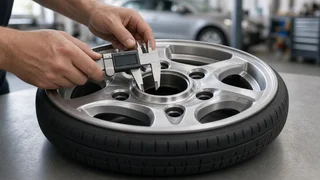
If the E36 wheel center bore is smaller than the hub pilot, the wheel cannot slide fully onto the hub and will sit crooked or bind against the rotor. If the bore is larger, the wheel may center only on the conical seats of the lug bolts. That creates the possibility of radial runout, where the wheel rotates slightly off its true center, producing a shake at highway speed. Checking this dimension is therefore the first diagnostic step when evaluating any aftermarket or used wheel.