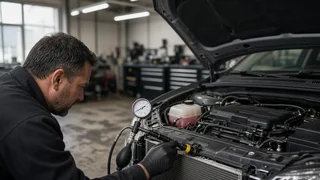
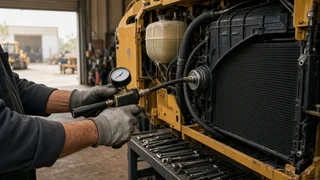
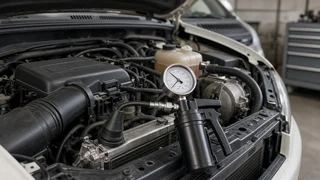
Blue-Point Cooling System Pressure Tester
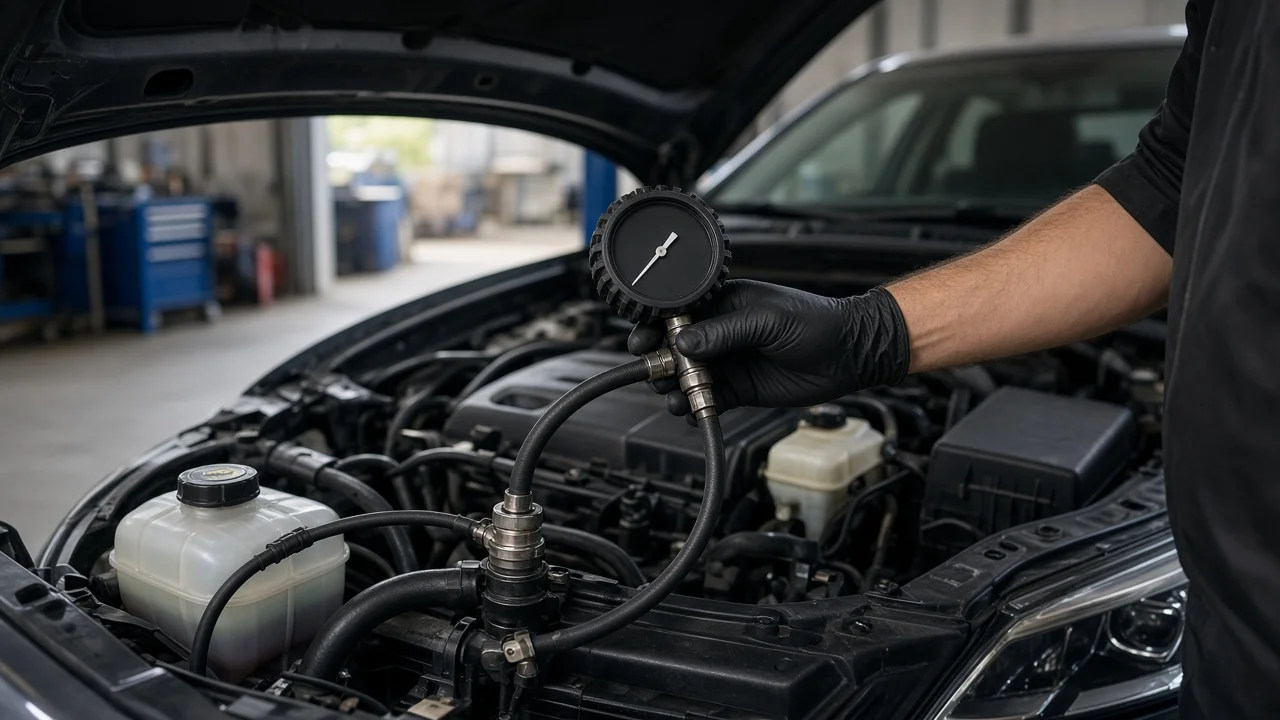
A cooling system pressure tester is a diagnostic tool used to pressurize the cooling circuit and reveal leaks, cap weaknesses, or internal sealing problems before they cause overheating. When you are researching the Blue-Point Cooling System Pressure Tester, the practical question is what this tool can confirm and what it cannot. It works by replacing or adapting to the pressure cap, allowing a technician to pump controlled air into the system and observe whether pressure holds. A steady drop points to an external leak, an internal combustion seal fault, or a hidden seepage that only opens under heat and load. Because the cooling circuit is closed and sensitive to both pressure and coolant concentration, testing gives a clearer picture than a simple visual inspection of hoses and the radiator. Condition matters, so the value depends on the adapter fit, gauge readability, and whether the set covers the vehicle neck style you plan to service.
The direct answer
The immediate answer is that the Blue-Point Cooling System Pressure Tester is a diagnostic hand-pump and gauge assembly intended to pressurize a cooling circuit and identify leaks without running the engine. Its main job is to show whether the system holds pressure and, when it does not, to guide you toward a seep from a hose, radiator tank, heater core, water pump seal, intake gasket, or pressure cap. It is a test instrument rather than a repair part, so it does not fix a leak by itself. The tool is most useful when an overheating complaint, coolant smell, or slow loss of coolant has not produced an obvious wet spot.
Using the tester requires fitting the correct adapter to the radiator or reservoir neck and pumping only to the pressure stamped on the cap or service information. If the gauge falls steadily, pressure is escaping somewhere that may be dry at idle and only show under load. If the gauge holds on a cold engine, the fault can still be thermal, such as a thermostat that fails to open, air pockets trapped after refilling, or a small head-gasket path that opens once combustion heat raises cylinder pressure. In those cases, the pressure tester narrows the cooling circuit possibilities but does not replace a block test or temperature diagnosis.