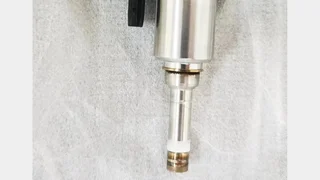
Bigger Fuel Injectors on a Stock Engine

Installing bigger fuel injectors on a stock car is not a plug-and-play power upgrade, even though the phrase suggests a simple parts swap. The stock engine management expects a specific injector flow rate, and a larger injector changes the relationship between pulse width, fuel pressure, and the air-fuel ratio. Without matching engine control changes, the result is usually over-fueling, poor idle quality, and reduced driveability rather than a useful gain. The answer depends on whether the injectors are modestly larger, significantly oversized, or intended for future modifications.
Essential answer
On an otherwise stock engine, bigger fuel injectors generally create a rich running condition because the factory calibration opens an injector for a duration based on the original flow rating. A higher-flowing injector delivers more fuel during that same pulse width, so the oxygen sensor feedback may attempt to pull fuel trim negative. If the correction exceeds the adaptive limit, the engine control unit can set a rich diagnostic trouble code while idle quality, fuel economy, and throttle response suffer. A small, matched increase can sometimes be compensated, but a large change cannot be corrected by the stock tune.
The practical distinction is between supporting future modifications and replacing a faulty injector. An injector is a precision component, and a confirmed fault is evidence for replacement, not proof that a different size is required. If the fuel pump remains stock and fuel pressure is unchanged, the larger injector becomes a control problem rather than a fuel delivery upgrade. The correct path is usually to keep a stock-flow injector for a stock engine, and to reserve larger injectors for a calibrated tune that matches the new flow rate, engine configuration, and intended fuel demand.