Service Battery Charging System Warning: What It Means and What to Do
The Short Answer
A "Service Battery Charging System" message means the vehicle has detected a problem with how the battery is being charged while the engine runs. The fault may be in the alternator, the battery, the wiring and connections between them, or the sensors and control logic that manage charging. The message does not identify which part has failed. It tells you the electrical supply may not be reliable and that the system needs to be checked soon.
The exact wording comes from General Motors vehicles such as Chevrolet, GMC, Buick and Cadillac. Other manufacturers report similar faults with a battery-shaped warning light or different text. The general meaning is the same, but the triggers, thresholds and diagnostic steps depend on the make, model year and powertrain. Check your owner's manual for the version that applies to your vehicle.
What the Charging System Does
The battery's main job is starting the engine. Once the engine is running, the alternator, a belt-driven generator, takes over. It powers the vehicle's electrical systems and recharges the battery. A voltage regulator, which may be built into the alternator or handled by the engine control module, keeps the output within a safe range. Many modern vehicles also use a battery current or monitoring sensor so the computer can adjust charging to the battery's condition and the electrical load. The warning appears when the monitoring logic sees charging behavior outside what it expects.
Common Causes
Weak, aging or failed battery that no longer holds or accepts a charge properly. Failing alternator or internal voltage regulator producing too little or too much output. Loose, corroded or damaged battery terminals, cables or ground connections. Worn, slipping or broken serpentine belt that drives the alternator. Faulty battery current sensor or monitoring sensor feeding incorrect data to the control module. Wiring faults, blown fuses or connector problems in the charging circuit. Software or control-module issues, which some manufacturers have addressed through updates on specific models.
Which cause is most likely depends on the vehicle, its age and its history. No model-specific failure data was available for this guide, so the list above shows the range of possibilities rather than how often each one occurs.
Is It Safe to Keep Driving?
Sometimes, briefly, but you should not ignore the warning. If the alternator is not charging, the vehicle runs on stored battery power until the battery is drained. When that happens, the engine may stall and electrically powered systems may stop working, including lights, power steering on vehicles with electric assist, and other functions. Some vehicles reduce non-essential electrical loads automatically when they detect a charging fault. How long a vehicle can run in this state varies widely and cannot be predicted from the message alone.
Stop and seek help promptly if the warning comes with any of the following: dimming or flickering lights, other warning lights appearing, a burning smell, a squealing or slapping belt noise, a temperature warning, or loss of steering assist. A broken serpentine belt can also stop the water pump on engines where the same belt drives it, which risks overheating.
What to Do Next
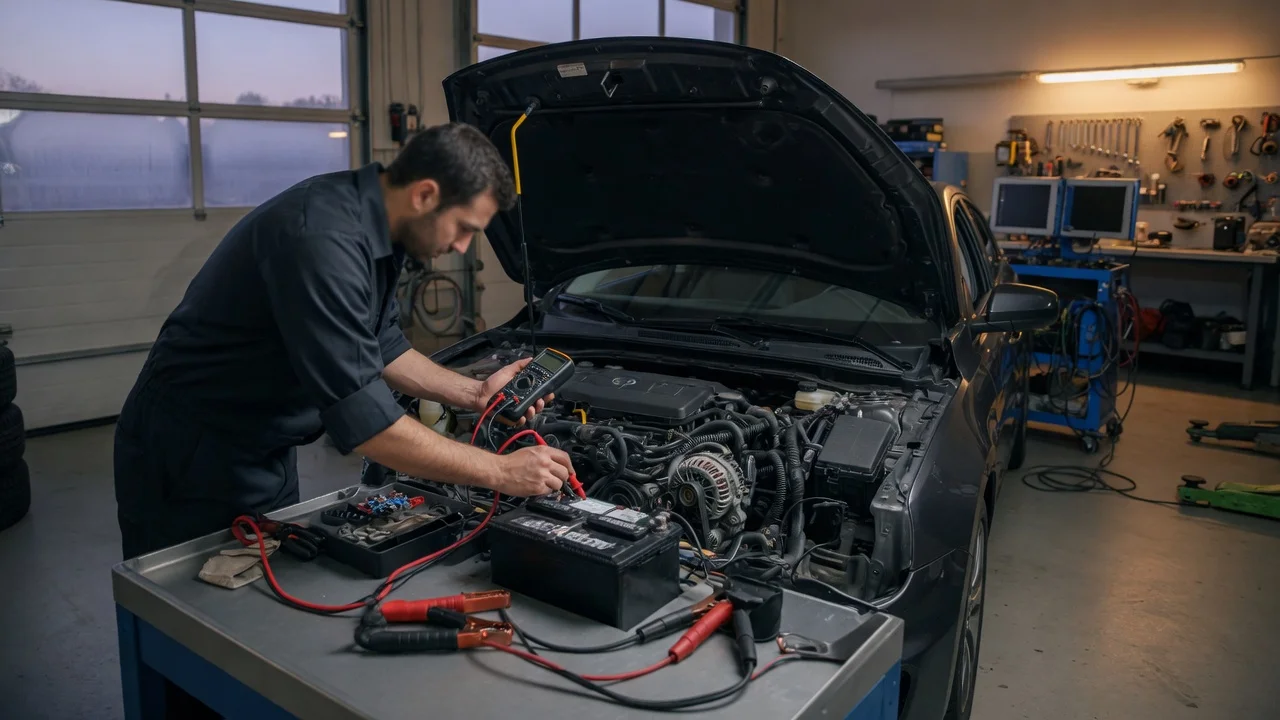
Reduce electrical load by switching off non-essential accessories such as heated seats, rear defrost and high-power audio, if it is safe to do so. Avoid turning the engine off far from help, because a weak battery may not restart it. With the engine off, check the battery terminals for looseness or corrosion and look at the drive belt for visible damage, but only if you can do so safely. Have the battery and charging system tested. Many repair shops and parts retailers offer battery and alternator testing that measures resting voltage, charging output and battery health. Ask for the stored diagnostic trouble codes to be read. They help narrow the fault to the battery, alternator, sensor or wiring. Check whether recalls or technical service bulletins apply to your vehicle's model year, since some charging-related warnings have been tied to known issues on specific models.
Why Replacing the Battery Alone May Not Fix It
A new battery is a common first step, and it does solve the problem when the old battery was the cause. If the alternator, belt, wiring or sensor is at fault, though, the warning can return and the new battery can run down. On some modern vehicles, a replacement battery also needs to be registered or the battery monitoring system reset so the charging strategy matches the new battery. Whether this step is required depends on the manufacturer and model. Testing the whole charging system before buying parts is the more reliable approach.
Gaps in This Guide
No model-specific specifications, voltage thresholds, test results or repair-cost data were provided for this guide. The correct charging voltage range, battery type, any battery registration requirements, and known faults for a particular vehicle should be confirmed from its owner's manual, its service information or a qualified technician.