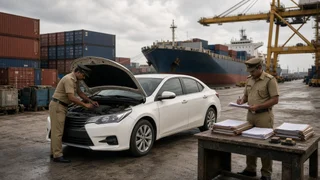
Bangladesh Car Import Rules: Eligibility, Duties and the Clearance Process
Bangladesh allows private car imports, but under tighter conditions than many countries. A vehicle must meet age, steering-side and technical requirements, arrive with complete import documentation, and clear customs with a tax bill that grows steeply with engine size. This guide explains how car import rules in Bangladesh work, what usually decides whether a vehicle is eligible, and what to check before you commit money to a purchase or shipment.
The Short Answer
You can import a new or reconditioned (used) car into Bangladesh if it fits the conditions in the government's current Import Policy Order, enters through an approved channel, and is cleared by customs with all duties and taxes paid. The main limits are vehicle age for reconditioned cars, a right-hand-drive requirement, and the documentation needed for customs clearance and later registration. Total taxes depend mainly on engine capacity and can exceed the vehicle's own value for larger engines.
One qualification changes the answer for many readers: these rules are revised periodically, and specific limits and tax rates move with each policy cycle and national budget. Treat the principles below as a framework, and confirm current figures with a licensed customs agent or the relevant authority before you buy.
Who Sets the Rules
Car import policy in Bangladesh involves several bodies, each controlling a different stage of the process.
Authority | Role in car imports; Ministry of Commerce | Issues the Import Policy Order, which defines which vehicles may be imported and under what conditions; Office of the Chief Controller of Imports and Exports | Administers import permissions and import registration for commercial importers; National Board of Revenue (Customs) | Assesses value, collects duties and taxes, and performs customs clearance at ports; Bangladesh Road Transport Authority (BRTA) | Registers the vehicle for road use after clearance; Commercial banks | Open the letter of credit or other payment instrument for the import
Vehicle Eligibility
Eligibility is where most import plans succeed or fail. The core conditions are:
Right-hand drive: Bangladesh drives on the left, so imported cars are expected to be right-hand drive. Left-hand-drive passenger cars are generally not eligible for ordinary private import. Age limit for reconditioned cars: used vehicles must fall within a maximum age measured from the date of manufacture. Recent policy orders have kept this to a short window, often cited as around five years, but the limit and how it is measured have been debated and revised. Roadworthiness: reconditioned cars are typically expected to come with an inspection or roadworthiness certificate issued in the exporting country. Technical compliance: the vehicle should meet the country's applicable emissions and safety requirements so it can pass registration. No prohibited categories: certain vehicle types or conditions, such as salvage or heavily modified vehicles, may be restricted or barred.
For readers in the United States this matters directly. Most US-market cars are left-hand drive and built to a North American market specification, so shipping a car from the US to Bangladesh for ordinary private use is usually not practical. This is a key reason why Japan dominates the reconditioned car trade: Japanese domestic-market vehicles are right-hand drive and relatively young when exported.
Market Specification, Emissions and Safety
Market specification refers to how a vehicle was built for its original market, including steering side, emissions equipment, lighting, and fuel requirements. A car built for one market may need changes, or may not be accepted at all, in another.
Emissions compliance in Bangladesh falls under environmental regulations that set exhaust standards for road vehicles. Safety standards are applied mainly through roadworthiness and fitness checks at registration. In practice, a well-maintained, recent right-hand-drive car from a mainstream manufacturer is the lowest-risk choice. Older, rare, or modified vehicles carry more uncertainty at inspection, so check them case by case before purchase.
How Import Duties Are Structured
The tax bill is often the deciding factor. Rather than one flat duty, Bangladesh applies several layered charges to the assessed value of the car:
Customs duty on the assessed value; Supplementary duty, which rises sharply in bands by engine capacity (cc) and is the largest variable in the total; Regulatory duty, where applicable; Value added tax (VAT); Advance income tax and advance tax, collected at import
Because supplementary duty climbs with engine size, a small-displacement car can face a much lower total tax rate than a large-engine SUV or luxury sedan. Hybrid and electric vehicles have at times received different treatment, though this depends on the budget in force. For reconditioned cars, customs applies a valuation method that can include a depreciation allowance based on age, which affects the taxable value.
Rates and engine-capacity bands are reset through the annual national budget, so any figure you see in an older article or forum post may already be outdated. Ask an importer or customs agent for a current duty estimate on the exact model, engine and model year before paying a deposit.
Import Documentation
The exact document set depends on whether you are a commercial importer, an individual, or someone importing under special status. A typical car import involves:
Letter of credit or another approved bank payment arrangement; Import Registration Certificate, for commercial importers; Commercial invoice and packing list; Bill of lading from the shipping line; Export certificate or deregistration document from the country of origin; Inspection or roadworthiness certificate for reconditioned vehicles; Certificate of origin and insurance documents; Bill of entry filed with customs, along with tax identification details
Inconsistencies between documents, such as a chassis number or manufacturing date that does not match across papers, are a common cause of clearance delays. Check every document against the physical vehicle details before shipment.
The Customs Clearance Process
Most cars enter through the major seaports, with Chattogram (Chittagong) handling the bulk of vehicle imports and Mongla also used. A typical sequence looks like this:
1) Confirm the vehicle is eligible under the current Import Policy Order. 2) Arrange payment through a bank instrument such as a letter of credit. 3) Ship the vehicle with complete export and inspection documents. 4) Appoint a licensed clearing and forwarding agent at the arrival port. 5) File the bill of entry; customs assesses value and calculates duties. 6) Customs physically examines the vehicle and verifies documents. 7) Pay all assessed duties and taxes, plus port and handling charges. 8) Receive release documents and collect the vehicle. 9) Register the car with the BRTA, with tax-paid customs papers as part of the application.
Delays at the port add storage costs, so it helps to have documents prepared and duties funded before the vehicle arrives.
Special Categories
Some importers are handled under separate rules. Diplomats, certain government officials, and other privileged persons may have duty concessions. Returning Bangladeshi nationals and expatriates have, at various times, had access to baggage or transfer-of-residence provisions with their own conditions. These schemes are narrow and change over time, so do not assume a concession applies until it has been confirmed for your circumstances.
Exporting a Car from Bangladesh
Exporting a privately owned car out of Bangladesh is far less common than importing one. It generally requires clearing the vehicle's registration and tax status with the BRTA and customs, plus meeting the destination country's own import rules. Because the car will be right-hand drive and built to a Bangladesh-bound specification, it may face eligibility barriers in left-hand-drive markets such as the United States.
Practical Takeaways
Start with eligibility: right-hand drive, within the current age limit, and in compliant condition. Get a duty estimate for the exact model and engine size before buying; engine capacity drives the cost. Use a licensed clearing agent and a reputable exporter who provides inspection certificates. Make sure every document matches the vehicle's chassis number and manufacturing date. Confirm the current Import Policy Order and budget rates, since both are revised periodically.
Bangladesh car import rules reward preparation. If you verify eligibility and costs first, the clearance and registration steps that follow are largely procedural.