Bad Transfer Case Symptoms: Identifying a Possible Failure
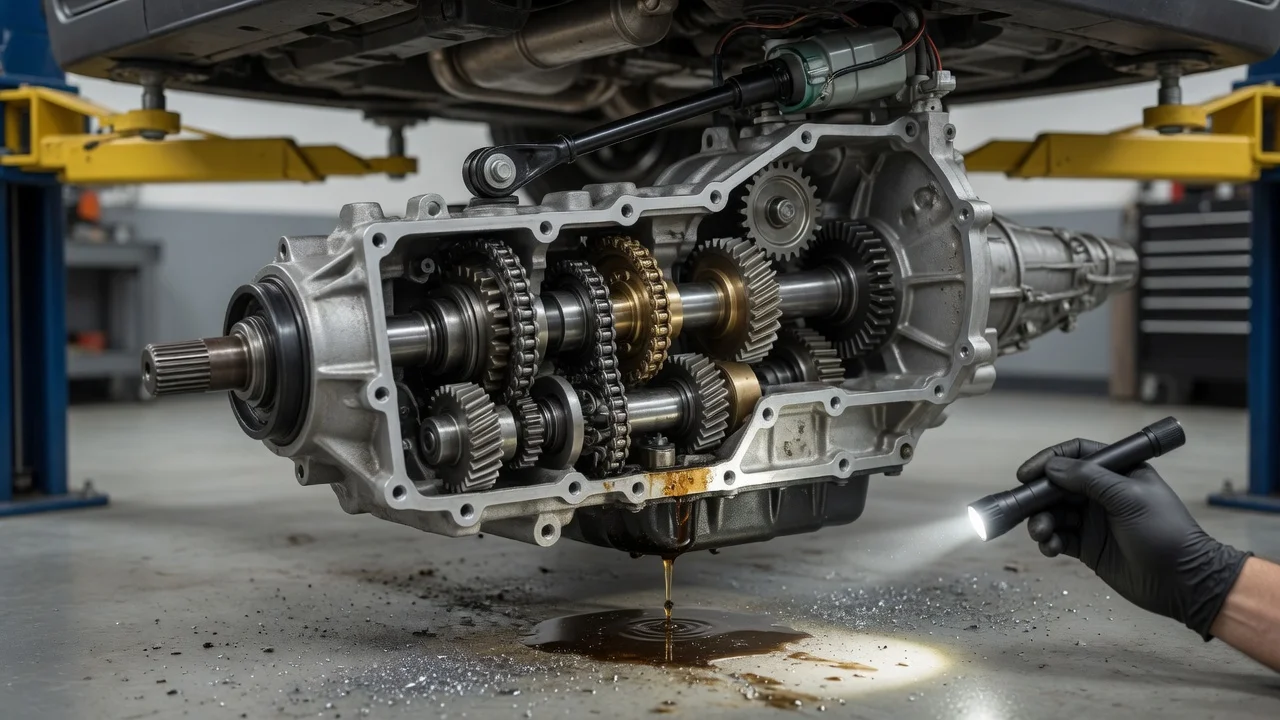
A transfer case splits engine power between the front and rear axles on four-wheel-drive and many all-wheel-drive vehicles. When it starts to fail, its warning signs overlap with problems in the driveshafts, axles, tires and electrical controls. This guide explains how to record the symptoms of a bad transfer case accurately, sort out competing causes, check things in a sensible order and decide how urgently the vehicle needs attention, without guessing at parts.
Establish the symptoms
The most common signs of a bad transfer case fall into a few groups. Shifting complaints include a lever that is hard to move, a 4WD switch that does nothing, an indicator light that flashes without completing the shift, or a system that drops out of four-wheel drive or low range on its own. Noise complaints include grinding, growling or whining that rises and falls with road speed rather than engine speed, and clunks when the system engages. Other symptoms include fluid drips under the middle of the vehicle behind the transmission, a driveline vibration, warning messages on electronically controlled systems and, on all-wheel-drive or full-time systems, binding or hopping while turning. A part-time system will also bind in tight turns if it is left in 4WD on dry pavement, but that is normal behavior, not a fault.
Before anyone touches the vehicle, write down exactly when the problem appears. Note whether it happens in 2WD, 4WD high, 4WD low or all of them; cold or warm; accelerating, cruising or coasting; going straight or turning; and at roughly what speeds. Record recent changes too: new or mismatched tires, a lift or leveling kit, towing, off-road use, a fluid service, driveshaft or axle work, or battery and electrical repairs. Finally, identify your vehicle configuration. Part-time, full-time and automatic all-wheel-drive systems behave differently, and a manual lever, a dash switch and a fully automatic system each fail in different ways.
Distinguish plausible causes
Noise is the symptom most often blamed on the transfer case and often caused by something else. Worn transfer case bearings, a stretched drive chain or damaged gears can growl or whine, but so can wheel bearings, differentials, U-joints, CV joints and tires with irregular wear. A noise that changes noticeably when you switch between 2WD and 4WD points toward parts that are only loaded in four-wheel drive, including the transfer case and the front driveline. A noise that changes with steering load in turns leans toward a wheel bearing. A clunk on takeoff or when shifting between drive and reverse can come from a worn U-joint, general driveline slack or internal transfer case wear.
Failure to engage four-wheel drive is often electrical or external rather than an internal failure. On electronically shifted systems, a blown fuse, faulty selector switch, damaged wiring, failed shift motor or encoder, module fault or bad sensor can all prevent the shift. Front axle disconnect actuators and locking hubs can stop the front wheels from being driven even when the transfer case has shifted correctly. On lever-operated systems, bent or poorly adjusted linkage can make shifts difficult or incomplete. Low or incorrect fluid can cause both noise and rough engagement, so its condition matters in almost every diagnosis.
Some observations point more strongly to the unit itself. Jumping out of low range under load suggests worn shift forks or range gears, or linkage that does not hold the selected position. Binding or shuddering in turns on an all-wheel-drive or full-time system may come from a worn clutch pack or wrong fluid, but mismatched tire diameters can produce the same complaint and should be ruled out first. A leak at an output shaft seal belongs to the transfer case, while fluid at the joint between the transmission and transfer case could come from either unit.
Checks in a useful order
Start with observations that need no tools and no lifting. Read the owner's manual for the correct shift procedure, because many systems require the vehicle to be stopped, rolling slowly or in neutral for certain shifts, and an incorrect procedure is a common reason a shift will not complete. Confirm that all tires are the same size and type, inflated to the placard pressures and similarly worn. Park on a level surface and look for fresh drips under the center of the vehicle. Note any warning lights or messages. Where it is safe, compare noise and behavior in each drive mode on a surface appropriate for your system. Never get under a vehicle supported only by a jack.
The next checks require tools, service information or a qualified technician. Checking fluid level usually means removing a fill plug with the vehicle level, and the correct fluid type and capacity must come from the manufacturer specifications for your exact unit, since transfer cases do not all use the same fluid. Draining the fluid lets a technician judge its condition and inspect the drain plug magnet for debris. Reading stored codes and live data needs a scan tool that can communicate with the four-wheel-drive or transfer case module. Testing a shift motor, switch or wiring requires a meter and the wiring diagram, and checking driveshafts for play requires the vehicle to be safely raised and supported. Confirming chain stretch, bearing wear or gear damage generally requires partial or full disassembly.
Interpret the findings
Each finding answers a narrower question than it may seem to. A stored trouble code identifies a circuit or condition the module detected, not necessarily the failed part; wiring, connectors and power supply still need checking before a motor or module is replaced. Low fluid confirms a leak or a missed service, but topping it up and having the noise fade does not prove the internals are undamaged. Some fine metallic residue on a drain magnet can come from normal wear, while chips or larger fragments are more concerning, and the technician who inspected the unit is best placed to judge which you have. Clean fluid at the correct level with no debris weakens the case for internal wear without ruling it out.
Before replacing a transfer case, the fault should be traced to it with reasonable confidence. That means ruling out tires, wheel bearings, U-joints, axle actuators and electrical faults, confirming that the shift motor receives power and ground when commanded, and reviewing the service history for previous fluid changes and repairs. If the transfer case is confirmed as the source, inspecting the opened unit helps decide between a seal repair, a rebuild or a replacement. Future fluid service should follow the manufacturer's maintenance schedule for your vehicle and its operating conditions, such as towing or off-road use.
Urgency and next action
Some symptoms mean the vehicle should not be driven further. Stop using it if you hear loud grinding, banging or clicking from underneath, if a vibration keeps getting stronger, if the vehicle loses drive or will not move in gear, or if fluid is pouring out or you smell burning. Take particular care if the transfer case may be stuck in neutral or between ranges: in that state the transmission's Park position may not hold the vehicle, so set the parking brake firmly. Arrange transport using the towing method your manufacturer specifies for your drive system, because towing a four-wheel-drive or all-wheel-drive vehicle the wrong way can damage the driveline. No safe remaining mileage can be promised for a failing transfer case.
Milder signs, such as an occasional failure to engage 4WD or a slow seep, still deserve prompt diagnosis, and it is sensible to avoid towing, heavy loads and off-road driving until the cause is known. When you book the repair, provide the year, make, model, engine, transmission and drive system type, how the system is shifted, the mileage, your written symptom record, recent changes, any warning messages or codes, tire details and the service history. That lets a technician start from the right service procedure and avoid replacing parts that were never at fault.