Bad Serpentine Belt Symptoms: How to Tell If Your Belt Is Failing
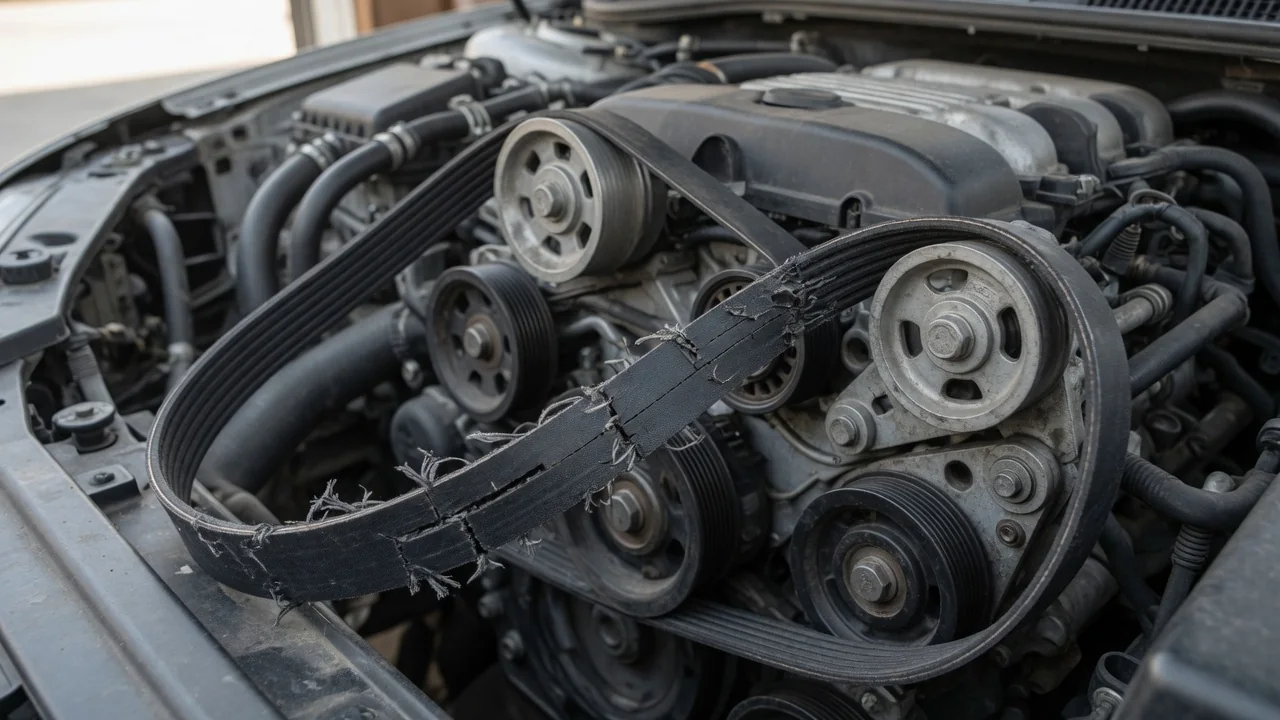
A worn accessory-drive belt rarely fails with one unmistakable warning. Bad serpentine belt signs include noise, visible rib damage, or accessories that no longer keep up, yet a quiet belt can still be failing. How to tell if your serpentine belt is bad means matching what you hear and see with charging, cooling, and hydraulic power steering, then confirming the drive rather than guessing from one symptom.
Symptoms That Can Point to a Failing Serpentine Belt
Typical symptoms of a bad serpentine belt include a high-pitched squeal, frayed edges or missing belt ribs, a charging lamp, and accessories that hesitate when needed. If the water pump or hydraulic power steering is belt driven, a failing drive can coincide with heavier steering or a climbing temperature gauge. Those clues also appear when a pulley, automatic belt tensioner, or accessory seizes, so the pattern points to the accessory drive rather than proving the belt failed.
How do you know if your serpentine belt is bad when it still looks intact? Wear can progress without noise, then an accessory can stop without a long warning period. Signs of a bad serpentine belt remain incomplete until charging, cooling, and other belt-driven loads are considered together. A quiet ride does not rule out a glazed or rib-worn belt, and sudden accessory loss is still a reason to inspect the entire drive.
What Wear and Damage Look Like on the Belt
What a bad serpentine belt looks like is more than a few surface cracks. Frayed edges, missing rib sections, exposed cords, splitting, and a torn or glazed backing all indicate material that can no longer grip pulleys reliably. Modern compounds can shed rib material without the classic cracked look, so an apparently uncracked belt may still be worn. How to tell if a serpentine belt is bad includes looking for thinning ribs and a polished face, not only splits.
A shiny, glazed surface or oil and coolant on the belt are clues that need assessment, but appearance alone does not prove belt slippage. Contamination can reduce friction, and a glossy rib face can hint at heat from slip, yet a misaligned pulley or dragging accessory can look the same. Edge damage or uneven wear calls for checking pulley alignment and the rest of the accessory drive, because a new belt on a cocked pulley can wear similarly.
What Squealing, Chirping, and Grinding Can Mean
A failing belt often announces itself as a sharp squeal at startup, when the air conditioner engages, or when electrical load rises. That car serpentine belt noise can accompany belt slippage, inadequate tension, contamination, or an accessory resisting rotation. A rhythmic chirp may point toward pulley alignment or uneven belt contact, but sound alone cannot assign a definite cause. Grinding or rumbling is more suggestive of bearing noise in a pulley or accessory and deserves professional diagnosis.
What a bad serpentine belt sounds like also depends on when it appears: cold startup, wet weather, turning, or air-conditioning use. Those timing notes help a technician separate belt slip from a noisy idler, tensioner, or accessory. Do not reach toward a running drive, apply belt dressing, or spray diagnostic liquids onto the belt; those actions add risk and can mask the contact problem. Record the conditions, then have the accessory drive inspected with the engine stopped.
How to Check the Serpentine Belt Safely
How to check a serpentine belt starts with parking securely, shutting the engine off, allowing it to cool, and preventing automatic restart according to the owner's manual. With the drive stopped, a flashlight can show accessible rib faces, edges, and backing. Stay clear of cooling fans, which can start unexpectedly after shutdown on some vehicles. This visual survey cannot expose every wrapped surface, measure remaining life, or confirm correct tension by casual pressing.
If covers hide the belt, routing is tight, or wear looks uneven, professional inspection is the safer next step. How can you tell if your serpentine belt is bad from a partial view? You often cannot. Skip belt removal, skip rotating the engine by hand to chase hidden ribs, and skip any running-engine look at the drive. A technician can inspect tensioner travel, pulley faces, and the sections you cannot see.
Can a Bad or Loose Serpentine Belt Cause Rough Idle?
Can a bad serpentine belt cause rough idle? Belt-drive trouble can contribute indirectly when accessory load fluctuates or charging becomes irregular, yet a shaky idle by itself does not identify a belt fault. Asking whether a serpentine belt can cause rough idle as a misfire is not a standalone diagnosis. A loose belt can slap or slip and disturb idle quality, but looseness does not show whether the automatic belt tensioner, installation, or another drive fault is responsible.
Belt-drive noise or vibration can feel like rough idle even when engine speed stays steady, because the shake travels through mounts and the steering column. Note whether the sensation lines up with squeal, a charging warning, or accessory operation such as the air conditioner cycling. Engine-management, ignition, and fuel faults remain possible and still require diagnosis. A stored fault code is evidence to interpret, not proof the belt or a pulley failed, and manufacturer-dependent codes need vehicle-specific confirmation.
How Pulleys, the Steering Pump, and Fan Clutch Can Affect Idle
Can a bad idler pulley cause rough idle, and can a bad tensioner pulley cause rough idle the same way? A worn idler or tensioner bearing can add noise and vibration, and severe resistance can raise accessory load. Neither effect proves a misfire. A seized or dragging pulley can shake the drive, so a bad pulley can cause rough idle sensations, but tensioner faults also disrupt belt control and the complete accessory drive needs assessment.
On a vehicle with belt-driven hydraulic power steering, a failing pump can add accessory load and unsettle idle, so a bad power steering pump can cause rough idle without a misfire. Do not hold the wheel against the stops as a test. Electric power steering uses a different arrangement not diagnosed through belt drag. A mechanical fan clutch with abnormal engagement, imbalance, or bearing trouble may add load, roar, or vibration; professional testing is needed to name the source.
When to Stop Driving and Arrange Professional Inspection
If the engine overheats, smoke appears, a strong burning smell develops, or the belt is visibly displaced or shredded, pull over safely and shut the engine down. A serpentine belt coming apart can take accessories with it quickly. Sudden heavy steering or a charging warning also needs prompt attention; whether you continue a short distance depends on that vehicle and accompanying symptoms. An engine that still runs does not mean cooling or charging is intact.
A technician assessing a bad serpentine belt typically looks at rib wear, automatic belt tensioner operation, pulley alignment, bearings, accessory resistance, contamination, and charging performance. That broader look shows whether belt trouble is the only issue. Replacing a damaged belt without correcting the underlying fault can leave noise, vibration, or repeat damage unresolved. Signs of bad serpentine belt wear after a recent replacement are a reason to recheck the drive, not to assume the new belt was simply defective.