Bad or Clogged Fuel Injector Symptoms: How to Identify the Problem
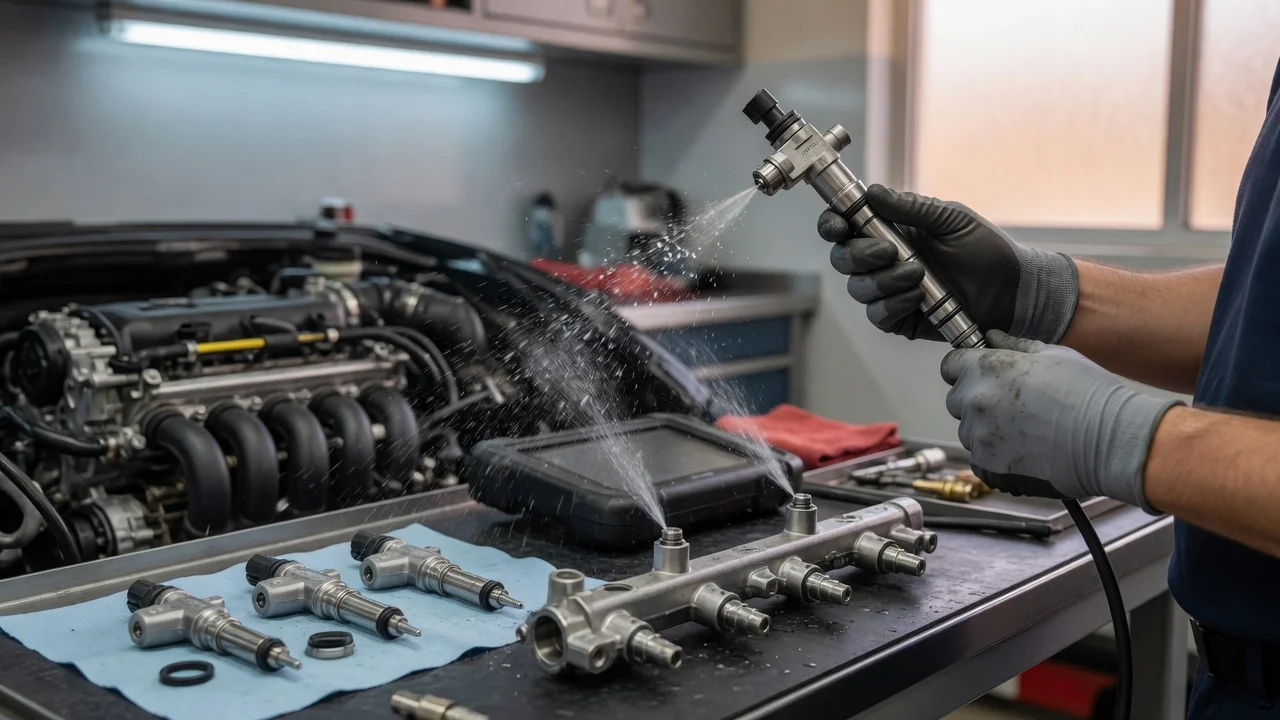
Common symptoms of a bad fuel injector include rough idling, misfires, hesitation, reduced power, difficult starting and increased fuel consumption. A leaking injector may also cause a fuel smell or excessive exhaust smoke. These symptoms suggest a fuel-delivery problem, but none proves that an injector is faulty: ignition faults, air leaks, fuel-pressure problems and mechanical engine faults can produce similar behavior.
Clogged, leaking and electrically faulty injectors behave differently
A fuel injector meters fuel into an engine. Depending on the engine design, it delivers fuel into the intake passage or directly into the combustion chamber. A restriction can reduce delivery or disrupt the spray pattern. An injector that leaks or fails to close properly can deliver unwanted fuel. An electrical fault in the injector, its wiring or its control circuit can prevent normal operation.
These faults overlap in their symptoms. A clogged injector may leave a cylinder with too little fuel, while a leaking injector may supply too much. Either condition can cause poor combustion and a misfire, meaning a cylinder does not produce its expected power. Symptoms alone usually cannot distinguish a restriction from an electrical or mechanical injector fault.
Symptoms that can point to an injector problem
Rough idle, shaking or stalling: Uneven fuel delivery can make the engine run unevenly, particularly at idle. However, worn spark plugs or faulty ignition coils on a spark-ignition engine, intake air leaks and low cylinder compression can cause similar symptoms.
Hesitation and reduced power: An injector that cannot deliver the required fuel may cause stumbling during acceleration or poor performance under load. Low fuel supply pressure or insufficient fuel volume can affect delivery too, so weak acceleration does not isolate an individual injector.
Difficult starting: Inadequate injection can make an engine hard to start. An injector that leaks into a cylinder after shutdown can also disrupt the next start. Whether the difficulty occurs when cold, when hot or after the vehicle has been parked helps guide diagnosis, but does not establish the cause.
Increased fuel consumption, fuel odor or dark exhaust smoke: Excess fuel delivery can increase consumption and, depending on the engine and exhaust-treatment system, produce visible smoke. Unburned fuel from a misfire can also cause an exhaust odor. Fuel smell around the engine may indicate an external leak rather than an internal injector fault and warrants prompt attention.
Check-engine light: The engine control system may detect a misfire, an injector circuit fault or an abnormal fuel mixture. Some injector problems do not immediately trigger a warning, and a warning light does not identify the failed part by itself.
What fault codes can and cannot tell you
A cylinder-specific misfire code identifies where the control system detected uneven combustion; it does not prove that the injector caused it. An injector circuit code points toward an electrical problem that may involve the injector, connector, wiring or control unit. A lean or rich mixture code describes a detected fueling condition and can have causes beyond the injectors.
Interpret each code using the definition and diagnostic information for the vehicle’s model year, engine and configuration. Record the codes and available freeze-frame data—the operating conditions saved when a fault was detected—before clearing them. Engine temperature, speed and load can help explain when the problem occurs.
How diagnosis separates an injector fault from other causes
Start with the pattern of the fault. A problem concentrated in one cylinder directs attention toward that cylinder’s ignition components, injector circuit and mechanical condition. Problems across several cylinders make shared causes, such as fuel supply or air-metering faults, important to investigate. Neither pattern rules an injector fault in or out.
Check competing causes before replacing an injector. On a spark-ignition engine, evidence of a spark plug or ignition coil fault may explain the misfire. Air-leak checks and fuel-pressure testing can identify problems that alter mixture or delivery. If those checks do not explain a persistent cylinder-specific fault, compression or other mechanical testing may be needed.
Injector electrical testing establishes whether the circuit and control signal operate as specified. A normal electrical result does not establish that the injector flows correctly or seals when closed. Likewise, an audible injector click indicates movement but does not prove correct fuel delivery.
Where supported by the manufacturer’s procedure, injector balance, delivery or leakage testing can help distinguish restricted flow from unwanted fuel delivery. Some diesel systems use injector return-flow testing to investigate excessive internal leakage. These tests answer different questions and are not interchangeable across injection systems.
No vehicle details or test results were supplied, so an exact test method, acceptable reading or replacement decision cannot be established here. Fuel-pressure limits, electrical specifications and test conditions must come from service information for the applicable engine. Direct-injection gasoline and diesel systems can retain hazardous fuel pressure; opening fuel lines requires the specified pressure-relief procedure and suitable equipment.
Can injector cleaner fix the symptoms?
A suitable cleaning treatment may help some deposit-related restrictions, but it cannot repair damaged wiring, a failed electrical actuator or mechanical wear. Improvement after an additive does not confirm which component caused the symptoms. Use only products permitted for the vehicle and fuel system, and investigate persistent misfires or starting problems.
When to stop driving
Stop safely and switch off the engine if you see leaking fuel or suspect an active fuel leak. Avoid restarting until the leak has been assessed. Severe shaking, substantial power loss or a flashing check-engine light also calls for stopping safely and consulting the vehicle handbook or arranging assistance. On many vehicles, a flashing light warns of a misfire that can damage the catalytic converter.
For milder symptoms, arrange diagnosis and describe exactly when they occur: at cold start, after a hot restart, at idle or during acceleration. Ask what test supports the injector diagnosis and whether it establishes an electrical fault, restricted delivery or leakage. That evidence provides a sounder basis for repair than symptoms or a fault code alone.