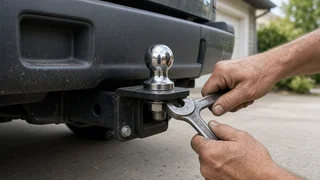
Average Trailer Hitch Ball Height
The average trailer hitch ball height is not a single fixed number for every vehicle. It describes the vertical distance from the ground to the center of the hitch ball when the tow vehicle is loaded and sitting on level pavement. This measurement matters because a small mismatch between the coupler height on the trailer and the ball height on the tow vehicle can create poor weight distribution, reduced steering control, and unnecessary stress on the hitch receiver. Everyday tow vehicles vary in ground clearance, suspension design, tire size, and rear load, so a useful starting figure must be understood as a range rather than a specification. Knowing why that range exists helps an owner measure correctly and choose a drawbar, ball mount, or adjustable hitch that keeps the trailer level.
Essential answer
A commonly referenced average ball height for passenger cars, crossovers, and light-duty SUVs falls roughly between 17 and 19 inches from the ground to the top of the hitch ball, although the center of the ball is the more precise reference point. Full-size pickups and taller SUVs often sit closer to 20 to 23 inches before a trailer is attached. These figures are useful as a starting point for comparing vehicles, but they are not a rule. Tire diameter, wheelbase, suspension type, factory ride height, and the amount of cargo or passenger weight in the rear all shift the real number on a specific vehicle.
The more important measurement is not a universal average but the relationship between the tow vehicle and the trailer. When a trailer is loaded and its coupler is supported at a level attitude, the coupler height should closely match the ball height. A slight difference can often be corrected with a raised or lowered ball mount, while a large difference may indicate the wrong drawbar or an unsuitable vehicle-trailer combination. Because trailer tongue weight compresses the rear suspension, a measurement taken on an empty vehicle can be misleading. Checking the ball height with a typical load, or allowing for expected squat, produces a much more dependable setup.