AutoZone Free OBD2 Scans: What to Check Before Visiting
Direct Answer: The Scan Is Free, the Diagnosis Is Not
AutoZone provides a free OBD2 code read at many store locations, typically performed in the parking lot with a handheld scan tool. The essential qualification is that the store retrieves and prints trouble codes; it does not perform a complete vehicle diagnosis, clear codes as a guaranteed service in every market, or provide the full repair path. A free code pull is best understood as a starting point for deciding whether you can handle a repair yourself or need a professional diagnostic technician.
How Free OBD2 Scanning Works
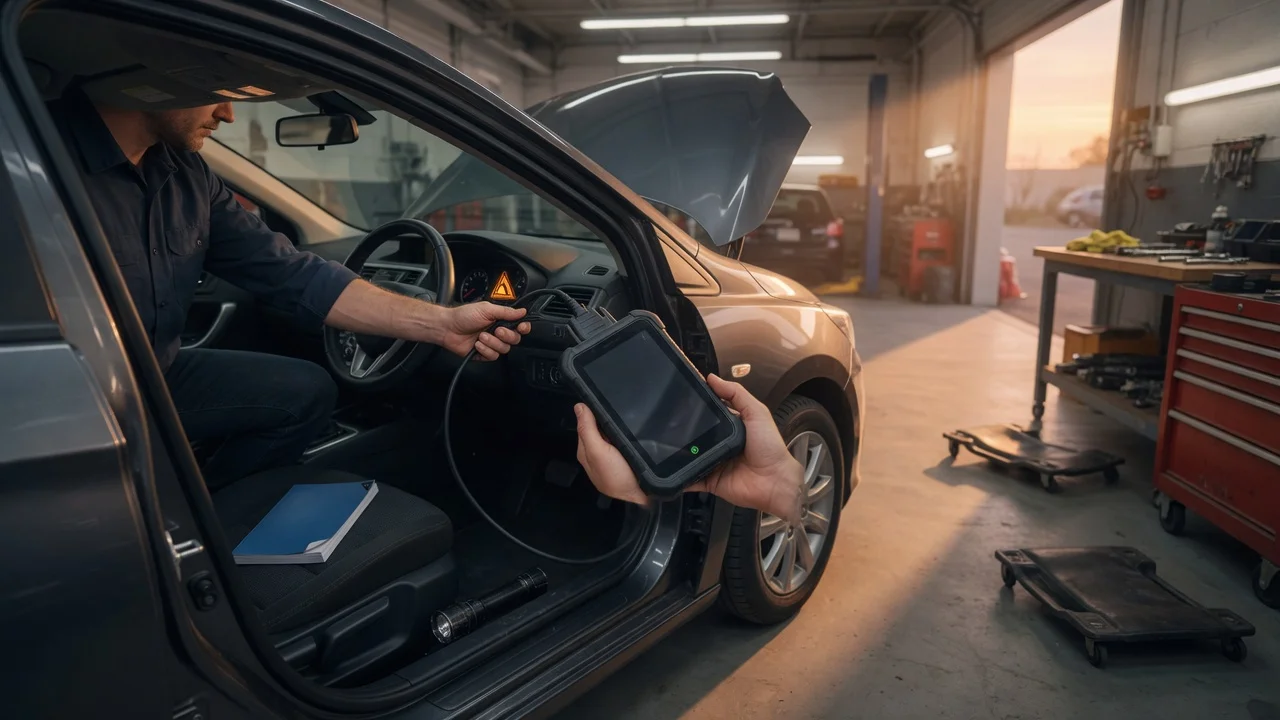
An OBD2 scan tool reads standardized data from a vehicle's on-board diagnostics system through the diagnostic link connector, which is normally located under the dashboard on the driver's side. Since the 1996 model year, most vehicles sold in the United States support emissions-related OBD2 communication with a common 16-pin connector. When a fault is detected, the vehicle's computer stores one or more diagnostic trouble codes. The scan tool asks the computer for stored and pending codes, which represent current issues and conditions that have not yet matured into a confirmed fault.
The practical effect is that a free scan can quickly translate a check-engine light into a code such as P0301 for a cylinder one misfire or P0420 for a possible catalytic converter efficiency problem. The code identifies the circuit or system involved but not automatically the failed component. A code for an oxygen sensor circuit, for example, can be caused by a faulty sensor, damaged wiring, a connector problem, an exhaust leak, or other conditions that the code alone cannot distinguish.
Strengths and Limitations
The main benefit is convenience and price. A free scan is useful when a check-engine light appears and you want to know whether the issue appears minor or urgent before committing to a repair shop. The retrieved code can help an owner communicate more accurately with a technician or purchase parts for a simple repair.
The main compromises involve depth and interpretation. Store equipment and employee training vary by location, so the level of assistance should not be treated as equivalent to a diagnostic technician's evaluation. Free scans generally cannot perform advanced functions such as bi-directional control tests, module-specific manufacturer data beyond basic emissions codes, or live-data analysis that a professional tool may provide. The service also depends on the vehicle's OBD2 readiness; some codes may be unavailable immediately after a battery disconnection or repair.
The free scan suits drivers who need a quick code pull before deciding on the next step. It is less suitable for intermittent faults, manufacturer-specific systems, drivability problems without a stored code, or situations requiring component-level diagnostic confirmation.
What to Check Before Visiting
Before relying on a store visit, confirm that the specific AutoZone location currently offers counter scanning, since store staffing and tool availability can affect the service. Bring the vehicle's year, make, model, and engine information so the technician can accurately identify the vehicle. If your vehicle was manufactured before the 1996 model year, is a heavy-duty truck, or uses a non-standard diagnostic system, a standard OBD2-only scanner may not communicate with the vehicle.
Confirm the store offers the free scanning service and has a working scan tool before driving there. Have the vehicle year, make, model, and engine size ready. Be prepared to switch the ignition to the run position without starting the engine if the vehicle does not permit scanning with the engine off. Note whether the vehicle has an aftermarket monitoring device, a modified wiring harness, or a damaged diagnostic connector that could prevent a clean connection to the reader. Ask the employee to explain the retrieved code and print the results. Record the exact code, not just a verbal description, before leaving the store.
Treat a trouble code as an indicator rather than proof of a specific failed part. For example, a code describing a camshaft position sensor circuit should lead to investigation of the sensor, its connector, its wiring, and related timing conditions rather than immediate sensor replacement. If the vehicle is running poorly, overheating, misfiring severely, or showing a flashing check-engine light, avoid extended driving and seek professional diagnosis promptly. A standard code pull cannot capture every manufacturer-specific body or chassis code, nor can it measure the mechanical conditions that often cause an emissions or drivability code.
How to Read the Results
A typical diagnostic trouble code starts with a letter followed by four digits. The letter P indicates a powertrain code, B indicates body, C indicates chassis, and U indicates a network or communication fault. A many reader will display a short descriptor, but the exact meaning can vary with the vehicle and code manufacturer. Use the printed code as a research starting point, not a final verdict, and confirm any repair part against the vehicle's specifications before purchase.
When Professional Diagnosis Is the Better Next Step
If the same code returns after a repair, the car shows symptoms that do not match the code, or the technician cannot establish a clear cause, a professional diagnostic session with live data and manufacturer-specific tools is the more reliable path. Intermittent electrical faults and misfires under specific loads often require conditions that a parking-lot code pull cannot reproduce. The free scan is a helpful screening service, but it does not replace a qualified diagnosis when the code's cause is not obvious.