Automotive Airbag Regulations and Safety Standards
The Short Answer
In the United States, airbag requirements are set at the federal level by the National Highway Traffic Safety Administration (NHTSA) through the Federal Motor Vehicle Safety Standards (FMVSS). The core rule is FMVSS No. 208, Occupant Crash Protection. Federal law has required frontal airbags for both the driver and the front passenger in new passenger cars since the 1998 model year and in light trucks since the 1999 model year.
One qualification matters most. US rules are mainly performance standards. They set crash tests and injury limits a vehicle must meet rather than specifying a number of airbags. Frontal airbags are explicitly required. Side, curtain and knee airbags are not individually mandated. Manufacturers fit them because they are the practical way to pass the side-impact and ejection tests, or because buyers and safety ratings reward them.
What FMVSS 208 Covers
FMVSS 208 governs frontal crash protection for front-seat occupants. It sets crash-test conditions, injury criteria measured on crash-test dummies, and requirements for how airbags and seat belts work together. The airbag is treated as a supplemental restraint, which is why many steering wheels and dashboards carry the label SRS (supplemental restraint system). It supplements the seat belt and does not replace it.
The standard was later revised with what are commonly called advanced airbag requirements. These were introduced because early, more forceful airbags could injure children and small adults who were sitting close to the airbag or out of position when it deployed. Under the revised rules, vehicles are tested with dummies of different sizes, including child dummies. The airbag must either be suppressed for small occupants or deploy in a way that limits injury risk to them.
Deployment Zones and Occupant Position
Much of airbag regulation deals with the space directly in front of the airbag, where an inflating bag carries the most force. Advanced frontal systems therefore use sensors to judge whether and how strongly to deploy. Typical inputs include seat-belt use, crash severity and, on the passenger side, an occupant classification system that estimates the size or weight of the person in the seat.
Keep a reasonable distance between your chest and the steering wheel hub. NHTSA guidance has long recommended about 10 inches. Seat children 12 and under in the rear seat where possible. Never place a rear-facing child seat in front of an active frontal airbag. Read the airbag warning labels on the sun visors. Federal rules require these labels, and they summarize the key positioning risks.
Some pickup trucks and other vehicles without a usable rear seat have a manual passenger airbag on-off switch so a child seat can be fitted in front. Separately, NHTSA has allowed retrofit on-off switches for specific at-risk groups through an authorization process. These switches are exceptions, not general options.
Side Impact and Ejection Rules
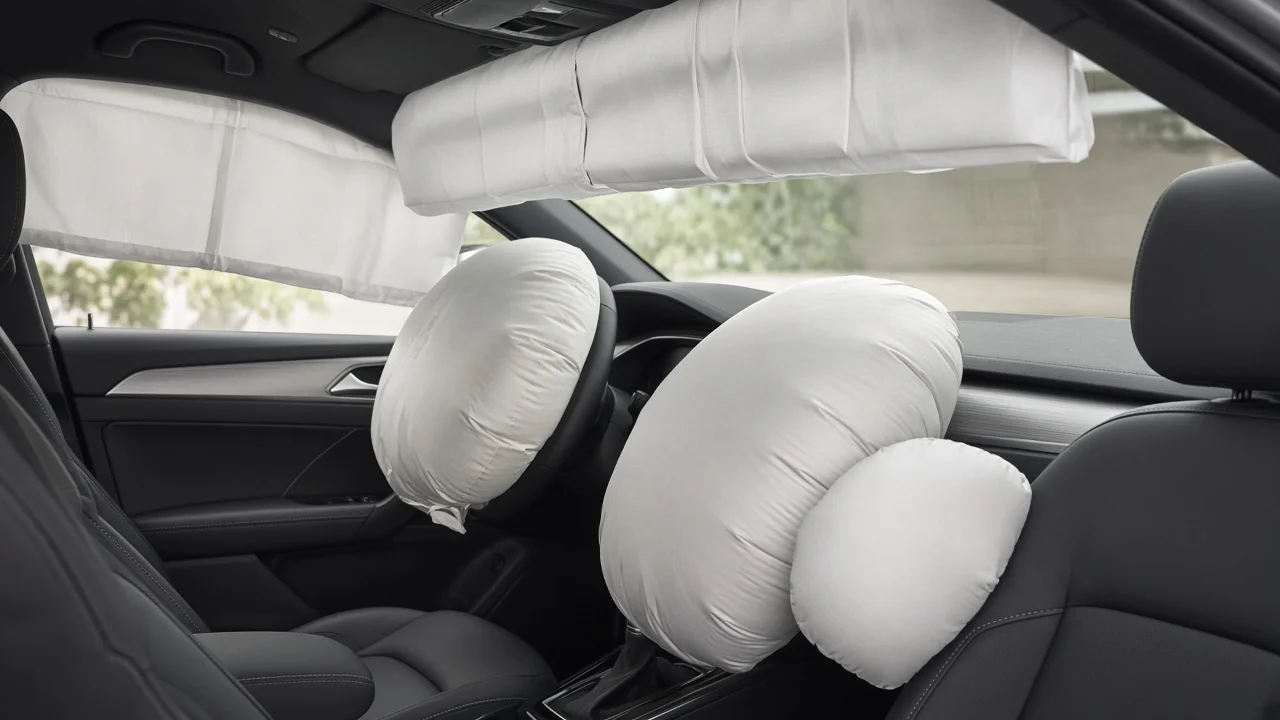
Side protection falls mainly under FMVSS No. 214, Side Impact Protection, and FMVSS No. 226, Ejection Mitigation. FMVSS 214 includes a test in which the vehicle strikes a narrow pole at an angle, which simulates hitting a tree or utility pole. Meeting its head-injury limits is very difficult without side head protection. FMVSS 226 addresses occupants being thrown out through side windows in rollovers and severe side crashes. Together these standards are why side-curtain airbags have become close to universal on new US light vehicles, even though no rule names them as mandatory equipment.
What the "6 Airbag Rule" Refers To
The phrase "6 airbag rule" is not a US regulation. It usually refers to a proposal in India to require six airbags in passenger cars: two frontal, two side and two curtain. The status of that proposal has changed since it was first announced. Readers who need it for a vehicle sold in India should check the current Indian government position. US rules do not set a minimum airbag count.
How US Rules Differ From Ratings and Other Markets
Item | What it is | Legally binding in the US? FMVSS 208, 214, 226 | NHTSA safety standards that every new vehicle sold must meet | Yes; NHTSA NCAP star ratings | Government consumer crash-test ratings | No, informational; IIHS ratings | Insurance-industry research crash tests and awards | No, informational; UN ECE regulations (Europe and other adopting markets) | Separate test-based frontal and side-impact standards | No, applies outside the US
Ratings programs often test scenarios that go beyond the legal minimum. A vehicle can meet every federal standard and still score poorly in a particular rating test. Compliance and a high rating are therefore separate questions.
Ownership: Repairs, Disabling and Recalls
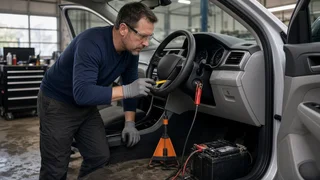
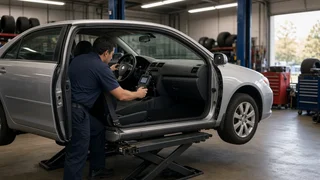
Federal law generally prohibits manufacturers, dealers and repair businesses from knowingly making a required safety system inoperative, and that includes airbags. Federal and many state laws also target the installation of counterfeit, nonfunctional or fake airbag components after a crash. The exact penalties and wording vary by state. Owners should confirm that any replacement airbag is a genuine part installed correctly, and that the airbag warning light behaves normally afterward.
Airbag recalls have been among the largest in US history. You can check a specific vehicle for open recalls with its 17-character VIN through NHTSA's recall lookup or through the manufacturer.
Gaps and What to Verify
No vehicle-specific evidence was supplied for this overview. It therefore does not state phase-in schedules, test speeds, injury thresholds or which airbags a particular model, trim or model year includes. Those details depend on the exact vehicle and the version of each standard in force when it was built. For a definitive answer, check the current text of the relevant FMVSS, the vehicle's owner's manual and its recall status.