Airbag Safety Precautions for Mechanics
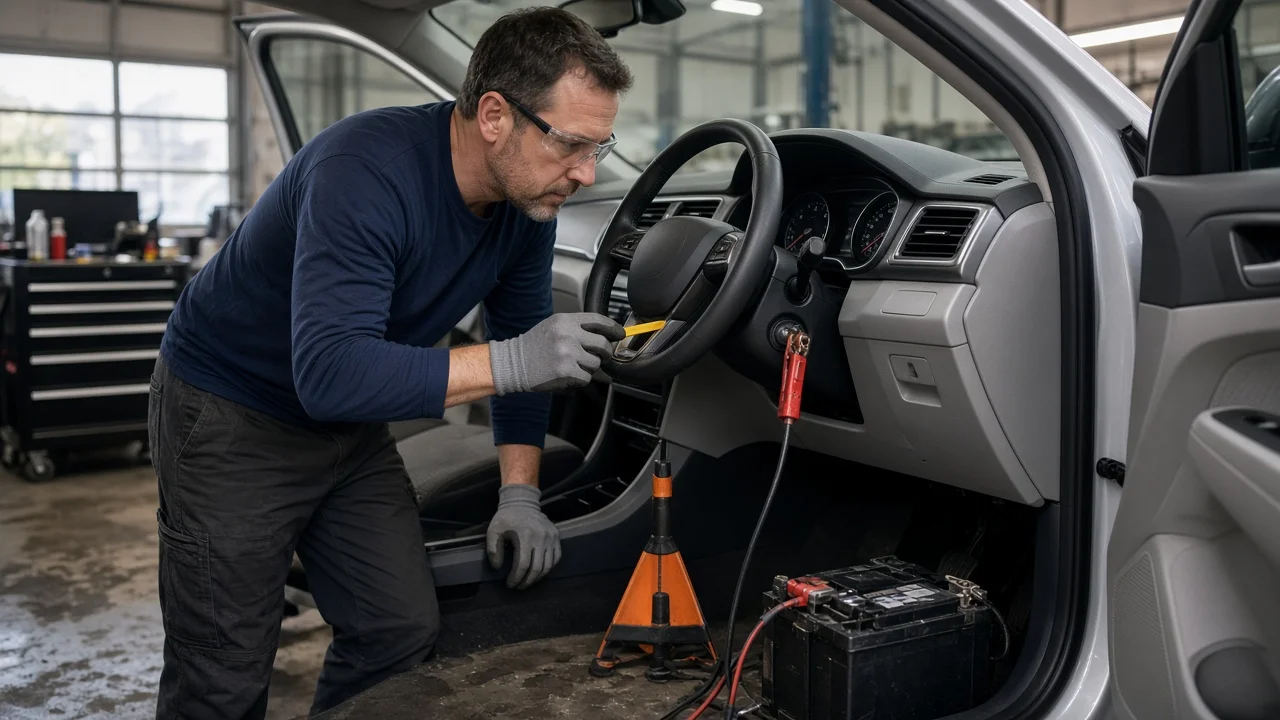
Airbag safety for mechanics centers on treating every undeployed restraint component as a potential source of sudden, violent movement. A supplemental restraint system can remain armed even with the ignition off because the restraint control module may hold reserve energy. Working near a steering wheel, seat, roof rail, or seat belt pretensioner without understanding the deployment zone creates a serious risk of injury. The warning indicator, impact sensors, and vehicle-specific service procedures all help identify when the circuit is actively managing a fault. Safe work begins with de-powering the system and keeping the deployment path clear.
Essential answer
The essential answer is that a mechanic should isolate the battery, de-power the restraint control module, and follow the manufacturer’s vehicle-specific service procedure before entering the deployment zone. Even after disconnect, the module can store enough energy to fire an inflator or seat belt pretensioner under certain conditions. Treat every undeployed component as loaded until the specified wait period has passed and the circuit has been confirmed dormant. This reduces the chance that a stray electrical signal, static discharge, or wiring movement becomes an unintentional trigger.
A warning indicator that is lit or flashing gives useful diagnostic evidence, but it does not make the system safe to handle. The indicator often means the module has detected a circuit issue involving an impact sensor, clockspring, inflator, or pretensioner circuit, and some faults still allow stored energy to remain. The practical next step is to read the fault data while following the vehicle-specific procedure, then repair the underlying circuit with the module de-powered. Keeping the deployment zone clear and the battery isolated until work is complete is the core precaution.