Audi Timing Chain Problems, Symptoms, and Replacement Cost
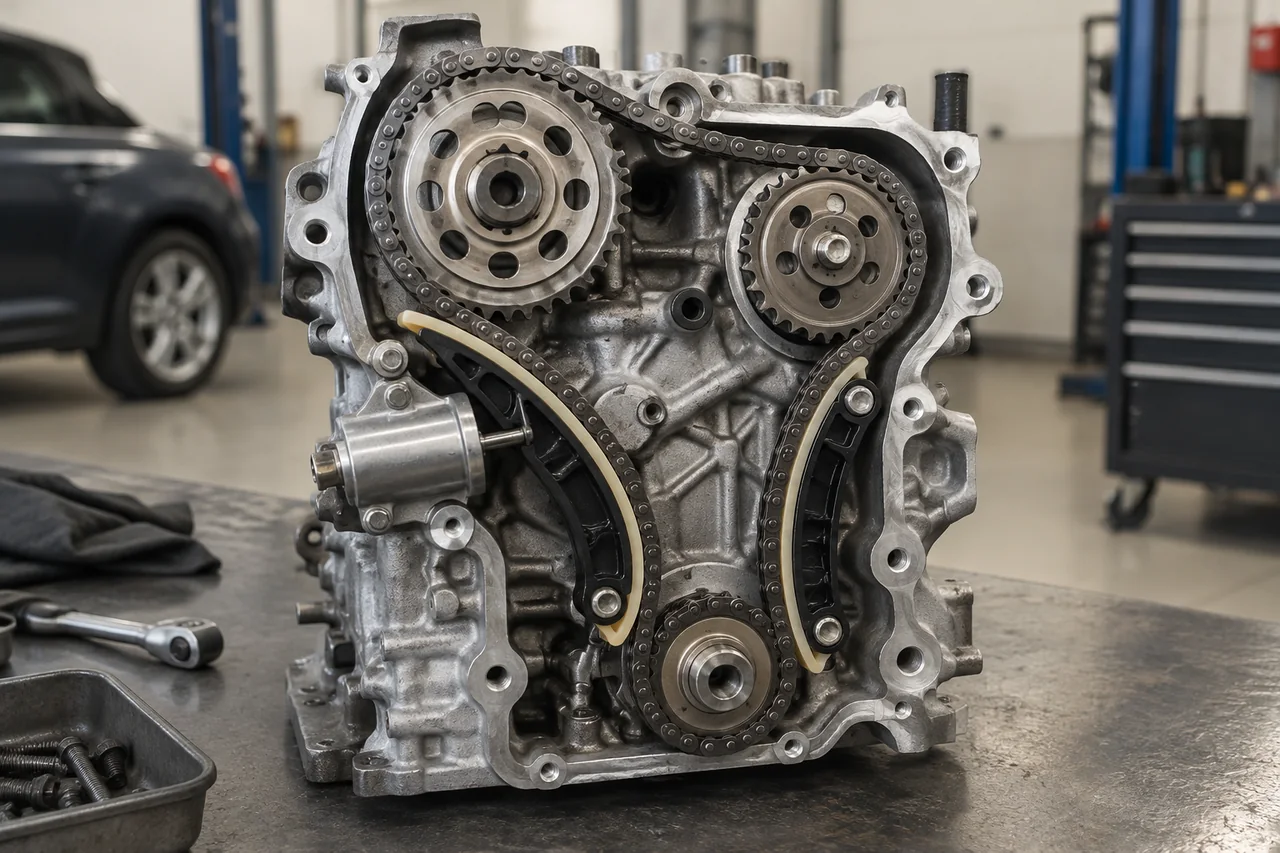
An Audi timing chain links crankshaft rotation to camshaft timing, and its condition depends on the specific engine, not the badge. Owners usually want to know whether a startup rattle, a stored fault, or a quoted repair estimate actually involves the chain, tensioner, or guides. Identification, symptoms, diagnosis, Audi timing chain replacement, and the gap between online jokes and documented engine condition all matter before any work is authorized.
What an Audi Timing Chain Does
The timing chain in an Audi engine is a metal chain that keeps the crankshaft and camshafts in a fixed relationship as the engine turns. Crankshaft position determines piston travel; camshaft timing determines when intake and exhaust valves open and close. If that relationship is correct, valves stay clear of pistons and combustion happens when the mixture can be burned efficiently. If it drifts, valve events arrive early or late, which can cut power, raise emissions, cause misfires, or, in interference designs, allow valves and pistons to occupy the same space.
A complete timing drive is more than the chain. Sprockets transfer motion at the crankshaft and camshafts, while timing chain guides keep the chain on its path and limit slap. A timing chain tensioner, often oil-pressure assisted, takes up slack so the chain cannot jump teeth. Engine oil lubricates the chain and, on many designs, supplies the tensioner. Layouts differ by engine family, and some Audi powerplants use a belt instead of a chain. The badge on the grille does not identify the timing system or the repair path.
Identifying the Engine and Its Documented Timing Chain Concerns
An individual Audi cannot be judged from the model name on the trunk. Timing design follows the engine, so owners should confirm model year, VIN-linked build data, and the engine code from the vehicle, the owner's documents, or a shop that can read that information accurately. Service campaigns, technical bulletins, and repair histories, when they exist for that engine, are the records that show whether a timing chain concern was documented for that family and production range. Without that engine-specific paper trail, a general reputation does not describe the car in the driveway.
Even within one documented family, the timing system can fail in different ways. Timing chain elongation stretches the chain so camshaft timing lags the crankshaft. A tensioner that cannot hold pressure or extend correctly leaves slack the chain can slap or skip. Damaged timing chain guides can shed material or leave the chain poorly supported. Mileage, a model name, and broad online claims cannot prove that any of those faults is present. The component has to be identified on that engine, not inferred from a forum average.
Timing Chain Symptoms and When to Stop Driving
Possible warning signs include a short startup rattle, a persistent mechanical noise after the engine is running, rough idle or misfire, and an engine warning light. Those signs are not unique to an Audi timing chain. Low oil pressure, a worn accessory, a failed hydraulic lifter, or an unrelated sensor fault can produce similar complaints. A useful observation is when the noise occurs, how long it lasts, and which dashboard warnings appear with it. Repeatedly restarting the engine just to reproduce a rattle is a poor idea if the noise is already severe.
Symptoms and stored fault codes still require engine-specific interpretation. A crankshaft correlation or camshaft timing code is evidence that the control unit saw a disagreement between sensors; it is not proof that the chain, tensioner, or guides have failed. Manufacturer-dependent code definitions also need confirmation on that vehicle. If an oil-pressure warning appears, rattling continues loudly after start, or the engine runs poorly enough that it may stall or lose power, shut the engine down when it is safe to do so and arrange a professional assessment or a tow rather than driving on.
How a Shop Determines Whether Replacement Is Needed
A shop deciding whether Audi timing chain replacement is needed starts with more than a noise complaint. Stored faults, freeze-frame data, and live camshaft and crankshaft correlation readings show whether the control unit is seeing a timing disagreement. Appropriate engine timing checks, oil-pressure and lubrication assessment, and inspection of accessible chain, tensioner, and guide evidence then have to match that data. Replacement should rest on those documented findings plus the guidance that applies to that engine, not on the model name or a reputation for chain trouble.
The repair plan itself is engine-specific. Confirmed wear may call for the chain, timing chain tensioner, timing chain guides, sprockets, seals, and specified hardware. Scope should follow confirmed damage, not a default kit for every Audi. If the chain may have jumped or lost timing, the shop needs to check whether valves and pistons have already contacted. A new chain cannot restore bent valves or other internal damage, so that condition check belongs in the diagnosis before anyone promises replacement will fix the complaint.
What Shapes an Audi Timing Chain Replacement Estimate
Audi timing chain replacement cost is driven by access and scope, not by a single national price. Engine layout, whether the chain sits at the front or the gearbox end, and how much surrounding hardware must come off all change labor hours. Shop rates, parts selection, and whether the job includes the tensioner, guides, and related seals further move the total. A useful written repair estimate lists diagnosis, labor, timing components, seals, required fluids, taxes, and any extra work that needs separate approval.
The replacement cost an Audi owner actually pays can also change after the engine is opened. Hidden guide fragments, a stretched chain that has already jumped, damaged sprockets, or oil contamination may expand the job beyond the original authorization. The shop should say in writing how it will pause, document new findings, and obtain approval before adding that work. Owners should request a vehicle-specific written estimate that names the included components, the diagnostic basis for the recommendation, and the parts and labor warranty. A phone quote without that engine identification is not a reliable figure.
What Audi Timing Chain Memes Can Tell an Owner
An Audi timing chain meme is a compressed joke about owner frustration and a long-running online reputation. It can tell an owner that the topic is widely discussed, and that some engines have left people with expensive repairs and rattling stories. It cannot establish how often chains fail, which engine families are involved, or whether the car in the driveway has a worn tensioner, elongated chain, or damaged guides. Humor travels farther than technical bulletins, so treating a meme as prevalence data or as a diagnosis for one VIN is a mistake.
The practical question behind the joke is narrower. Does this vehicle's engine code and production range have a documented timing chain concern, and do current symptoms or stored data justify inspection? That answer comes from engine identification, service and repair records, and diagnostic evidence, not from a shared image. If the engine is one with a known campaign or bulletin, or if a startup rattle, correlation fault, or oil-pressure warning is already present, inspection is the next step. If none of those apply, the meme is commentary, not a work order.